


An evolutionarily conserved constellation of functional cis-elements programs the virus-responsive fate of the human (epi)genome
- PMID: 40131776
- PMCID: PMC11934927
- DOI: 10.1093/nar/gkaf207
An evolutionarily conserved constellation of functional cis-elements programs the virus-responsive fate of the human (epi)genome
Abstract
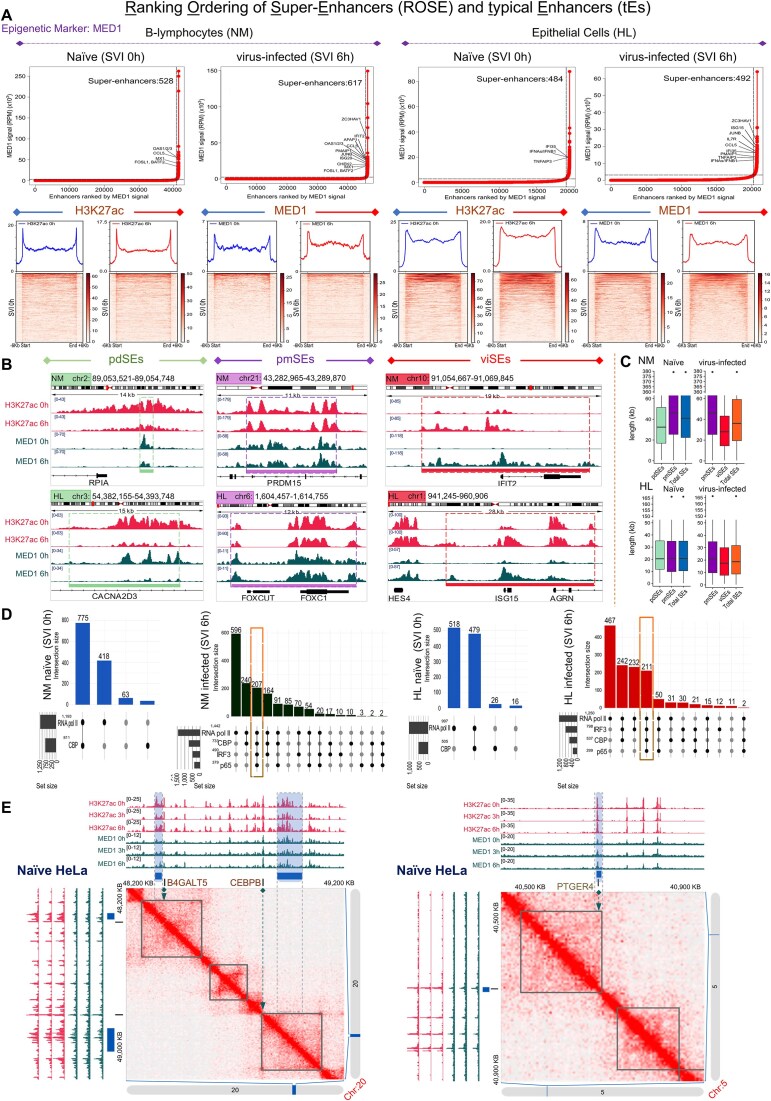
Human health depends on perplexing defensive cellular responses against microbial pathogens like Viruses. Despite the major effort undertaken, the (epi)genomic mechanisms that human cells utilize to tailor defensive gene expression programs against microbial attacks have remained inadequately understood, mainly due to a significant lack of recording of the in vivo functional cis-regulatory modules (CRMs) of the human genome. Here, we introduce the virus-responsive fate of the human (epi)genome as characterized in naïve and infected cells by functional genomics, computational biology, DNA evolution, and DNA Grammar and Syntax investigations. We discovered that multitudes of novel functional virus-responsive CRMs (vrCRMs) compose typical enhancers (tEs), super-enhancers (SEs), repetitive-DNA enhancers (rDEs), and stand-alone functional genomic stretches that grant human cells regulatory underpinnings for layering basal immunity and eliminating illogical/harmful defensive responses under homeostasis, yet stimulating virus-responsive genes and transposable elements (TEs) upon infection. Moreover, extensive epigenomic reprogramming of previously unknown SE landscapes marks the transition from naïve to antiviral human cell states and involves the functions of the antimicrobial transcription factors (TFs), including interferon response factor 3 (IRF3) and nuclear factor-κB (NF-κB), as well as coactivators and transcriptional apparatus, along with intensive modifications/alterations in histone marks and chromatin accessibility. Considering the polyphyletic evolutionary fingerprints of the composite DNA sequences of the vrCRMs assessed by TFs-STARR-seq, ranging from the animal to microbial kingdoms, the conserved features of antimicrobial TFs and chromatin complexes, and their pluripotent stimulus-induced activation, these findings shed light on how mammalian (epi)genomes evolved their functions to interpret the exogenous stress inflicted and program defensive transcriptional responses against microbial agents. Crucially, many known human short variants, e.g. single-nucleotide polymorphisms (SNPs), insertions, deletions etc., and quantitative trait loci (QTLs) linked to autoimmune diseases, such as multiple sclerosis (MS), systemic lupus erythematosus (SLE), Crohn's disease (CD) etc., were mapped within or vastly proximal (±2.5 kb) to the novel in vivo functional SEs and vrCRMs discovered, thus underscoring the impact of their (mal)functions on human physiology and disease development. Hence, we delved into the virus-responsive fate of the human (epi)genome and illuminated its architecture, function, evolutionary origins, and its significance for cellular homeostasis. These results allow us to chart the "Human hyper-Atlas of virus-infection", an integrated "molecular in silico" encyclopedia situated in the UCSC Genome Browser that benefits our mechanistic understanding of human infectious/(auto)immune diseases development and can facilitate the generation of in vivo preclinical animal models, drug design, and evolution of therapeutic applications.
© The Author(s) 2025. Published by Oxford University Press on behalf of Nucleic Acids Research.
Conflict of interest statement
The authors declare that they have no competing interests.
Figures




References
MeSH terms
Substances
Grants and funding
LinkOut - more resources
Full Text Sources
Research Materials
