


Changes in the Intracellular Composition of Macro and Microminerals After Cryopreservation of the Rabbit Stem/Progenitor Cells
- PMID: 40137013
- PMCID: PMC11942849
- DOI: 10.3390/jdb13010006
Changes in the Intracellular Composition of Macro and Microminerals After Cryopreservation of the Rabbit Stem/Progenitor Cells
Abstract
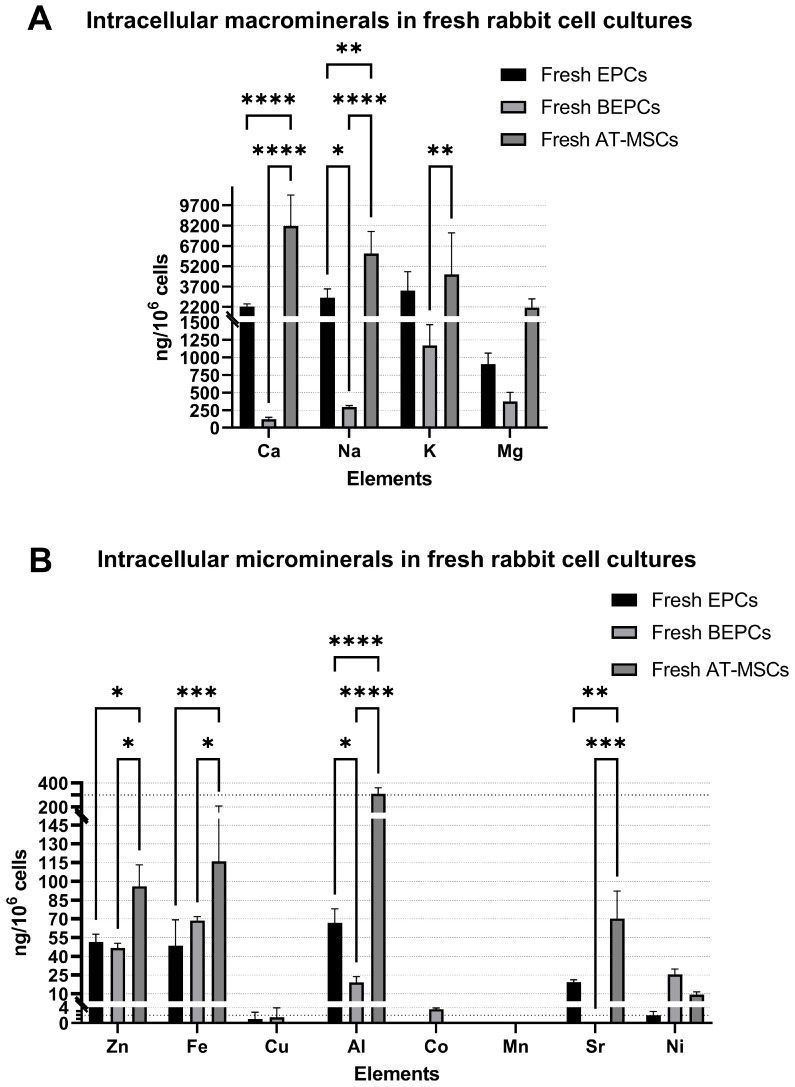
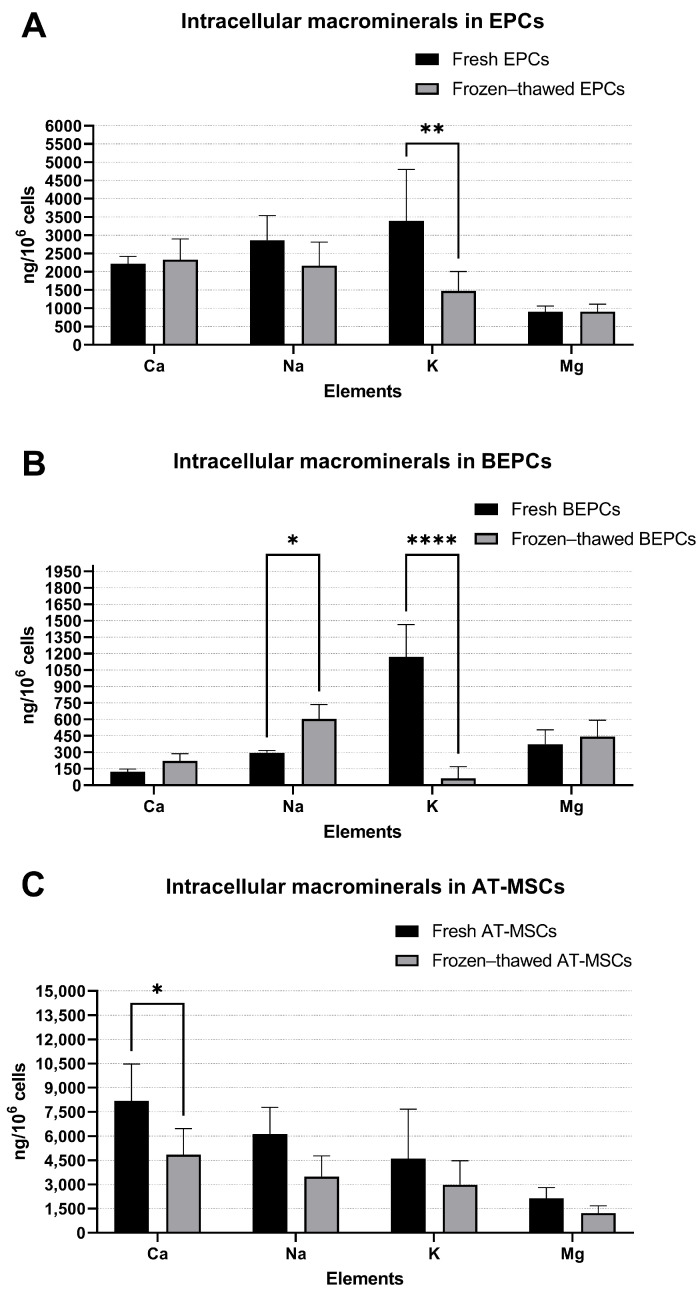
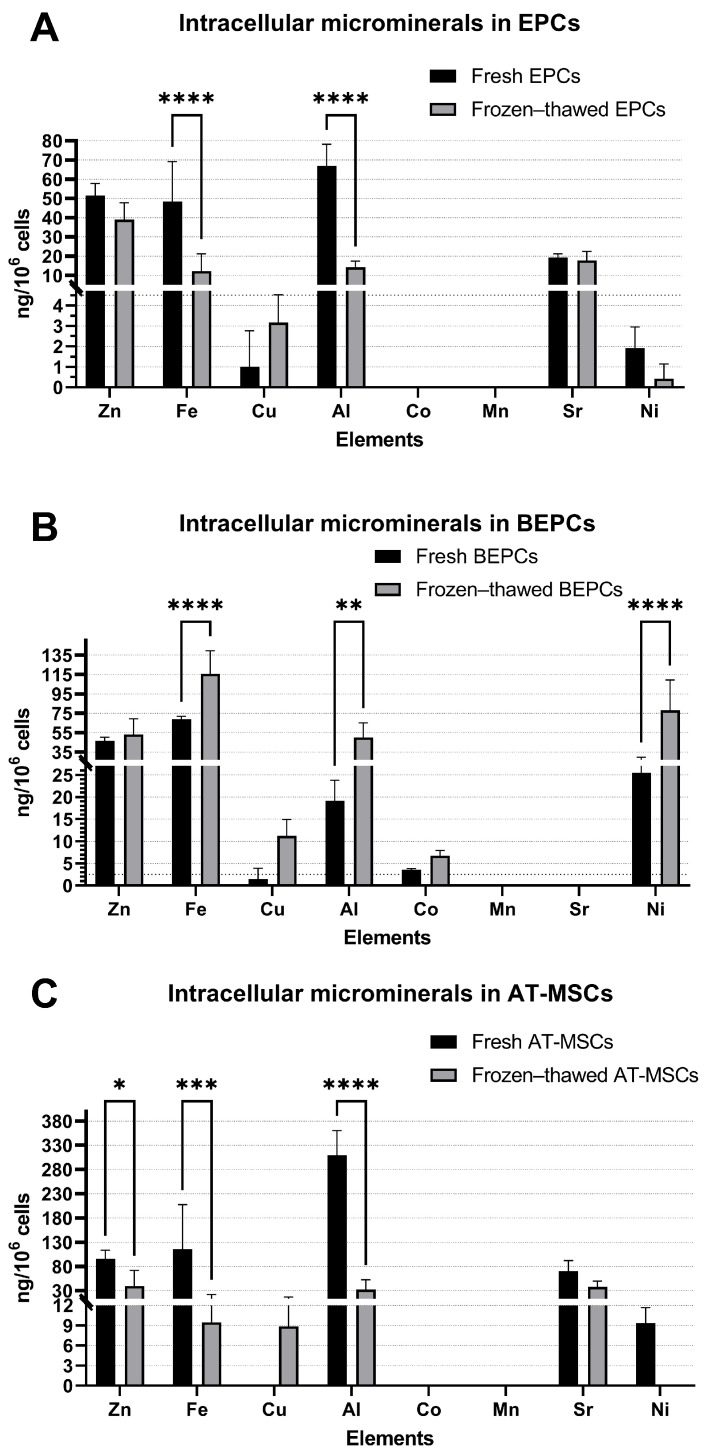
Cryopreservation is a widely used method for the long-term preservation of reproductive or somatic cells. It is known that this storage method may negatively affect cell viability, proliferation, differentiation, etc. However, there is a lack of information about whether cryostorage can alter the content of intracellular minerals. Therefore, we focused this study on the analysis of the mineral composition of living cells before and after long-term cold storage. Briefly, three different primary cell lines were established from rabbits as follows: endothelial progenitor cells from peripheral blood (EPCs), endothelial progenitor cells from bone marrow (BEPCs), and mesenchymal stem cells from adipose tissue (AT-MSCs), which were cultured until passage 3 prior to cryopreservation in liquid nitrogen. Samples from freshly cultured and frozen-thawed cells were mineralized and analyzed using inductively coupled plasma-optical emission spectroscopy (ICP-OES) for the content of minerals (macro: Ca, Na, K, and Mg, and micro: Zn, Fe, Cu, Al, Co, Mn, Sr, and Ni). After cryopreservation, we found significantly decreased content of K in frozen-thawed EPCs (p < 0.01) and BEPCs (p < 0.0001) and Ca in AT-MSCs (p < 0.05), while Na was increased in frozen-thawed BEPCs (p < 0.05). Concentrations of Fe and Al were reduced significantly in frozen-thawed EPCs (both p < 0.0001) and AT-MSCs (p < 0.001 and p < 0.0001, respectively). On the contrary, Fe and Al were elevated in frozen-thawed BEPCs (p < 0.0001 and p < 0.01, respectively) together with Ni (p < 0.0001). In addition, decreased Zn (p < 0.05) was observed in cryopreserved AT-MSCs. In conclusion, the ICP-OES technique might be used to analyze the basic elemental composition of animal cells in fresh or frozen-thawed conditions. Nevertheless, additional studies are needed to reveal the possible impact of cryopreservation on cell fate by changing the content of intracellular minerals.
Keywords: ICP-OES; cryopreservation; minerals; rabbit; stem cells.
Conflict of interest statement
The authors declare no conflicts of interest.
Figures
References
-
- Saha S.K., Pathak N.N. Fundamentals of Animal Nutrition. Springer; Singapore: 2021. Chemicals of Life and Chemical Reactions in the Animal Cells; pp. 13–19.
-
- Nieder R., Benbi D.K., Reichl F.X. Soil Components and Human Health. Springer; Dordrecht, The Netherlands: 2018. Microelements and Their Role in Human Health; pp. 317–374.
-
- Spears J. Reevaluation of the metabolic essentiality of the minerals—Review. Asian-Australas. J. Anim. Sci. 1999;12:1002–1008. doi: 10.5713/ajas.1999.1002. - DOI
-
- Combs G.F., Jr. Essentials of Medical Geology: Revised Edition. Springer; Dordrecht, The Netherlands: 2012. Geological impacts on nutrition; pp. 179–194.
Grants and funding
- APVV-18-0146/Slovak Research and Development Agency
- APVV-23-0141/Slovak Research and Development Agency
- VEGA 1/0160/18/Scientific Grant Agency of the Ministry of Education, Science, Research and Sport of the Slovak Republic and Slovak Academy of Sciences
- VEGA 1/0011/23/Scientific Grant Agency of the Ministry of Education, Science, Research and Sport of the Slovak Republic and Slovak Academy of Sciences
LinkOut - more resources
Full Text Sources
Research Materials
