


Independent risk factors for placental abruption: a systematic review and meta-analysis
- PMID: 40140972
- PMCID: PMC11938633
- DOI: 10.1186/s12884-025-07482-7
Independent risk factors for placental abruption: a systematic review and meta-analysis
Abstract
Background: Placental abruption is one of the most severe complications during pregnancy, and its associated risk factors remain incompletely understood and somewhat controversial.
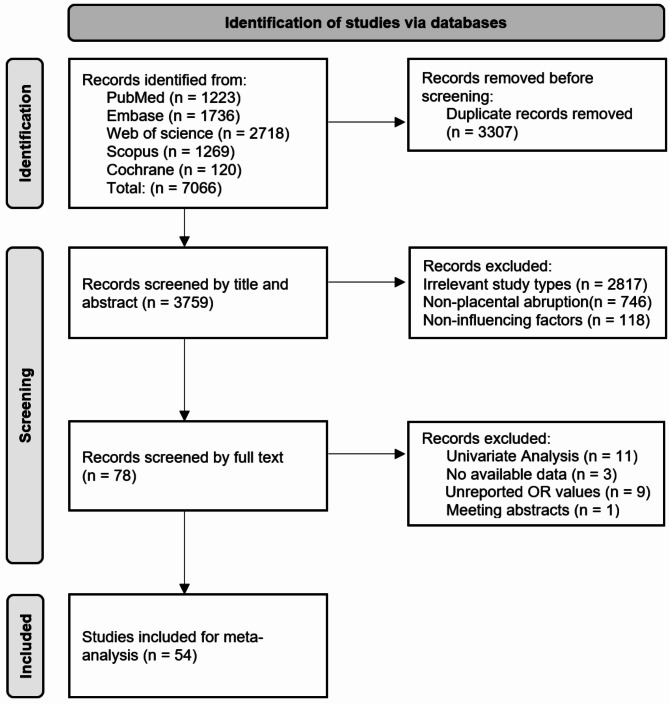
Methods: This study conducted a systematic search of the PubMed, Embase, Cochrane, Web of Science, and Scopus databases to collect literature related to placental abruption, with a cutoff date of July 30, 2024.
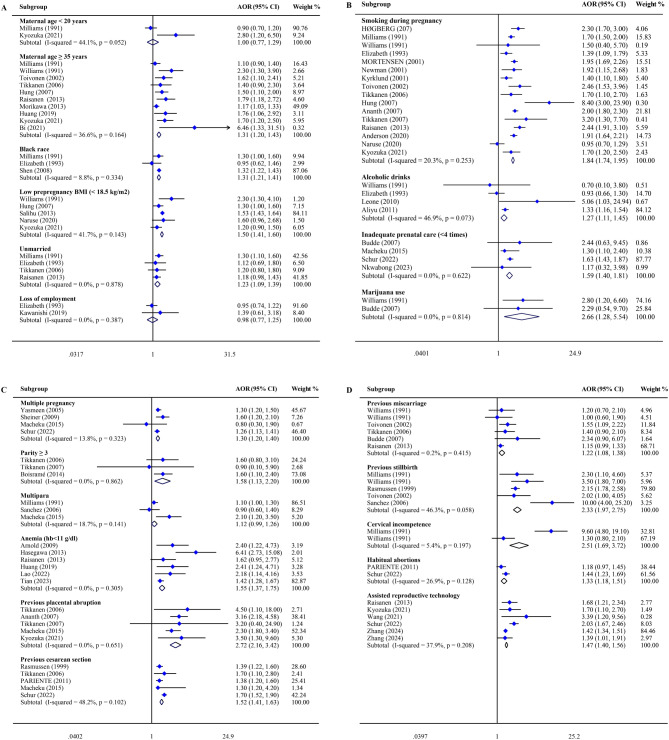
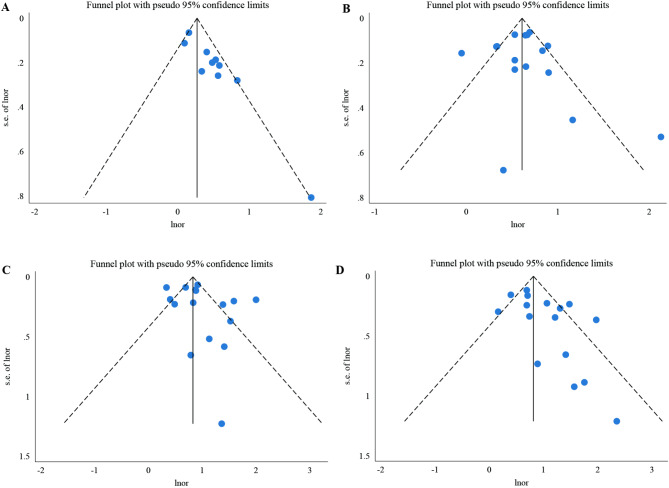
Results: A total of 54 observational studies were included, covering 7,267,241 pregnant women, with 47,702 cases diagnosed with placental abruption. The study identified three categories of independent risk factors: The first category includes baseline maternal characteristics (18 items), such as maternal age ≥ 35 years, black race, low prepregnancy BMI (< 18.5 kg/m²), unmarried status, smoking during pregnancy, alcohol consumption, inadequate prenatal care (< 4 visits), marijuana use, multiple pregnancy, parity ≥ 3, anemia (hemoglobin < 11 g/dL), previous placental abruption, previous cesarean section, previous miscarriage, previous stillbirth, cervical incompetence, habitual abortions, and assisted reproductive technology. Among these, previous placental abruption (AOR = 2.72, 95% CI [2.16, 3.42]) was found to be the most significant risk factor. The second category includes pregnancy-related complications (7 items), such as preterm premature rupture of membranes, preeclampsia, small for gestational age, polyhydramnios, antepartum hemorrhage, gestational hypertension, and placenta previa. Of these, placenta previa (AOR = 7.31, 95% CI [4.78, 11.19]) was identified as the most significant risk factor. The third category consists of other independent risk factors (33 items) and protective factors (3 items). However, methodological inconsistencies and publication bias in the current studies may affect the reliability of the meta-analysis results.
Conclusion: This study summarizes 58 independent risk factors for placental abruption, covering various aspects such as maternal baseline characteristics and pregnancy complications. For these high-risk populations, it is essential to strengthen the frequency of prenatal check-ups, establish early warning systems, and provide targeted health guidance. Future research should further refine risk factor models and develop more targeted preventive strategies to reduce the incidence of placental abruption and improve maternal and neonatal outcomes.
Prospero: CRD42024546514.
Clinical trial number: Not applicable.
Keywords: Independent risk factors; Meta-analysis; Placental abruption; Systematic review.
© 2025. The Author(s).
Conflict of interest statement
Declarations. Ethics approval and consent to participate: Not applicable. Consent for publication: Not applicable. Competing interests: The authors declare no competing interests.
Figures

References
-
- Tikkanen M. Placental abruption: epidemiology, risk factors and consequences. Acta Obstet Gynecol Scand. 2011;90(2):140–9. - PubMed
-
- Riihimäki O, Paavonen J, Luukkaala T, Gissler M, Metsäranta M, Andersson S, et al. Mortality and causes of death among women with a history of placental abruption. Acta Obstet Gynecol Scand. 2017;96(11):1315–21. - PubMed
-
- Ushiro S, Suzuki H, Ueda S. Japan obstetric compensation system for cerebral palsy: strategic system of data aggregation, investigation, amelioration and no-fault compensation. J Obstet Gynaecol Res. 2019;45(3):493–513. - PubMed
Publication types
MeSH terms
Grants and funding
LinkOut - more resources
Full Text Sources
