


Antiviral Effects of Tecovirimat and Cellular Ultrastructural Changes in Human Bronchial Epithelial Cell Line Following Monkeypox Virus Infection
- PMID: 40141361
- PMCID: PMC11942983
- DOI: 10.3390/ijms26062718
Antiviral Effects of Tecovirimat and Cellular Ultrastructural Changes in Human Bronchial Epithelial Cell Line Following Monkeypox Virus Infection
Abstract
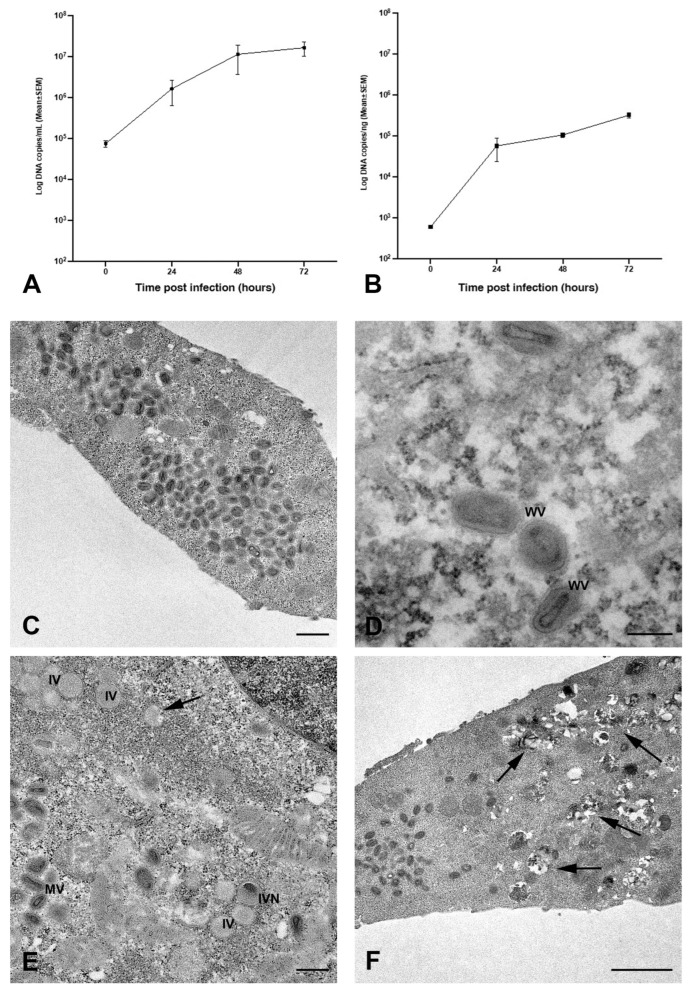
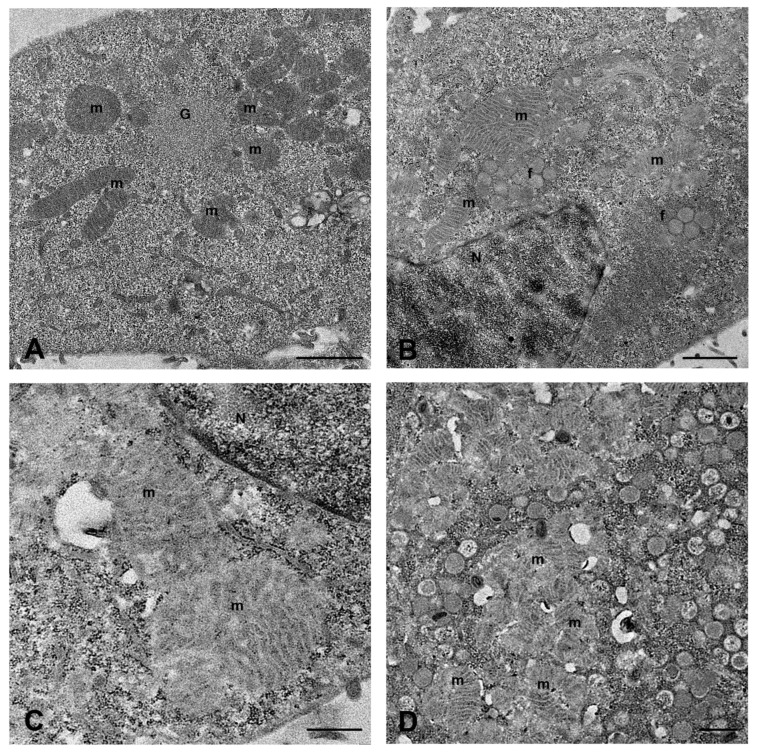
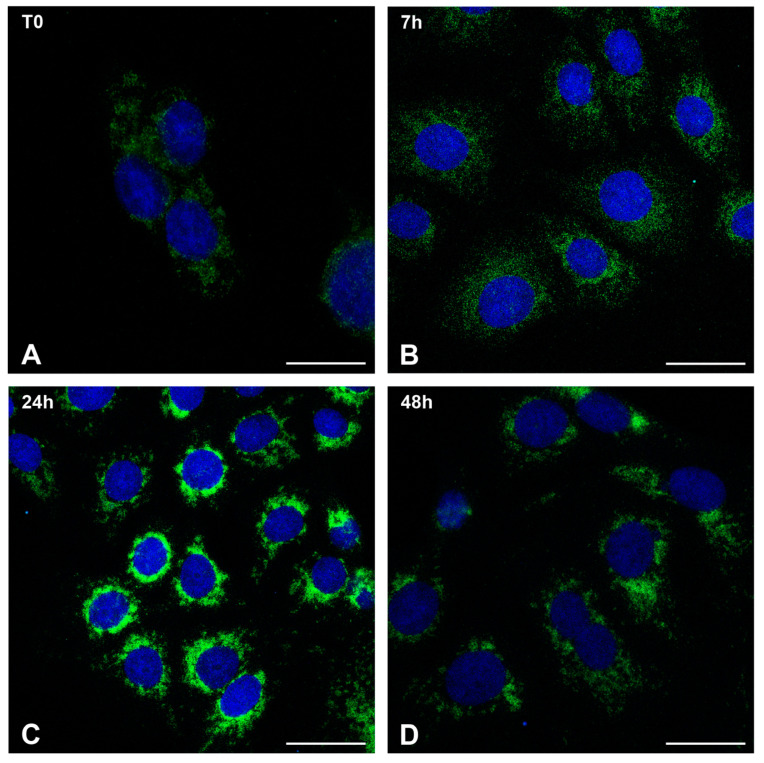
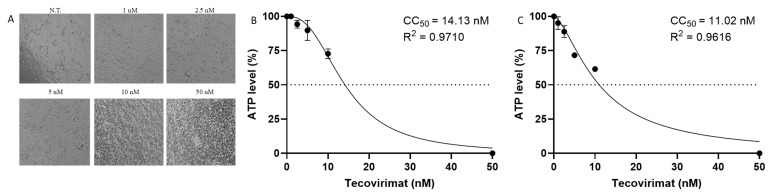
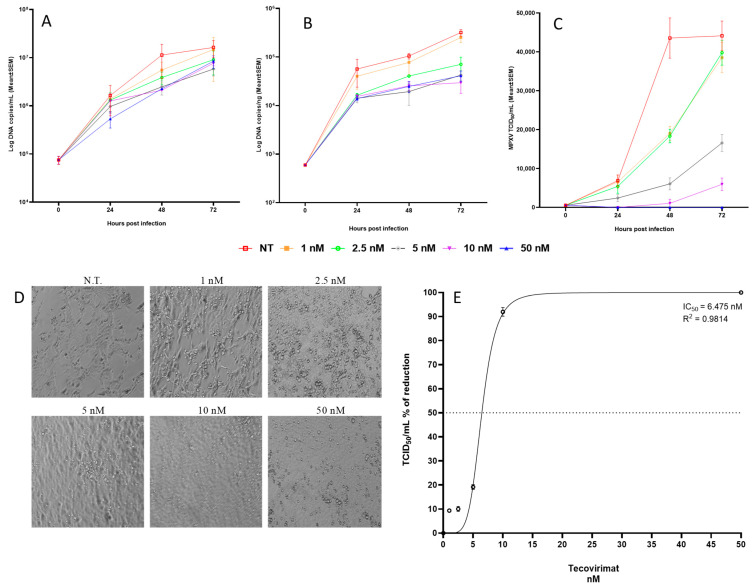
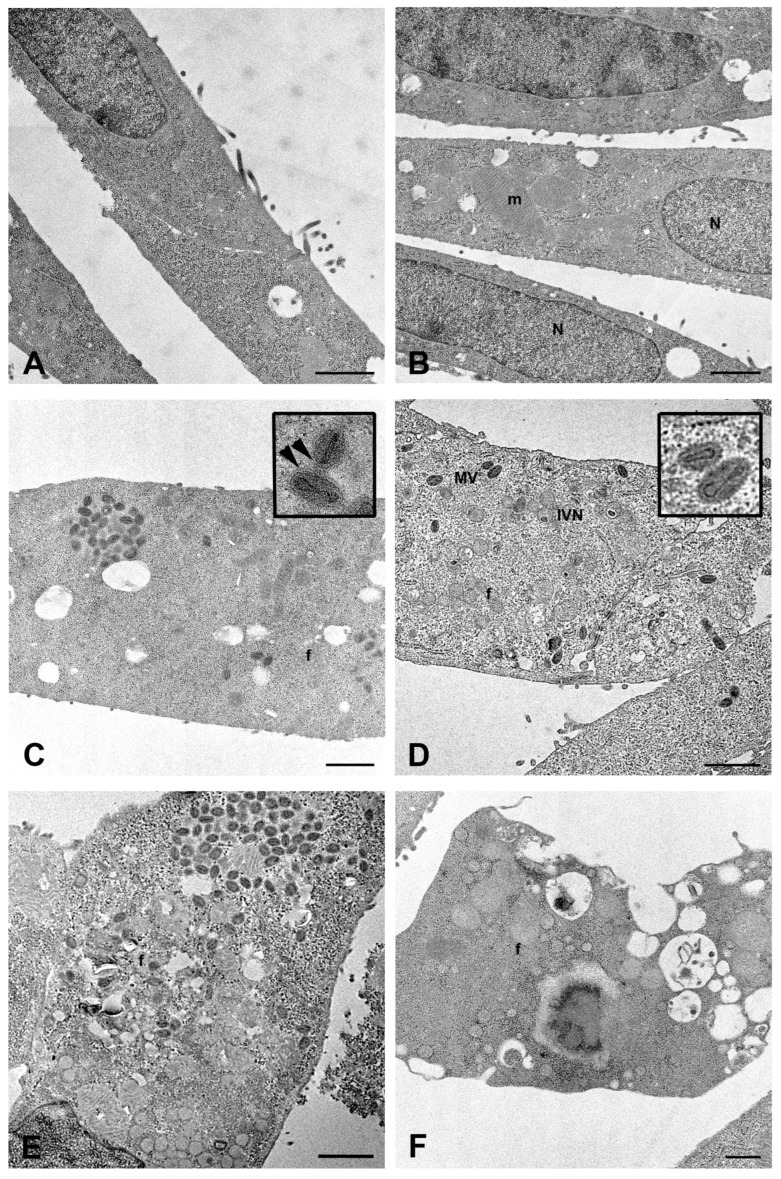
The mpox virus (MPXV) Clade IIb outbreak in 2022 was the biggest one ever to occur outside Africa, causing different types of clinical symptoms and levels of disease severity. There is no currently approved treatment for mpox, but Tecovirimat has proven effective against known orthopoxviruses in several animal models and Vero cell cultures. Since serious complications, including lung involvement, have been reported, especially in immunocompromised people, we investigated the effects of MPXV infection on the in vitro model of lung airway epithelium (Calu-3 cell line) and examined MPXV replication kinetic and related ultrastructural changes, also performing dose-response studies to measure Tecovirimat antiviral activity. Our results highlighted an active replication of MPXV in Calu-3 cells linked to mitochondrial structural modifications with perinuclear relocation and the formation of cytoplasmic vacuoles. Treatment with Tecovirimat consistently reduced viral replication both in supernatants (81%) and inside cells (77%) and ultimately stopped viral infectivity (92% of cytopathic effect reduction) after 48 h of infection. Drug administration inhibited the final wrapping of mature viral particles, causing extensive cytoplasmic vacuolation. Our results demonstrated Tecovirimat's in vitro effectiveness against MPXV at the nanomolar concentration on Calu-3 cells. This suggests a potential rationale for using this drug for patients with mpox severe disease and lung involvement.
Keywords: Calu-3 cells; MPXV; antiviral activity; electron microscopy; mitochondria; mpox disease; tecovirimat.
Conflict of interest statement
The authors declare that they have no known competing financial interests or personal relationships that could have appeared to influence the work reported in this paper.
Figures
References
-
- ICoToV Virus Taxonomy: 2023 Release. [(accessed on 11 July 2023)]. Available online: https://talk.ictvonline.org/taxonomy.
-
- Adler H., Gould S., Hine P., Snell L.B., Wong W., Houlihan C.F., Osborne J.C., Rampling T., Beadsworth M.B., Duncan C.J., et al. Clinical features and management of human monkeypox: A retrospective observational study in the UK. Lancet Infect. Dis. 2022;22:1153–1162. doi: 10.1016/S1473-3099(22)00228-6. - DOI - PMC - PubMed
-
- World Health Organization Mpox (Monkeypox) Outbreak 2022-Global. 2022. [(accessed on 11 July 2023)]. Available online: https://www.who.int/emergencies/situations/monkeypox-oubreak-2022.
-
- Antinori A., Mazzotta V., Vita S., Carletti F., Tacconi D., Lapini L.E., D’Abramo A., Cicalini S., Lapa D., Pittalis S., et al. Epidemiological, clinical and virological characteristics of four cases of monkeypox support transmission through sexual contact, Italy, May 2022. Euro. Surveill. 2022;27:2200421. doi: 10.2807/1560-7917.ES.2022.27.22.2200421. - DOI - PMC - PubMed
MeSH terms
Substances
Grants and funding
LinkOut - more resources
Full Text Sources
