


Analysis of Morbidity and Mortality Due to Yellow Fever in Brazil
- PMID: 40143370
- PMCID: PMC11945936
- DOI: 10.3390/v17030443
Analysis of Morbidity and Mortality Due to Yellow Fever in Brazil
Abstract
Introduction: Yellow fever (YF) is a viral hemorrhagic fever transmitted by mosquitoes, characterized by a high mortality due to kidney and liver failure, massive coagulation disorders, and hemorrhages. With no specific treatment, prevention through vaccination and vector control is essential. This study investigates the epidemiology of YF in Brazil from 2011 to 2020, focusing on its trends and distribution across the territory.
Methods: This ecological time-series study analyzed confirmed YF cases in Brazil's 27 federative units between 2011 and 2020. Data were sourced from DATASUS, IBGE, and IPEA. Incidence rates per 100,000 inhabitants were calculated, and various sociodemographic and health indicators were analyzed. Prais-Winsten autoregressive models assessed the trends, while a spatial analysis identified the risk areas using global and local Moran's I statistics. The data were processed using Stata and GeoDa® software, version 1.12.
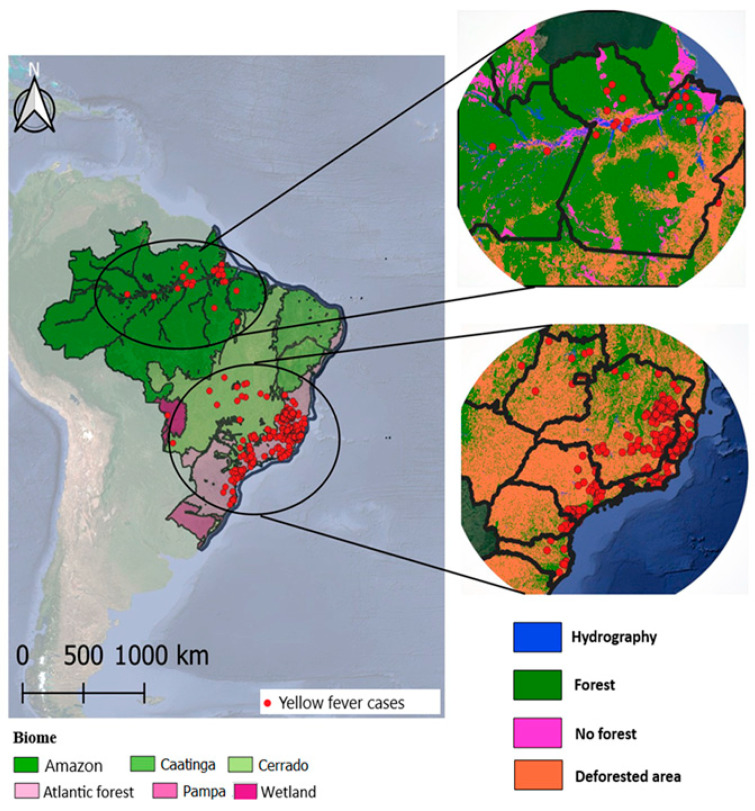
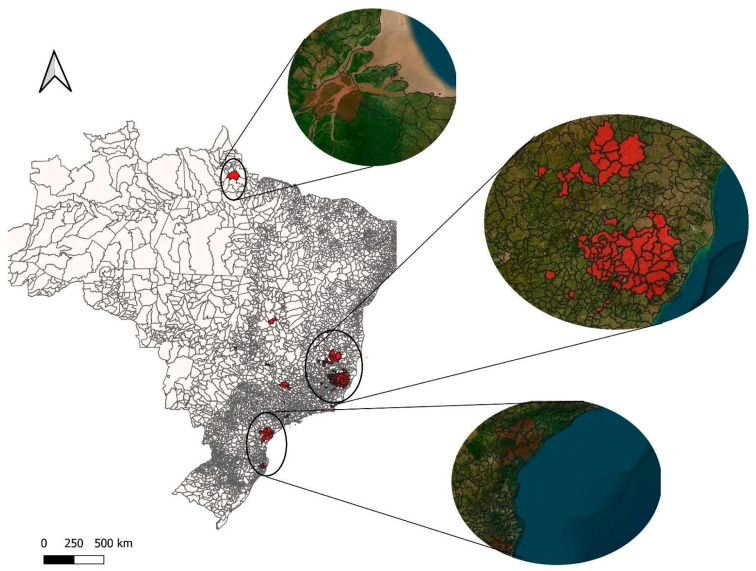
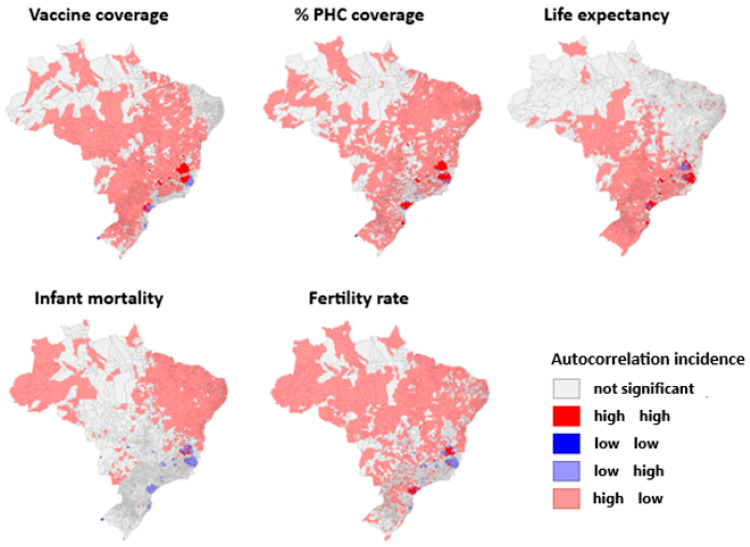
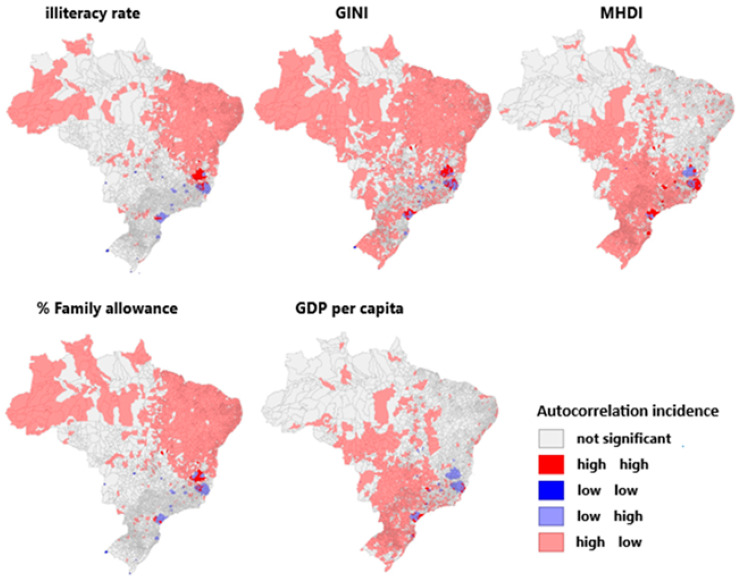
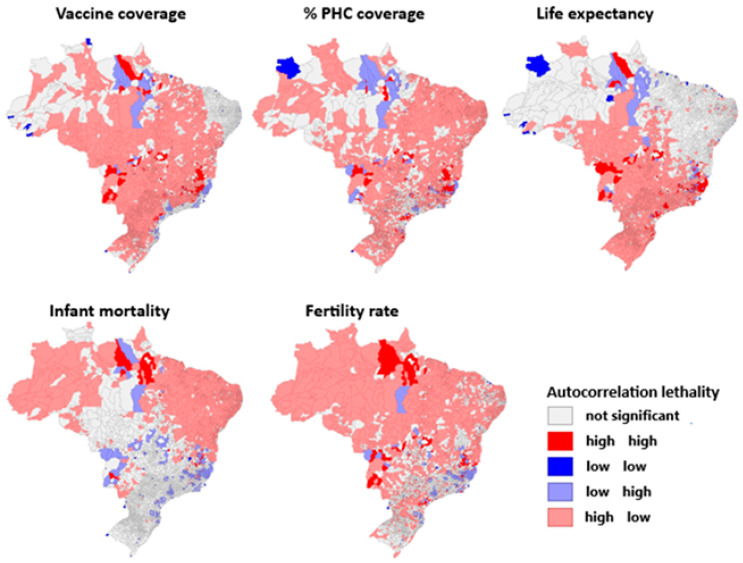
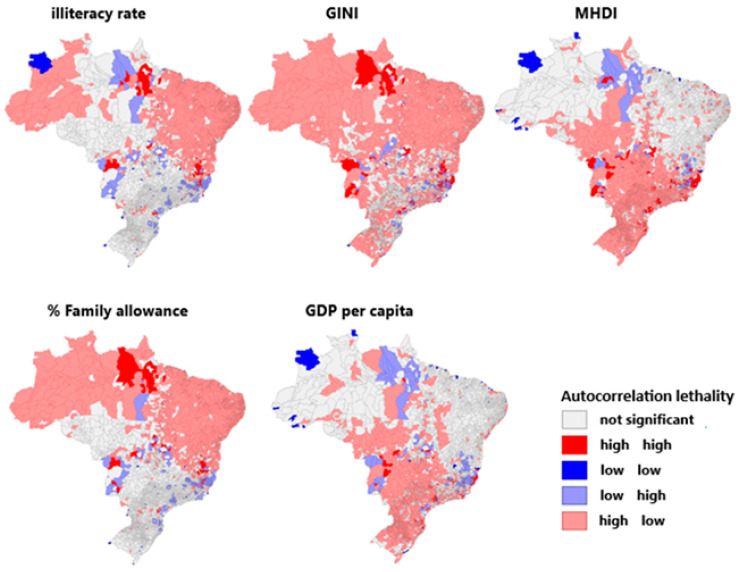
Results: YF cases were concentrated in the Amazon and Atlantic Forest biomes. The majority of the cases occurred in males (83.3%), non-white individuals (94.3%), and rural workers. Pará showed an increasing trend in incidence. A higher vaccination coverage correlated with a lower YF incidence, though endemic areas with good vaccination coverage still exhibited high rates. Health and socioeconomic indicators were inversely related to incidence, highlighting disparities in regional development.
Conclusion: Effective YF control requires multidisciplinary strategies, including expanded vaccination coverage, intensified vector control, and active surveillance. Research should focus on developing better vaccines, monitoring immunity, and improving the global response coordination.
Keywords: environmental health; epidemiology; socioeconomic factors; vaccination; yellow fever.
Conflict of interest statement
The authors declare no conflicts of interest.
Figures
References
-
- Vasconcelos P.F.D.C., Quaresma J.A.S. Infectious Tropical Diseases and One Health in Latin America. Springer International Publishing; Cham, Switzerland: 2022. Yellow fever; pp. 1–17. - DOI
-
- International Committee on Taxonomy of Viruses (ICTV) Virus Taxonomy: 2025 Release. 2025. [(accessed on 26 February 2025)]. Available online: https://ictv.global/report/chapter/flaviviridae/flaviviridae/orthoflaviv....
-
- Klitting R., Fischer C., Drexler J.F., Gould E.A., Roiz D., Paupy C., de Lamballerie X. What Does the Future Hold for Yellow Fever Virus? Unité des Virus Émergents (UVE: Aix-Marseille Univ–IRD 190–Inserm 1207–IHU Méditerranée Infection); Marseille, France: 2018.
-
- Bollati M., Alvarez K., Assenberg R., Baronti C., Canard B., Cook S., Coutard B., Decroly E., de Lamballerie X., Gould E.A., et al. Structure and functionality in flavivirus NS proteins: Perspectives for drug design. Antivir. Res. 2010;87:125–148. doi: 10.1016/j.antiviral.2009.11.009. - DOI - PMC - PubMed
Publication types
MeSH terms
LinkOut - more resources
Full Text Sources
