


Surface Versus Penetrative rTMS Stimulation May Be More Effective for AD Patients with Cerebrovascular Disease
- PMID: 40143889
- PMCID: PMC11938491
- DOI: 10.1177/26331055251328355
Surface Versus Penetrative rTMS Stimulation May Be More Effective for AD Patients with Cerebrovascular Disease
Abstract
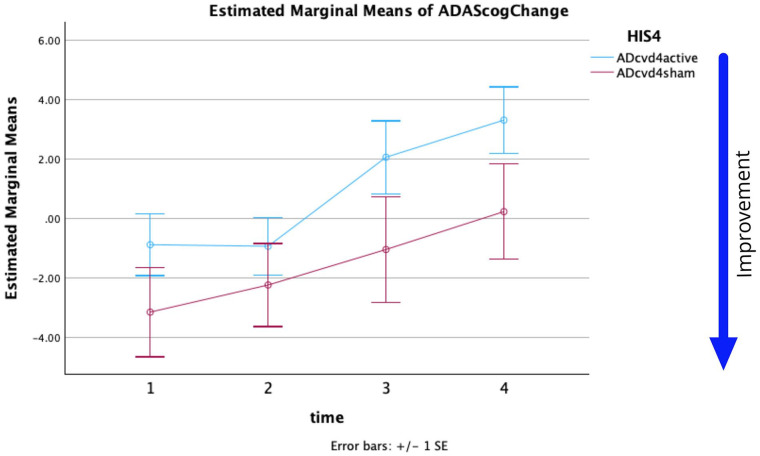
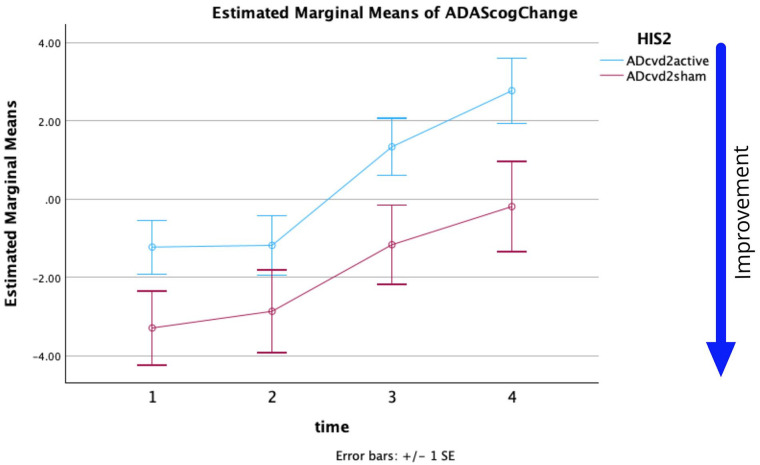
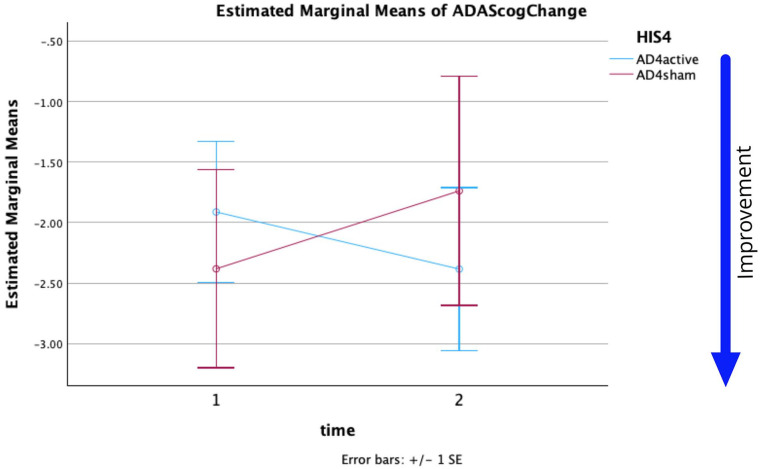
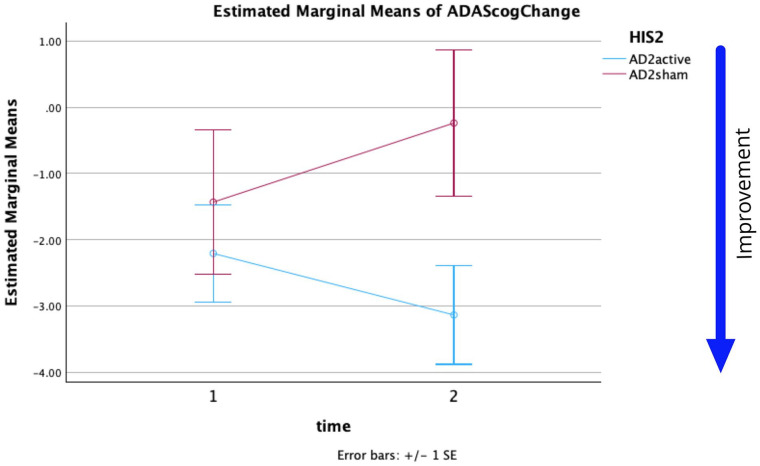
Repetitive Transcranial Magnetic Stimulation (rTMS) has been applied as an investigational therapy for Alzheimer's Disease (AD). The recent largest (N = 135) double-blind study with 6 months post-treatment follow-up investigating rTMS efficacy as a treatment for AD found about 72% of participants in each group of active and sham were positively responsive to rTMS (using Magstim AirFilm active and sham coils). Since the used sham coil produced about 25.3% of the peak active stimulus, it was hypothesized it could evoke a measurable response in AD patients. This study looks at the details of the above study's sham responses to determine why and how such a response might occur and how cerebrovascular symptomatology may have impacted that response. In the above-mentioned study, 90 and 45 patients were randomly assigned to active and sham groups, respectively. Those with modified Hachinski Ischemic Scores (HIS) below and above 2 were labeled AD2 and ADcvd2, respectively. Analysis of the primary outcome measure ADAS-Cog score change from baseline to post-treatment and follow-ups showed the ADcvd2 in the sham group had a significantly (p = .034) greater improvement or less decline at post-treatment and follow-up sessions compared to the ADcvd2 in the active group. Additionally, the improvement of the ADcvd2 sham compared to those in the active group persisted longer. Also, there was a significant (p = .036) improvement for AD2 individuals in the active compared to AD2 sham stimulation group at 2-months post-treatment. Overall, the sham rTMS stimulus did evoke a measurable response which was more effective for ADcvd2 in sham than ADcvd2 in active support of a vascular mechanism likely linked to the shallower sham stimulus penetration.
Keywords: ADAScog; Alzheimer’s Disease; cerebrovascular disease; rTMS.
© The Author(s) 2025.
Conflict of interest statement
The author(s) declared no potential conflicts of interest with respect to the research, authorship, and/or publication of this article.
Figures
References
-
- Hallett M. Transcranial magnetic stimulation and the human brain. Nature. 2000;406(6792):147-150. - PubMed
-
- Zhang F, Qin Y, Xie L, et al.. High-frequency repetitive transcranial magnetic stimulation combined with cognitive training improves cognitive function and cortical metabolic ratios in Alzheimer’s disease. J Neural Transm (Vienna). 2019;126(8):1081-1094. - PubMed
-
- Li X, Qi G, Yu C, et al.. Cortical plasticity is correlated with cognitive improvement in Alzheimer’s disease patients after rTMS treatment. Brain Stimul. 2021;14(3):503-510. - PubMed
LinkOut - more resources
Full Text Sources
