


Being touched by death while giving birth to life: A meta-ethnography exploring women's experiences with postpartum hemorrhage
- PMID: 40144802
- PMCID: PMC11938736
- DOI: 10.18332/ejm/200615
Being touched by death while giving birth to life: A meta-ethnography exploring women's experiences with postpartum hemorrhage
Abstract
Introduction: Postpartum hemorrhage (PPH) is a serious complication following childbirth and the most common cause of maternal mortality globally. Women who survive PPH have an increased risk of enduring long-term physical and psychological consequences. This meta-ethnography aimed to investigate women's experiences of postpartum hemorrhage to develop new insights and understanding of women's needs for care and follow-up after a PPH.
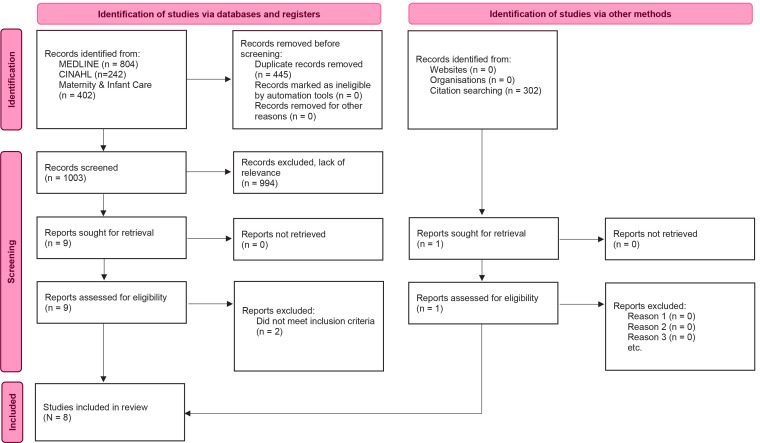
Methods: A meta-ethnography was carried out in accordance with Noblit and Hare's seven phases and the eMERGe reporting guidance. Comprehensive literature searches were conducted in MEDLINE, CINAHL, and Maternity and Infant Care, in January 2024. A PRISMA flowchart was used to illustrate the search process and quality assessment was performed according to CASP.
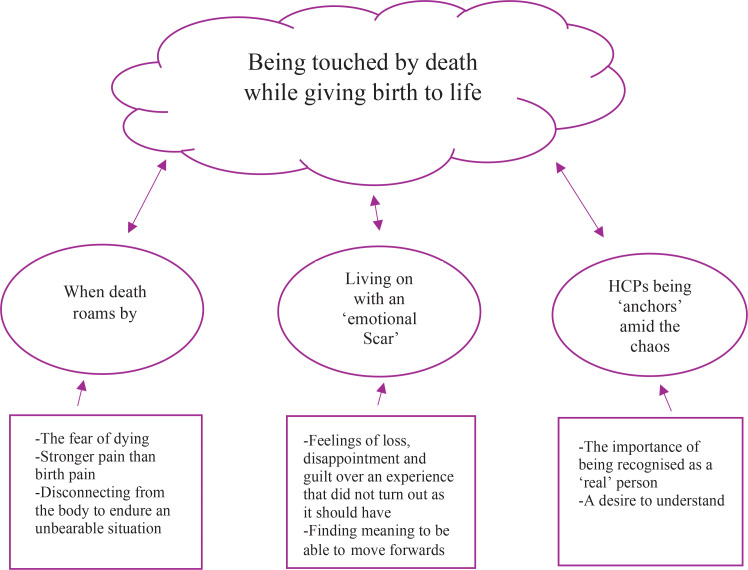
Results: Eight studies were included based on specific inclusion criteria. The analysis and synthesis led to the overarching metaphor of 'Being touched by death while giving birth to life' encompassing three main themes. The first theme, 'When death roams by' described women's experiences with PPH as an encounter with death, leading to fear and severe pain. The second theme 'Living on with an emotional scar' indicated how PPH was an experience leaving deep impact in a person. The final theme, 'Healthcare providers as anchors amid the chaos', described that women valued healthcare professionals who demonstrated empathy and good communication skills.
Conclusions: Our study emphasizes the importance of healthcare providers, particularly midwives, providing empathetic care to aid women in recovering from postpartum hemorrhage.
Keywords: existential experience; meta-ethnography; postpartum haemorrhage; qualitative; traumatic birth.
© 2025 Allum K.E. et al.
Conflict of interest statement
The authors have each completed and submitted an ICMJE form for Disclosure of Potential Conflicts of Interest. The authors declare that they have no competing interests, financial or otherwise, related to the current work. B. Dahl reports receiving support for the language editing and publication fee from the University of South-Eastern Norway.
Figures
References
-
- World Health Organization . WHO recommendations for the prevention and treatment of postpartum haemorrhage. WHO; 2012. Accessed October 31, 2024. https://iris.who.int/bitstream/handle/10665/75411/9789241548502_eng.pdf?... - PubMed
-
- World Health Organization . A roadmap to combat postpartum haemorrhage between 2023 and 2030. WHO; 2023. Accessed October 31, 2024. https://iris.who.int/bitstream/handle/10665/373221/9789240081802-eng.pdf...
Publication types
LinkOut - more resources
Full Text Sources
Miscellaneous