


Validation of the intolerance of uncertainty scale-12 in a sample of pregnant people
- PMID: 40148844
- PMCID: PMC11948860
- DOI: 10.1186/s12884-025-07434-1
Validation of the intolerance of uncertainty scale-12 in a sample of pregnant people
Abstract
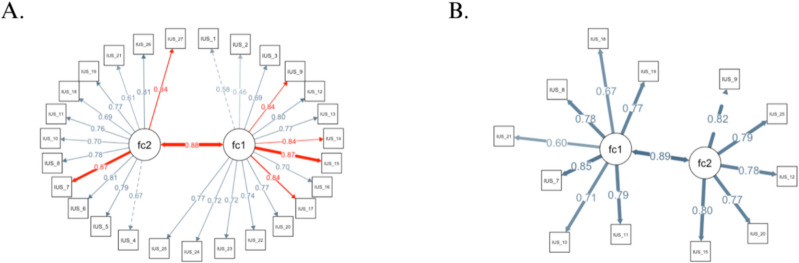
Background: Intolerance of uncertainty (IU) has been proposed as a transdiagnostic mechanism driving anxiety, depression, and eating disorder symptoms. Pregnancy is a time of significant uncertainty, yet few studies have examined the measurement of IU and its impacts on pregnant people. The current study aimed to examine the psychometric performance of two versions of the Intolerance of Uncertainty Scale (IUS-27 and IUS-12) and their associations with psychopathologies common in pregnancy.
Methods: This study is a secondary analysis of participants (n = 254) recruited for a larger study of a single-session intervention targeting disordered eating in pregnancy. We examined fit of participant baseline data with IUS-27 and IUS-12 factor structures using confirmatory factor analyses. We also assessed associations between IU and emotion dysregulation and depression and eating disorder symptoms, controlling for age, parity, and perceived social status.
Results: The IUS-12 provided superior fit to the data (CFI = 0.95; TLI = 0.93; RMSEA = 0.09) compared to the IUS-27. The IUS-12 was significantly (all p < 0.05) correlated with measures of emotion dysregulation (r = 0.67), depression (r = 0.58), and eating disorders (r = 0.37). Inhibitory IU rather than prospective IU was generally significantly associated with greater psychopathology (ß range = 0.46 - 3.51, p's < 0.01).
Conclusions: Results from this study provide initial support for the IUS-12 as a valid measure of IU in pregnant people and suggest that IU is strongly associated with measures of depression, emotion dysregulation, and eating disorder behaviors in this population. Severe psychological distress in pregnancy has been linked to complications in gestation and delivery and overall poor birth outcomes. Clinicians and doctors should consider using the IUS-12 as a general measure of psychological distress among pregnant patients.
Trial registration: The trial from which these data were drawn is registered at clinicaltrials.gov, NCT06129461 (registered on November 10, 2023).
Keywords: Confirmatory factor analysis; Factor structure; Intolerance of uncertainty; Intolerance of uncertainty scale; Pregnancy.
© 2025. The Author(s).
Conflict of interest statement
Declarations. Ethics approval and consent to participate: All study procedures were approved by the Institutional Review Board at the University at Albany, State University of New York in accordance with the Helsinki Declaration. The Institutional Review Board granted a waiver of signed informed; all participants reviewed an informed consent form and indicated their consent to participate in the research by completing the study questionnaires. Consent for publication: All authors read and approved the final manuscript. Competing interests: The authors declare no competing interests.
Figures
References
-
- Abramowitz, J. S., Taylor, S., & McKay, D. (2009). Obsessive-compulsive disorder. Lancet. 374(9688), 491–499. 10.1016/S0140-6736(09)60240-3 - PubMed
-
- Birrell, J., Meares, K., Wilkinson, A., & Freeston, M. H. (2011). Toward a definition of intolerance of uncertainty: A review of factor analytical studies of the Intolerance of Uncertainty Scale. Clin Psych Rev. 31(7), 1198–1208. 10.1016/j.cpr.2011.07.009 - PubMed
Publication types
MeSH terms
Associated data
LinkOut - more resources
Full Text Sources
Medical
Miscellaneous
