


Spanish language version of the "Medical Quality Video Evaluation Tool" (MQ-VET): Cross-cultural AI-supported adaptation and validation study
- PMID: 40151147
- PMCID: PMC11951876
- DOI: 10.1177/00368504251327507
Spanish language version of the "Medical Quality Video Evaluation Tool" (MQ-VET): Cross-cultural AI-supported adaptation and validation study
Abstract
Background: The Medical Quality Video Evaluation Tool (MQ-VET) is a standardized instrument for assessing health-related video quality, yet it is only available in English. This study addresses the growing demand for a Spanish version to better support the increasing Spanish-speaking population seeking reliable digital health content.
Objective: To adapt and validate the MQ-VET into Spanish, ensuring robust psychometric reliability and validity through rigorous cross-cultural adaptation methods, augmented by the integration of artificial intelligence (AI) tools.
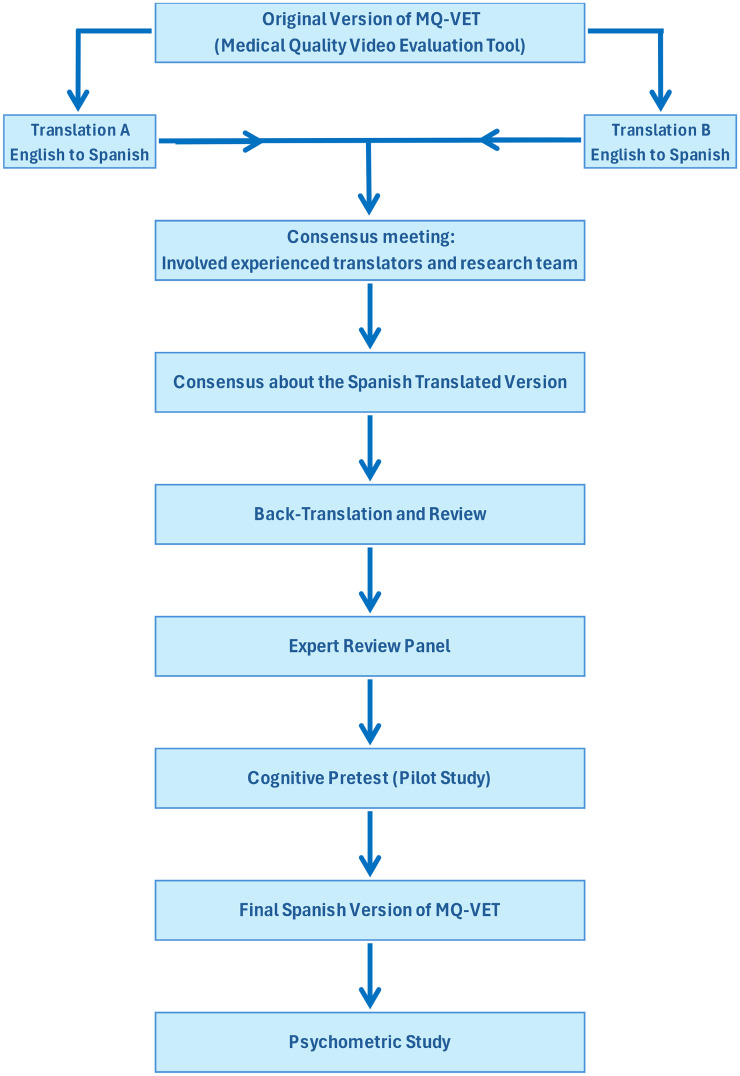
Materials and methods: Following international guidelines, the MQ-VET was translated, back-translated, and reviewed by experts. AI-based tools were employed to refine linguistic and cultural accuracy. Psychometric properties were evaluated by 60 participants (30 healthcare and 30 nonhealthcare professionals), focusing on reliability, agreement, and concurrent validity with the DISCERN instrument.
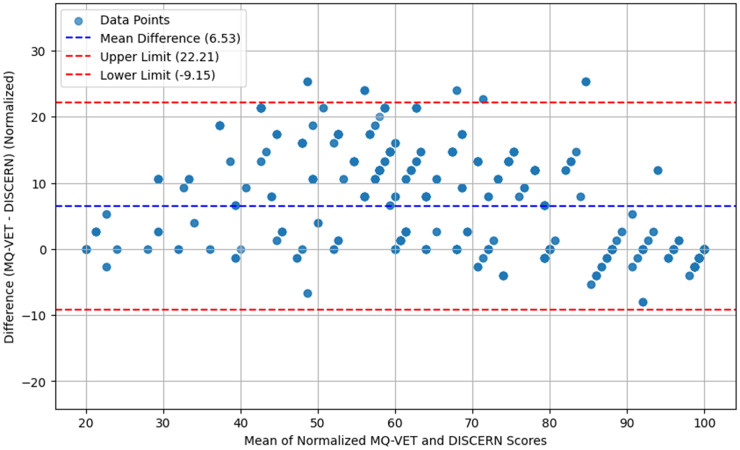
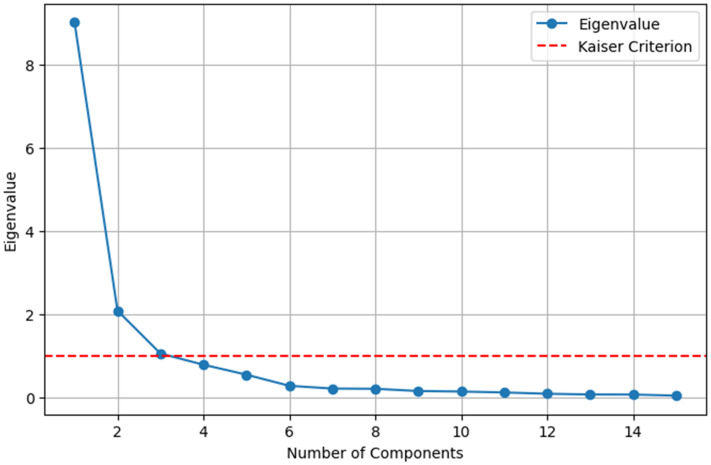
Results: The Spanish MQ-VET showed excellent reliability (Cronbach's alpha>0.90, ICC=0.81) and strong concurrent validity (Pearson r = 0.9435, Spearman r = 0.9482, p < 0.0001), alongside with a robust linear regression result (R²=0.8902). Bland-Altman analysis confirmed a robust agreement, and AI-driven tools performed the factorial analysis that revealed a clear three-factor structure explaining 81.1% of the variance.
Conclusions: The Spanish MQ-VET is a reliable and valid instrument for assessing the quality of health-related videos, applicable to both healthcare professionals and individuals outside the healthcare field. Leveraging AI-driven methodologies, it serves as a robust resource for enhancing digital health literacy and promoting critical appraisal of video content among Spanish-speaking populations.
Keywords: Spanish-language tools; Validation studies; artificial intelligence; cross-cultural adaptation; health literacy; health videos evaluation; healthcare education; psychometric analysis.
Conflict of interest statement
Declaration of conflicting interestsThe authors declared no potential conflicts of interest with respect to the research, authorship, and/or publication of this article.
Figures
References
-
- Statista. Number of internet users worldwide 2005-2023 [Internet]. Statista. 2023. [cited 2024 Nov 17]. Available from: https://www.statista.com/statistics/273018/number-of-internet-users-worl...
-
- Chen J, Wang Y. Social media use for health purposes: systematic review. J Med Internet Res 2021; 23. https://pubmed.ncbi.nlm.nih.gov/33978589/. [cited 2024 Nov 17]. - PMC - PubMed
-
- Madathil KC, Rivera-Rodriguez AJ, Greenstein JS, Gramopadhye AK. Healthcare information on YouTube: a systematic review. Health Inform J 2015; 21: 173–194. [cited 2024 Nov 17]. Available from: https://pubmed.ncbi.nlm.nih.gov/24670899/ - PubMed
-
- Osman W, Mohamed F, Elhassan M, Shoufan A. Is YouTube a reliable source of health-related information? A systematic review. BMC Med Educ 2022; 22. [cited 2024 Nov 17]. Available from: https://pubmed.ncbi.nlm.nih.gov/35590410/ - PMC - PubMed
Publication types
MeSH terms
LinkOut - more resources
Full Text Sources
