


Intimate Partner Violence Among Brazilian Trans and Cisgender Women Living with HIV or at HIV Risk During COVID-19 Era: Another Epidemic?
- PMID: 40151174
- PMCID: PMC11937771
- DOI: 10.1089/trgh.2023.0057
Intimate Partner Violence Among Brazilian Trans and Cisgender Women Living with HIV or at HIV Risk During COVID-19 Era: Another Epidemic?
Abstract
Purpose: Our study was conducted to estimate intimate partner violence (IPV) prevalence and associated factors among trans and cisgender women at risk of or living with HIV during the coronavirus disease (COVID-19) pandemic in Rio de Janeiro, Brazil.
Methods: A cross-sectional study was conducted between May and August 2020 through telephone surveys with cisgender and trans women enrolled in two cohort studies in Rio de Janeiro. We assessed IPV employing the Revised Conflict Tactics Scale during the initial months of shelter-in-place ordinances. Regression models evaluated the factors associated with IPV for each population.
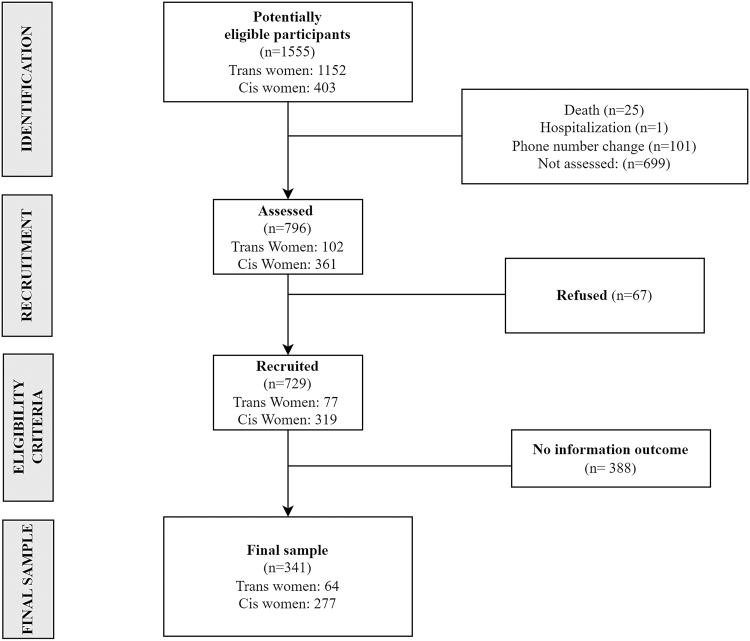
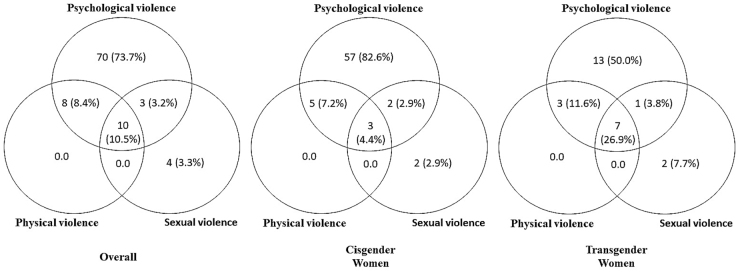
Results: We surveyed 796 women, and 341 participants (47.78%) were eligible and included in the current analysis. All cisgender women and 41 (64.06%) trans women were living with HIV. Overall IPV prevalence was 27.86% (95% confidence interval [95% CI] 23.34-32.88). IPV was 63% higher among trans women than among cisgender women (prevalence ratio 1.63, 95% CI 1.14-2.34, p=0.008). Loneliness was significantly associated with IPV in both groups. Younger age and binge drinking were associated with IPV prevalence among trans women. For cisgender women, IPV was associated with withdrawal of cash transfer programs during the shelter-in-place.
Conclusion: Trans women experienced significantly more IPV than cisgender women in the early phase of the COVID-19 epidemic. Plans to prevent and address violence against cisgender and trans women, especially those with heightened vulnerability that may be associated with living with HIV, are needed in public health planning for future pandemics.
Keywords: COVID-19; HIV; cisgender women; intimate partner violence; trans women.
© Ricardo de Mattos Russo Rafael et al. 2023; Published by Mary Ann Liebert, Inc.
Figures
References
LinkOut - more resources
Full Text Sources