


TsRNA-49-73-Glu-CTC: A promising serum biomarker in non-small cell lung cancer
- PMID: 40153423
- PMCID: PMC11952254
- DOI: 10.1371/journal.pone.0320187
TsRNA-49-73-Glu-CTC: A promising serum biomarker in non-small cell lung cancer
Abstract
Objective: Lung cancer has the highest incidence and mortality rates globally, with the majority of cases classified as non-small cell lung cancer (NSCLC). Due to the absence of specific tumor biomarkers, most lung cancer cases are diagnosed at an advanced stage. Therefore, the identification of novel molecular biomarkers with high sensitivity and specificity for early diagnosis is deemed crucial for enhancing the treatment of NSCLC. Transfer RNA-derived small RNA (tsRNA) is closely associated with malignant tumors and holds promise as a potential biomarker for tumor diagnosis. This study aimed to investigate whether serum tsRNA could serve as a biomarker for NSCLC.
Methods: Differentially expressed tsRNAs were identified through high-throughput sequencing of serum samples obtained from patients with NSCLC and healthy individuals. Additional serum samples were collected for validation using Reverse Transcription Quantitative Polymerase Chain Reaction (RT-qPCR). The diagnostic performance of these tsRNAs was assessed through Receiver Operating Characteristic (ROC) Curve Analysis. Furthermore, preliminary functional exploration was undertaken through cell experiments.
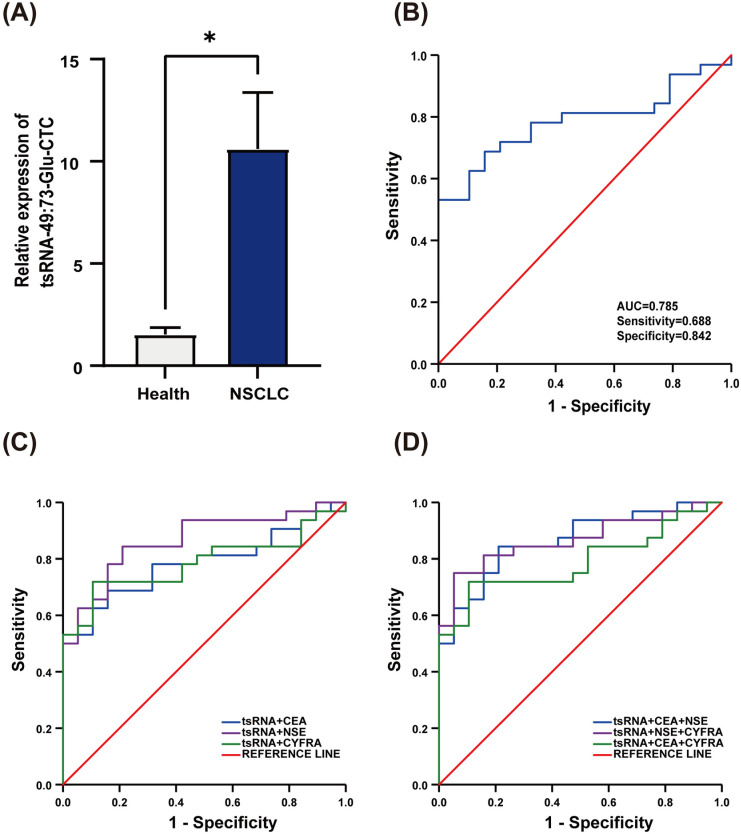
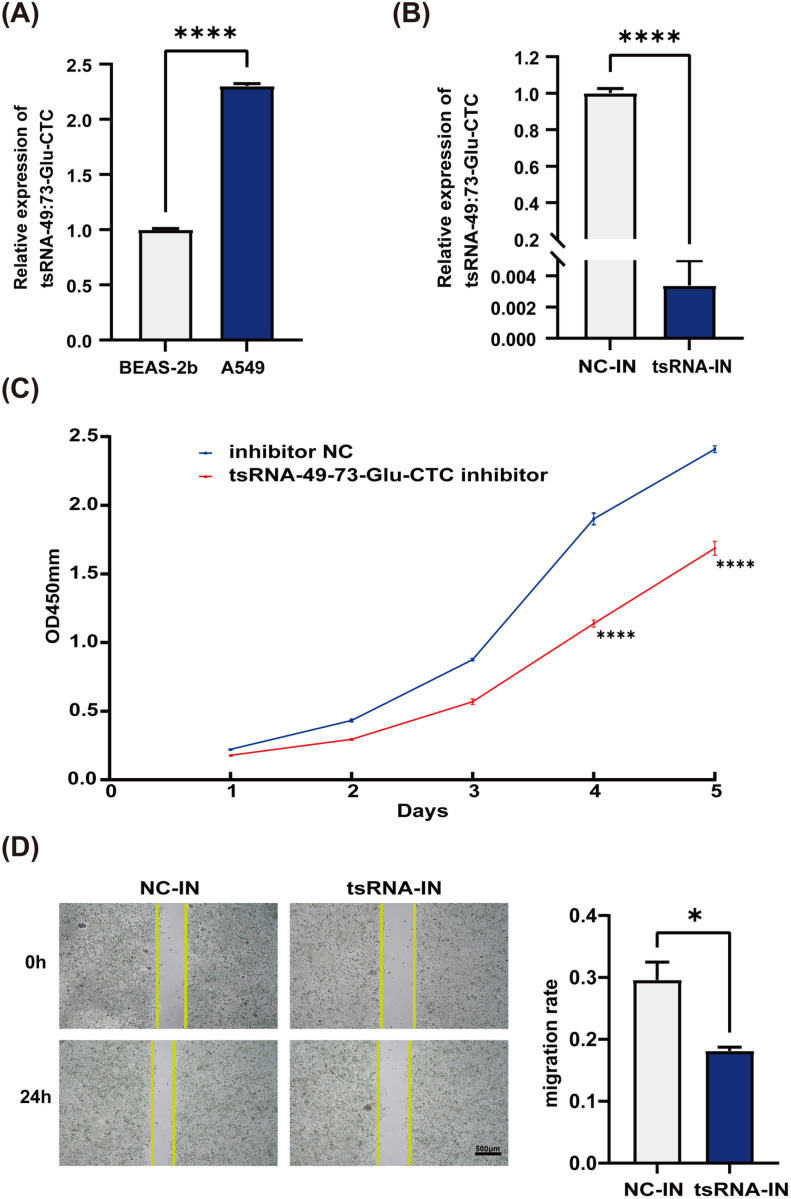
Results: tsRNA-49-73-Glu-CTC is highly expressed in the serum of patients with NSCLC and demonstrates superior diagnostic value compared to commonly used tumor markers in clinical practice, such as Carcinoembryonic Antigen (CEA), Neuron-Specific Enolase (NSE), and Cytokeratin 19 Fragment (CYFRA). A combined diagnostic approach enhances the accuracy of NSCLC detection. Additionally, tsRNA-49-73-Glu-CTC is highly expressed in A549 cells, and transfection with a tsRNA-49-73-Glu-CTC inhibitor significantly reduces both proliferation and migration capabilities.
Conclusions: tsRNA-49-73-Glu-CTC has the potential to serve as a novel molecular diagnostic biomarker for NSCLC and plays a significant role in the biological processes associated with NSCLC proliferation and migration.
Copyright: © 2025 Li et al. This is an open access article distributed under the terms of the Creative Commons Attribution License, which permits unrestricted use, distribution, and reproduction in any medium, provided the original author and source are credited.
Conflict of interest statement
The authors have declared that no competing interests exist.
Figures
References
-
- Allemani C, Matsuda T, Di Carlo V, Harewood R, Matz M, Nikšić M, et al. Global surveillance of trends in cancer survival 2000-14 (CONCORD-3): Analysis of individual records for 37 513 025 patients diagnosed with one of 18 cancers from 322 population-based registries in 71 countries. Lancet. 2018;391(10125):1023–75. doi: 10.1016/S0140-6736(17)33326-3 - DOI - PMC - PubMed
MeSH terms
Substances
LinkOut - more resources
Full Text Sources
Medical
