


Early diagnosis of Crohn's disease in patients presenting with a perianal fistula: systematic review and development of a perianal red flags index
- PMID: 40155532
- PMCID: PMC11953225
- DOI: 10.1007/s10151-024-03106-y
Early diagnosis of Crohn's disease in patients presenting with a perianal fistula: systematic review and development of a perianal red flags index
Abstract
Background: Delay in diagnosing Crohn's disease (CD) in patients presenting with perianal abscess (PAA) and/or fistula (PAF) is common. The aim of this study was to identify red flags suggestive of CD.
Methods: A systematic literature review was conducted to identify symptoms associated with CD in patients presenting with PAA/PAF. A questionnaire including those symptoms, supplemented with items from the International Organization for the Study of Inflammatory Bowel Diseases (IO-IBD) red flags index for luminal CD, was administered to all adult patients presenting with a PAF and eventually diagnosed with CD and matched patients (1:3) from the same study period with a cryptoglandular PAF (2012-2023) at a single non-academic teaching hospital. All patients were asked to recall symptoms/signs experienced during their first PAF.
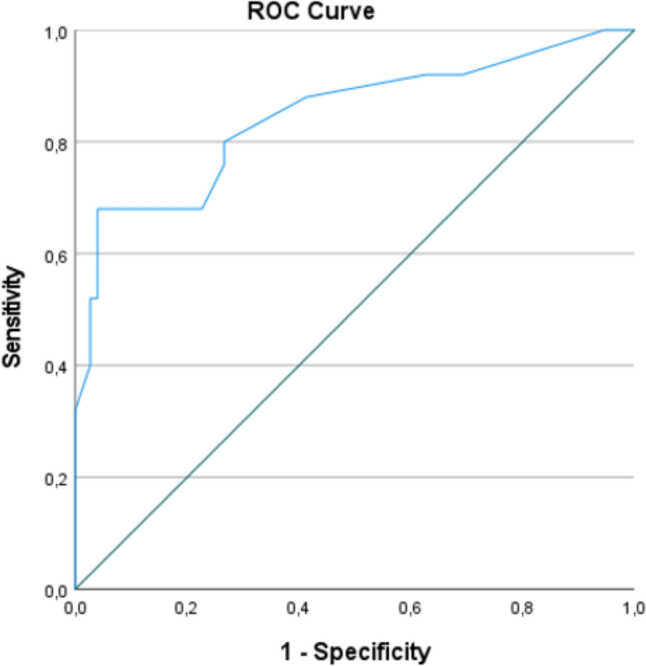
Results: The systematic review identified 8 articles reporting on 15 clinical characteristics in patients presenting with PAA (n = 2)/PAF (n = 6), supplemented with 13 items from the IO-IBD red flags index (28 items in total). A total of 25 patients with CD and 75 patients with PAF without CD answered the questionnaire. Univariate analysis identified seven items associated with CD (age, family history, > 2 perianal interventions, weight loss, abdominal pain, diarrhoea and fatigue), and four items remained significant in multivariate analysis: age (OR 3.4 [1.0-11.5]), > 2 previous perianal interventions (OR 3.4 [1.0-10.1]), weight loss (OR 14.4 [3.7-55.6]) and abdominal pain (OR 9.8 [1.9-49.8]). Receiver-operating characteristic curve (ROC) analysis showed that a combination of these red flags was associated with good discrimination of CD versus non-CD (AUC 0.83 [0.72-0.94]).
Conclusions: The perianal red flags index has a good predictive value for early identification of patients with PAF at risk for underlying CD.
Keywords: Crohn’s disease; Delay; Inflammatory bowel disease; Perianal fistula.
© 2025. The Author(s).
Conflict of interest statement
Declarations. Conflict of interest: The authors declare no competing interests. Ethical approval and Informed consent: This study was approved by the accredited Medical Ethics Committee (METC) (reference number W21_281#21.308) and conducted according to the principles of the Declaration of Helsinki (64th WMA General Assembly, Fortaleza, Brazil, October 2013). All patients were informed in writing and were offered to withdraw from participation (opt-out).
Figures


References
-
- Adegbola SO, Dibley L, Sahnan K, Wade T, Verjee A, Sawyer R, Mannick S, McCluskey D, Yassin N, Phillips RKS, Tozer PJ, Norton C, Hart AL (2020) Burden of disease and adaptation to life in patients with Crohn’s perianal fistula: a qualitative exploration. Health Qual Life Outcomes 18(1):370. 10.1186/s12955-020-01622-7. (PMID:33218361; PMCID:PMC7678264) - DOI - PMC - PubMed
-
- Sigmon DF, Emmanuel B, Tuma F (2023) Perianal abscess. [updated 2022 Jun 21]. In: StatPearls. StatPearls Publishing, Treasure Island (FL). https://www.ncbi.nlm.nih.gov/books/NBK459167/. Accessed 8 June 2023
-
- de Groof EJ, Cabral VN, Buskens CJ, Morton DG, Hahnloser D, Bemelman WA, Research committee of the European Society of Coloproctology (2016) Systematic review of evidence and consensus on perianal fistula: an analysis of national and international guidelines. Colorectal Dis 18(4):119–134. 10.1111/codi.13286. (PMID: 26847796) - DOI - PubMed
Publication types
MeSH terms
LinkOut - more resources
Full Text Sources
Medical
