


Immersive solutions: South African community service nurses' perspectives on virtual reality potential in hypertension management
- PMID: 40166587
- PMCID: PMC11955627
- DOI: 10.3389/fdgth.2025.1430438
Immersive solutions: South African community service nurses' perspectives on virtual reality potential in hypertension management
Abstract
Introduction: With the rapid development of information technology globally and the scarcity of educators in higher education institutions, educational reforms are crucial to prepare students for an advancing and complex work environment. Virtual reality (VR) makes education widely available as it bridges the gap between students and educators, as educators and students enter an immersive world where educators can guide students.
Aim: The researchers' aim for this study was to explore community service nurses' (CSN's) experiences with a VR prototype when managing a hypertensive patient.
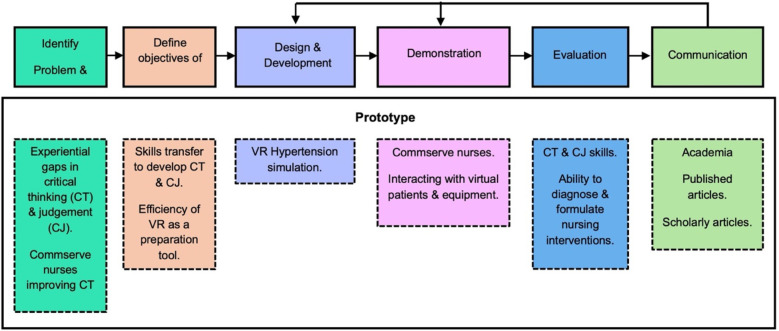
Method: The study comprised nine CSN with varied knowledge, skills, experiences, and who have been allocated to certain disciplines within a public hospital. The study was split into three phases: phase one, focus group and individual interviews were used to gain an understanding of the CSN's current knowledge and experiences regarding the assessment and implementation of nursing interventions used in the management of hypertensive patients. In the second phase, participants were exposed to the VR environment, where they were prompted by the programmed patient avatar to perform several nursing diagnostic procedures and interpret the clinical data provided in order to formulate a nursing diagnosis. During the third phase, the researchers conducted focus groups and individual interviews to acquire and comprehend the participants experiences regarding their interaction with the VR prototype and describe the benefits and drawbacks of the prototype they encountered.
Results: Constructive feedback and recommendations were provided by participants regarding the VR program's interactiveness and the accuracy of diagnostic tests. Participants claimed the experience was enjoyable, and based on the researchers' observations, the VR program stimulated critical thinking as well as clinical reasoning as intended. Their feedback was used to alter the VR prototype before the main study's commencement.
Keywords: clinical; design science research; hypertension; nursing education; virtual reality.
© 2025 Clara, Downing, Ndayizigamiye and Myburgh.
Conflict of interest statement
The authors declare that the research was conducted in the absence of any commercial or financial relationships that could be construed as a potential conflict of interest.
Figures

References
-
- South African Nursing Council. Regulations relating to the approval of and the minimum requirements for the education and training of a learner leading to registration in the categories professional nurse and midwife. Regulation 174. Pretoria: (2013). Available online at: https://www.sanc.co.za/r-174/ (Accessed August 16, 2023).
-
- Republic of South Africa. Department of Health (DoH). National Health Act, Act no. 61 of 2003. Pretoria: Government Printing Works. (2004). Available online at: https://www.gov.za/sites/default/files/gcis_document/201903/b8-2019healt...
LinkOut - more resources
Full Text Sources
Miscellaneous
