


A LEAP Forward in Wildlife Conservation: A Standardized Framework to Determine Mortality Causes in Large GPS-Tagged Birds
- PMID: 40170813
- PMCID: PMC11949540
- DOI: 10.1002/ece3.70975
A LEAP Forward in Wildlife Conservation: A Standardized Framework to Determine Mortality Causes in Large GPS-Tagged Birds
Abstract
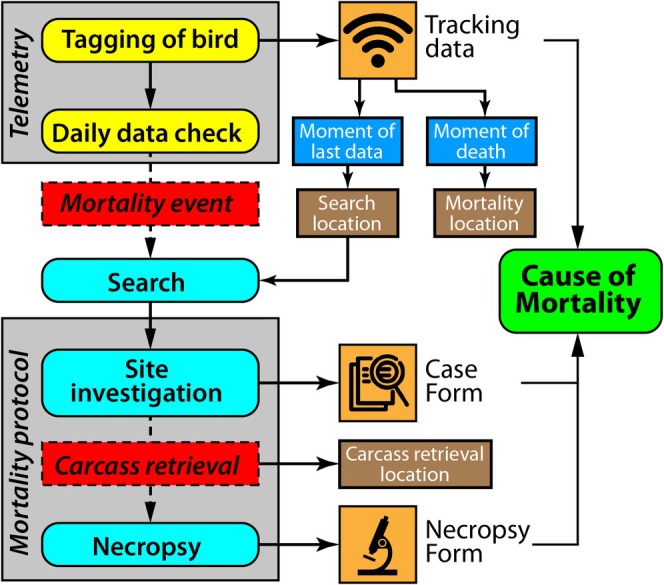
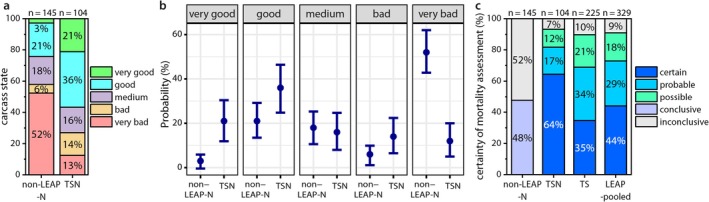
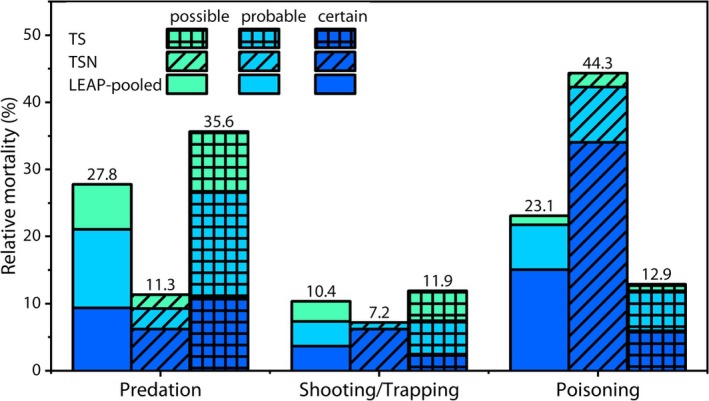
Anthropogenic activities threaten many wildlife populations by increasing mortality rates, making it crucial to identify the locations and causes of mortality to inform conservation actions. Technological advancements, such as GPS satellite tracking, enable precise recording of wildlife movements. High-resolution data from such devices can facilitate rapid carcass recovery and provide insights into the mortality causes of tagged individuals. Obtaining required information to determine these causes is complex, and standardized approaches can overcome these limitations. In this study, we introduce the LIFE EUROKITE Assessment Protocol (LEAP), a framework for determining the timing, locations, and causes of mortality in GPS-tagged birds. LEAP is a multifaceted approach that integrates: (1) GPS tracking data, (2) evidence from the mortality location (site investigation), and (3) necropsy results to derive the mortality cause and a corresponding certainty score. We supplement the detailed description of LEAP with case studies assessing its effectiveness. Using 329 deceased GPS-tagged red kites (Milvus milvus) we compared conditions of the carcasses processed using LEAP with 145 opportunistically collected raptor carcasses. We also show that LEAP improves carcass condition and therefore allows for higher quality necropsy results. Additionally, we assessed how availability among sources of information (tracking, site investigation and necropsy) influences the quality of mortality assessments. Applying LEAP with all data sources provided the highest quality assessments in 64% of cases. Some 35% of cases were of high quality without necropsy, instead drawing evidence only from tracking data and site investigations. Predation related mortality was less prevalent (11%) when relying on necropsy compared to cases without necropsy (36%), while poisoning showed the opposite trend. Furthermore, we provide guidelines and empirical examples of mortality assessments. Our standardized LEAP approach ensures the best use of all available information regarding mortality events in GPS-tagged birds and advances wildlife mortality research as a valuable tool for conservationists and wildlife managers.
Keywords: GPS tracking; bird crime; cause of death; human‐wildlife conflict; population monitoring; survival analysis; wildlife conservation.
© 2025 The Author(s). Ecology and Evolution published by John Wiley & Sons Ltd.
Conflict of interest statement
This publication was produced as part of the LIFE EUROKITE project, which is funded by the European Commission's LIFE Nature program (60%), grid operators (15.8%), nature conservation NGOs (9.2%), authorities (8.8%) and renewable energy companies (6.2%). The LIFE EUROKITE project is based on an international cooperation of scientists, NGOs, governmental authorities, and companies, representing diverse backgrounds and contributing to this study in different ways. Based on the legal setup of the LIFE project, co‐financers only provide funding but have no say in the content of scientific contributions. Prof. Dr. Martin Bergmann, who works for iTerra energy GmbH, conducted a mandated quality assurance review to ensure scientific standards. Financial contributors from private companies and NGOs were largely responsible for tagging birds and providing data to the project, while data evaluation, interpretation, and writing of the manuscript were performed by authors working for independent research institutions and universities.
Figures
References
-
- Balmori, A. 2019. “Endangered Bird Mortality by Gunshots: Still a Current Problem.” Biodiversity and Conservation 28: 2555–2564.
-
- Brochet, A. L. , Van den Bossche W., Jbour S., et al. 2016. “Preliminary Assessment of the Scope and Scale of Illegal Killing and Taking of Birds in the Mediterranean.” Bird Conservation International 26: 1–28.
LinkOut - more resources
Full Text Sources
