


Inhalable Polymeric Nanoparticle Containing Triphenylphosphanium Bromide-modified Sonosensitizer for Enhanced Therapy of Acute Bacterial Pneumonia
- PMID: 40171966
- PMCID: PMC12165071
- DOI: 10.1002/advs.202417469
Inhalable Polymeric Nanoparticle Containing Triphenylphosphanium Bromide-modified Sonosensitizer for Enhanced Therapy of Acute Bacterial Pneumonia
Abstract
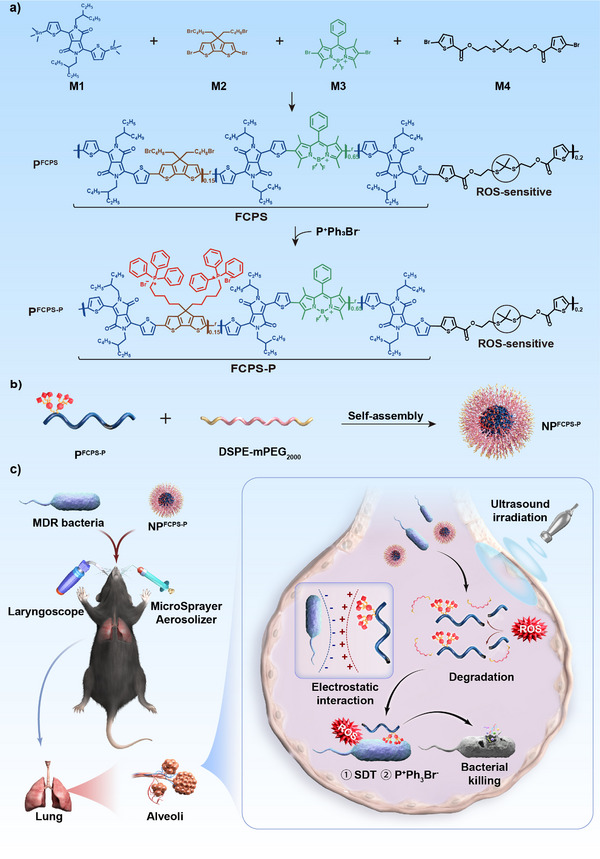
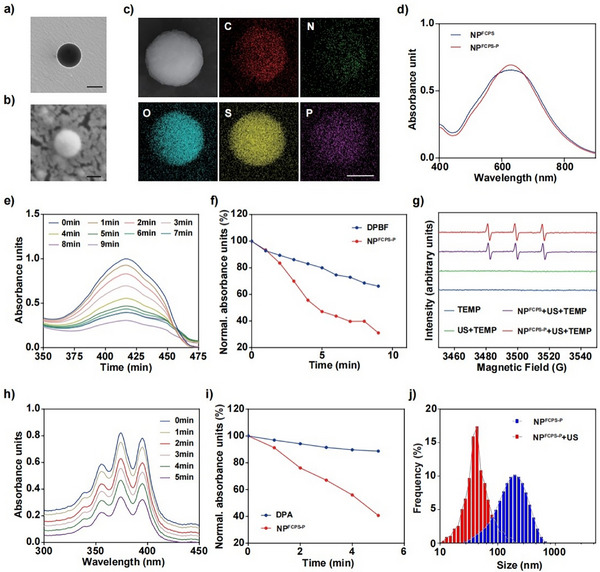
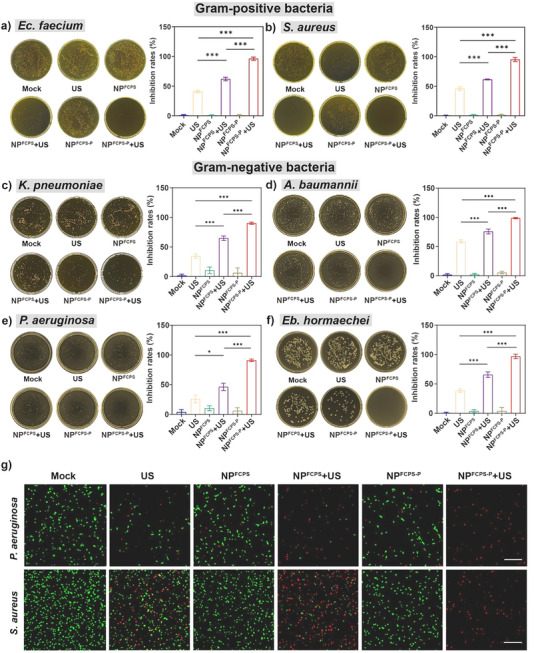
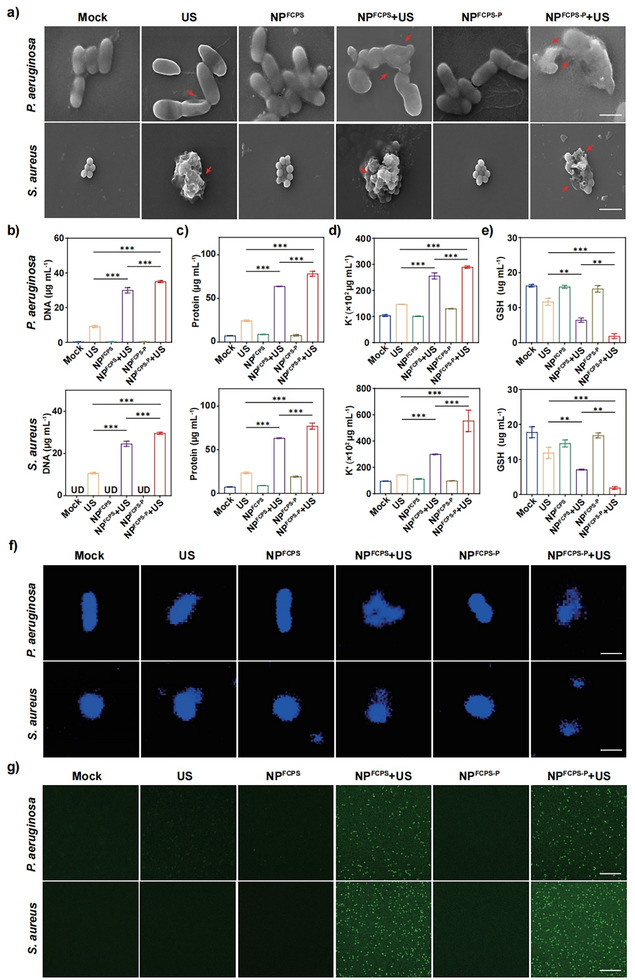
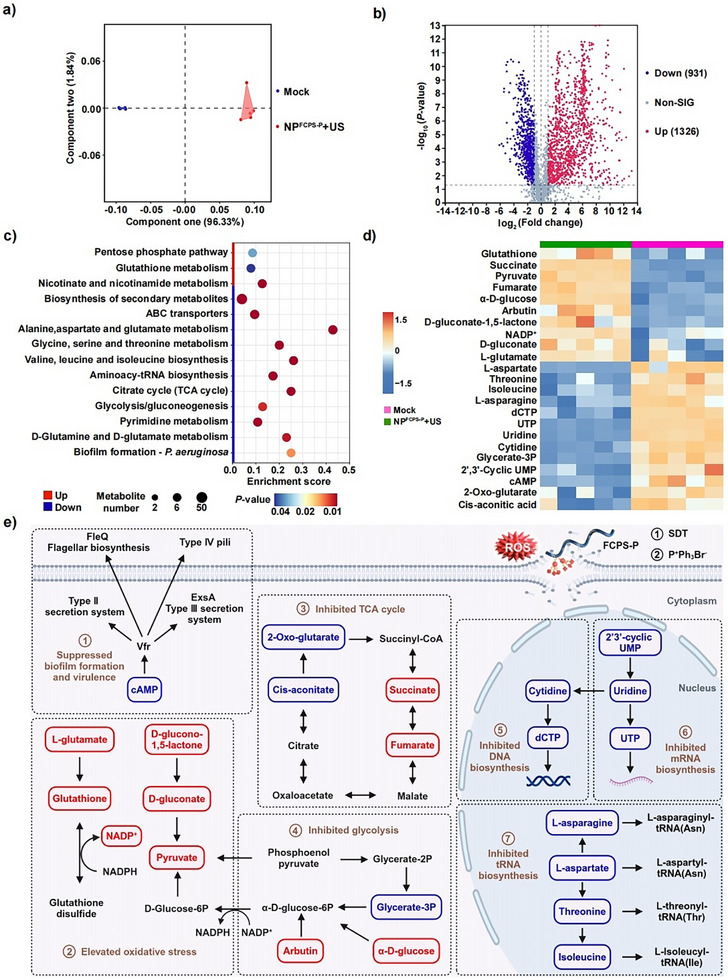
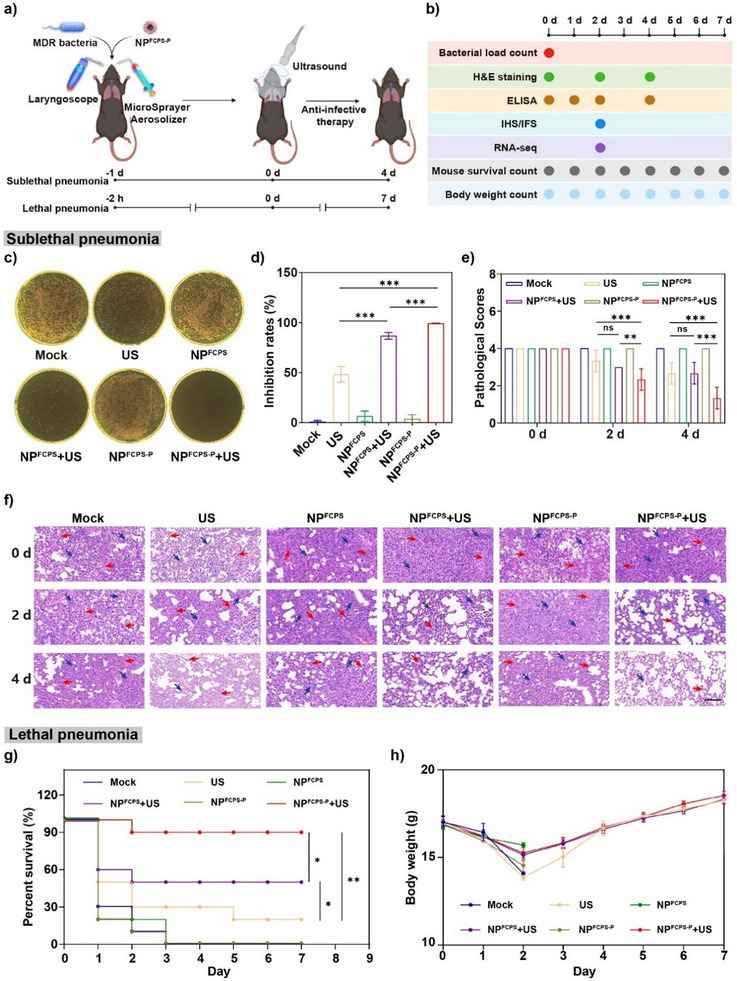
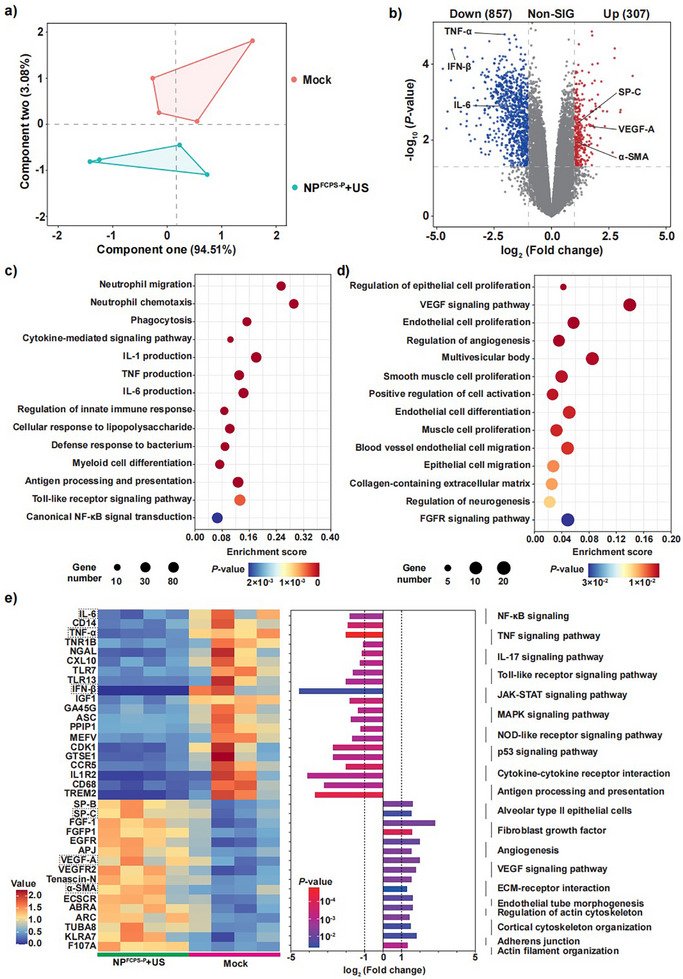
Sonodynamic therapy (SDT) has good feasibility to deeply seated infections, but SDT alone is insufficient being highly effective against multidrug-resistant (MDR) bacteria. SDT combined with triphenylphosphanium bromide (P+Ph3Br-) is expected to solve this problem. This work develops a pseudo-conjugated polymer PFCPS-P containing cationic P+Ph3Br--modified sonosensitizer FCPS (FCPS-P) and ROS-sensitive thioketal bonds. PFCPS-P is assembled with DSPE-mPEG2000 to generate nanoparticle NPFCPS-P. FCPS has SDT effect and generates ROS under ultrasound (US) stimulation. ROS triggers the degradation of NPFCPS-P and release of FCPS-P, endowing highly favored biosafety. FCPS-P targets to bacterial surface through electrostatic interaction and achieves bacterial killing under a synergistic action of SDT and P+Ph3Br-. In vitro, NPFCPS-P+US gives >90% inhibition rates against MDR ESKAPE pathogens, moreover, it causes bacterial metabolic disorders including inhibited nucleic acid synthesis, disordered energy metabolism, excessive oxidative stress, and suppressed biofilm formation and virulence. In mice, NPFCPS-P+US exhibits a 99.3% bactericidal rate in Pseudomonas aeruginosa-induced sublethal pneumonia and renders a 90% animal survival rate in lethal pneumonia, and additionally immunological staining and transcriptomics analyses reveal that NPFCPS-P+US induces inhibited inflammatory response and accelerated lung injury repair. Taken together, NPFCPS-P+US is a promising antibiotics-alternative strategy for treating deeply seated bacterial infections.
Keywords: ESKAPE pathogens; bacterial pneumonia; cationic triphenylphosphanium bromide; pseudo‐conjugated polymer; sonodynamic therapy.
© 2025 The Author(s). Advanced Science published by Wiley‐VCH GmbH.
Conflict of interest statement
The authors declare no conflict of interest.
Figures

References
MeSH terms
Substances
Grants and funding
LinkOut - more resources
Full Text Sources
Miscellaneous