. 2025 Apr;97(4):e70274.
doi: 10.1002/jmv.70274.

The Burden of HPV Infections and HPV-Related Diseases Among People With HIV: A Systematic Literature Review

Affiliations

The Burden of HPV Infections and HPV-Related Diseases Among People With HIV: A Systematic Literature Review

Bekana K Tadese et al. J Med Virol. 2025 Apr.

Abstract

Human papillomavirus (HPV) is associated with a significant global burden of precancerous lesions and cancer. People with HIV (PWH) are at higher risk of HPV infection and HPV-related diseases. This systematic review was conducted to synthesize data on the burden of HPV infection and HPV-related diseases among PWH. Studies published between January 2018-June 2023 were sourced from databases and conferences. Included were 221 publications containing epidemiological data on HPV infections and the clinical burden of HPV-related diseases among PWH. The burden varied by geographical region, age, sex, and sexual orientation. Compared to people without HIV (PWoH), PWH had higher prevalence and incidence of HPV infection and HPV-related diseases. Among PWH, the prevalence of anal HPV infection ranged between 44% and 83%; men had a higher prevalence and incidence of anogenital warts than women. The incidence of anal HPV infection was over two-fold greater among transgender women with HIV and men who have sex with men with HIV than among their respective counterparts without HIV. Incident HPV-related anal cancer was up to two-fold higher among PWH than PWoH, and incident cervical cancer was up to six times higher among women with HIV than those without. The most prevalent high-risk (hr) HPV genotypes with HPV-related disease were vaccine genotype HPV16/18/52/58. HPV35 was one of the most prevalent genotypes with anal or cervical HPV infection among PWH of African descent. PWH also have a higher burden of concurrent HPV infections and HPV-related diseases. This study calls for strengthening appropriate HPV vaccine delivery and increasing vaccine uptake among this high-risk group, potentially by integrating HPV vaccination with routine HIV care.

Keywords: HIV; HPV; HPV‐related cancer; PWH; cervical cancer; human papillomavirus.


Conflict of interest statement

B.K.T., X.Y., T.N., J.E.T., and Y.C. are employees of Merck & Co. Inc. Rahway, NJ, USA. Alisa Chowdhary, Jia Pan, and Ana Costa are employees of Adelphi Values PROVE and were funded by Merck Sharp & Dohme LLC, a subsidiary of Merck & Co. Inc. Rahway, NJ, USA to conduct this research. Nelly Mugo is employee of Kenya Medical Research Institute, Nairobi City, Kenya.

Figures
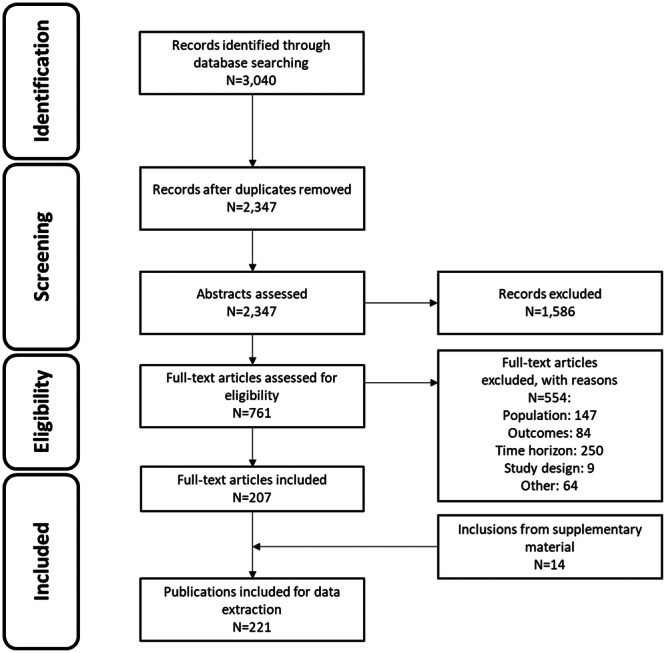
Figure 1
Figure 1
PRISMA flow diagram of included publications retrieved from databases and conferences.
Figure 2
Figure 2
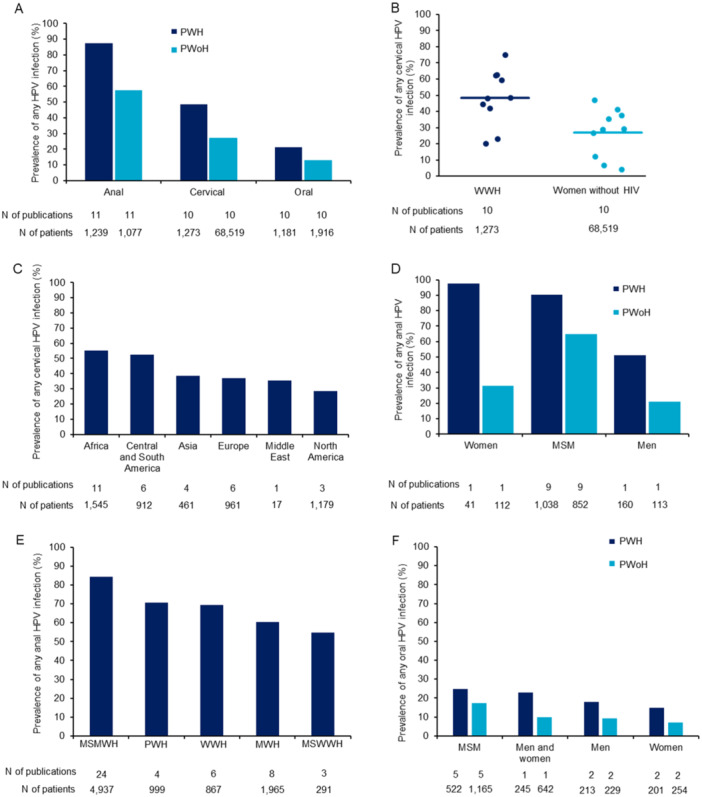
(A) Summary of HPV prevalence across anal, cervical and oral sites by HIV status. Includes comparative publications only [12, 13, 14, 15, 16, 17, 18, 19, 20, 21, 22, 23, 24, 25, 26, 27, 28, 29, 30, 31, 32, 33, 34]. Publications reporting on multiple subpopulations have been included as separate data points. (B) Average prevalence of cervical HPV infection from publications reporting comparative data [12, 13, 14, 25, 26, 27, 28, 29, 30, 31]. (C) Average weighted prevalence of cervical HPV infection among WWH, stratified by geographic region [12, 13, 14, 25, 26, 27, 28, 29, 35, 36, 37, 38, 39, 40, 41, 42, 43, 44, 45, 46, 47, 48, 49, 50, 51, 52, 53, 54, 55]. Weighted prevalence was calculated according to the total sample size of the population from each region. (D) Average prevalence of anal HPV infection, stratified by patient population and HIV status; reporting only from publications with comparative data [20, 21, 22, 56]. (E) Average prevalence of anal HPV infection stratified by subpopulation [15, 16, 17, 18, 19, 20, 21, 22, 23, 24, 52, 54, 56, 57, 58, 59, 60, 61, 62, 63, 64, 65, 66, 67, 68, 69, 70, 71, 72, 73, 74, 75, 76, 77, 78]. (F) Summary of any oral HPV infection, stratified by patient population and HIV status [16, 17, 19, 31, 32, 33, 34, 79]. HIV, human immunodeficiency virus; HPV, human papillomavirus; MWH, men with HIV; MSM, Men who have sex with men; MSMWH, men who have sex with men with HIV; MSW, Men who have sex with women; MSWWH, men who have sex with women with HIV; N, number; PWH, people with HIV; PWoH, people without HIV; WWH, women with HIV.
Figure 3
Figure 3
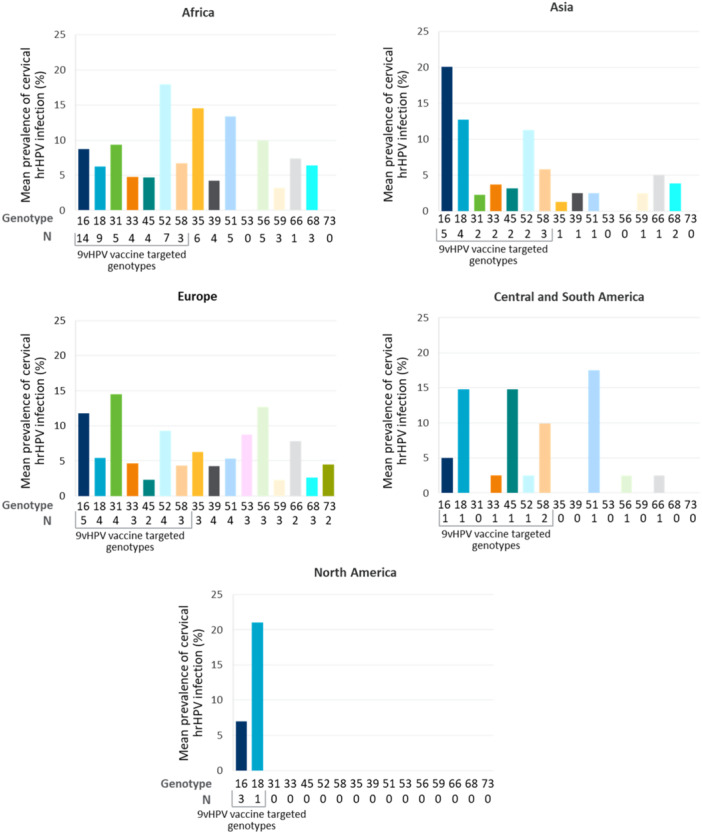
Average cervical hrHPV genotype distribution among WWH across regions. 9v, nonavalent; HPV, human papillomavirus; hrHPV, high‐risk human papillomavirus; N, number of publications; WWH, women with HIV.
Figure 4
Figure 4
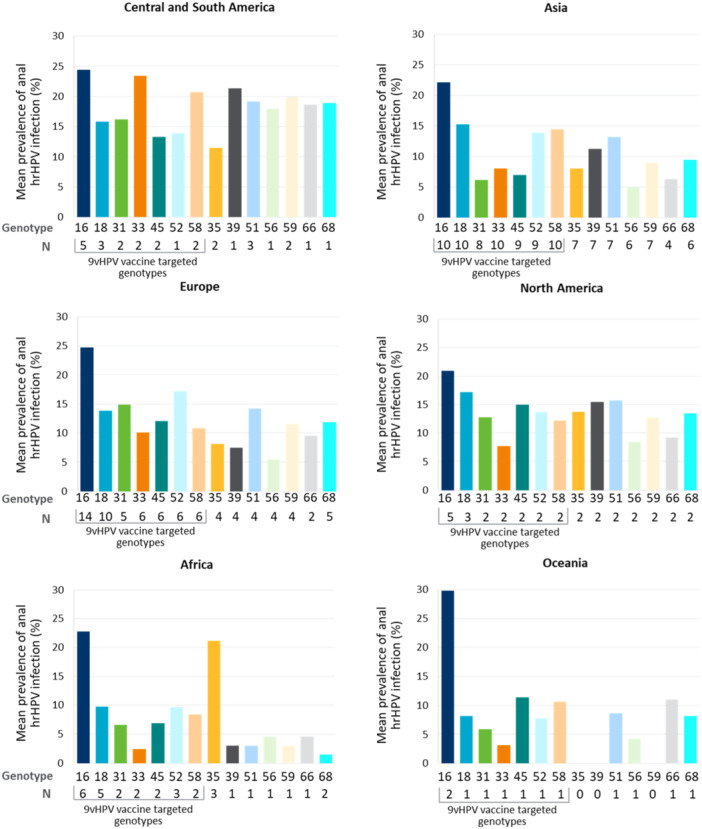
Average anal hrHPV genotype distribution among PWH across regions. 9v, nonavalent; HPV, human papillomavirus; hrHPV, high‐risk human papillomavirus; N, number of publications; PWH, people with HIV.
Figure 5
Figure 5
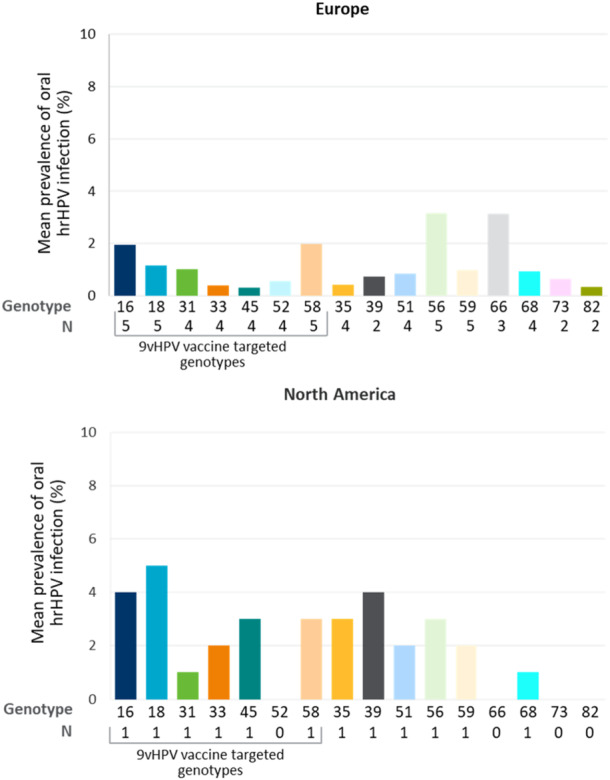
Average oral hrHPV genotype distribution among PWH across regions. 9v, nonavalent; HPV, human papillomavirus; hrHPV, high‐risk human papillomavirus; N, number of publications; PWH, people with HIV.
Figure 6
Figure 6
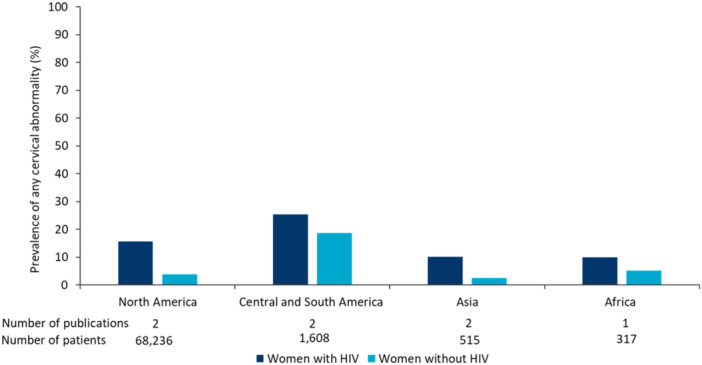
Average weighted prevalence of any cervical abnormality in women with HIV and women without HIV by region [12, 14, 31, 105, 110, 112, 113]. Europe not included due to lack of data. Any cervical abnormality across publications was defined by the inclusion of atypical squamous cells of undetermined significance (ASC‐US), low‐grade squamous intraepithelial lesions (LSIL), high‐grade squamous intraepithelial lesions (HSIL), atypical granular cells of undetermined significance (AG‐US), atypical squamous cells not excluding high grade (ASC‐H), except for one Asian study which did not specify what this encompassed [113]. Abbreviations: HIV: human immunodeficiency virus.
Figure 7
Figure 7
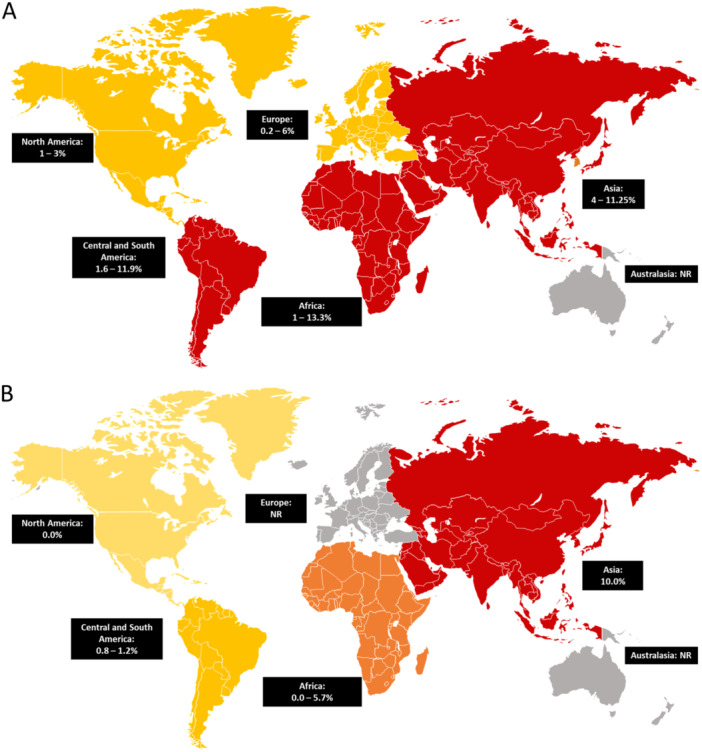
(A) Prevalence of high‐grade cervical abnormalities (HSIL, ASC‐H, CIN2 + ) among women with HIV; North America: US [112, 114]; Central and South America: Colombia [105], Brazil [31, 83, 115]; Europe: Italy [49, 116], Belgium [117], Spain [118]; Africa: South Africa [119], Tanzania [27, 108], Burundi [120], Nigeria [28, 121, 122], Asia: India [13, 46, 104, 123, 124], China [101, 125]; B: Prevalence of high‐grade cervical abnormalities (HSIL, ASC‐H, CIN2 + ) in women without HIV only; North America: US [112], Central and South America: Colombia [105], Brazil [31]; Africa: South Africa [119], Kenya [126], Tanzania [27, 108], Burundi [120], Nigeria [28, 121, 122]; Asia: India [13]. French data from Bouassa et al. (2019) not included due to study population being African migrants [127]. ASC‐H, atypical squamous cells not excluding high grade; CIN, cervical intraepithelial neoplasia; HSIL, high‐grade squamous intraepithelial lesions; NR, not reported.

Similar articles

References

    1. Kombe Kombe A. J., Li B., Zahid A., et al., “Epidemiology and Burden of Human Papillomavirus and Related Diseases, Molecular Pathogenesis, and Vaccine Evaluation,” Frontiers in Public Health 8 (2020): 552028, 10.3389/fpubh.2020.552028. - DOI - PMC - PubMed
    1. de Martel C., Plummer M., Vignat J., and Franceschi S., “Worldwide Burden of Cancer Attributable to HPV by Site, Country and HPV Type,” International Journal of Cancer 141, no. 4 (2017): 664–670, 10.1002/ijc.30716. - DOI - PMC - PubMed
    1. Muñoz N., Bosch F. X., de Sanjosé S., et al., “Epidemiologic Classification of Human Papillomavirus Types Associated With Cervical Cancer,” New England Journal of Medicine 348, no. 6 (2003): 518–527, 10.1056/NEJMoa021641. - DOI - PubMed
    1. Choi Y. J. and Park J. S., “Clinical Significance of Human Papillomavirus Genotyping,” Journal of Gynecologic Oncology 27, no. 2 (2016): e21, 10.3802/jgo.2016.27.e21. - DOI - PMC - PubMed
    1. Chen Z., Schiffman M., Herrero R., et al., “Classification and Evolution of Human Papillomavirus Genome Variants: Alpha‐5 (HPV26, 51, 69, 82), Alpha‐6 (HPV30, 53, 56, 66), Alpha‐11 (HPV34, 73), Alpha‐13 (HPV54) and Alpha‐3 (HPV61),” Virology 516 (2018): 86–101, 10.1016/j.virol.2018.01.002. - DOI - PMC - PubMed

Publication types