


Epidemiology of Chronic Suppurative Otitis Media: Systematic Review To Estimate Global Prevalence
- PMID: 40178730
- PMCID: PMC11968643
- DOI: 10.1007/s44197-025-00396-9
Epidemiology of Chronic Suppurative Otitis Media: Systematic Review To Estimate Global Prevalence
Abstract
Background: Chronic Suppurative Otitis Media (CSOM) is a disorder characterised by a perforation of the tympanic membrane leading to ear discharge and hearing loss, a disability causing marginalisation in employment, education, social stigma, and reduced wellbeing and quality of life. Previous studies on the global epidemiology of this condition, despite methodological limitations, have estimated global prevalence at 200 million.
Methods: Adhering to PRISMA guidelines, published literature was systematically reviewed across Ovid and Embase databases, with original community-based studies on CSOM published from 2004 to March 19th, 2025 extracted for final consideration on quality and relevance. Studies focusing on hospital populations were excluded as they seem more likely to represent a biased group of severe cases. Published articles were analysed for data on CSOM prevalence and associated risk factors.
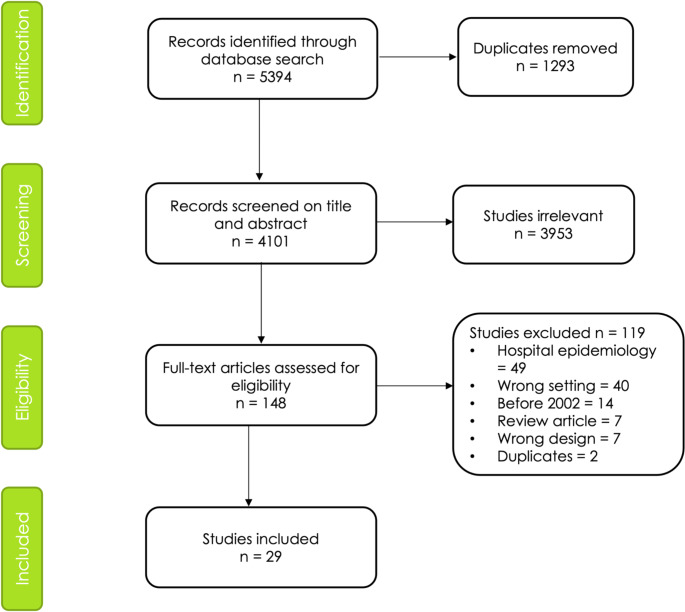
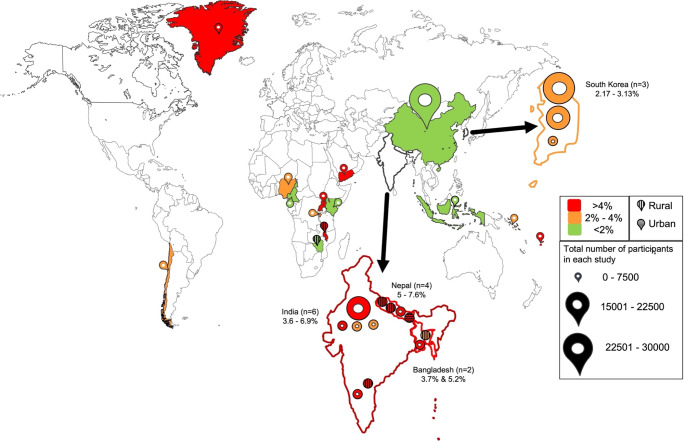
Results: From 5,394 articles, 29 cross-sectional studies met the inclusion criteria. Included studies predominantly originated from low- and middle-income countries (LMICs) and focused on paediatric populations. A pooled average estimate revealed a CSOM global prevalence of 3.8% of the global population, or 297 million people, 85% (252 million) of which in LMICs. 64 million (21.5%) of those affected had bilateral disease, and 184 million (62%) had disabling hearing loss defined as > 25-30 dB. Hearing impairment was reported in only four studies, which affected 50-78% of participants. Frequency of ear discharge was reported in only one study.
Conclusion: The study identifies a significant global burden of CSOM, disproportionately affecting LMICs, and signals to healthcare providers and policymakers a pressing need for initiatives to prevent and manage this disease.
Keywords: Chronic suppurative otitis media; Global burden of disease; Health disparities; Hearing loss epidemiology; Low- and middle-income Countries; Public health interventions.
© 2025. Crown.
Conflict of interest statement
Declarations. Ethics Approval and Consent to Participate: Not applicable as the research did not involve human or animal experimentation. Use of Artificial Intelligence (AI) Tools: No AI tools were used. Competing Interests: The authors declare no competing interests.
Figures
References
-
- Bhutta MF, Leach AJ, Brennan-Jones CG. Chronic suppurative otitis media. Lancet [Internet]. Lancet; 2024 May 25 [cited 2024 Sep 2];403(10441):2339–2348. Available from: https://pubmed.ncbi.nlm.nih.gov/38621397/ - PubMed
-
- Baltussen R, Smith A. Cost effectiveness of strategies to combat vision and hearing loss in sub-Saharan Africa and South East Asia: mathematical modelling study. BMJ [Internet]. BMJ; 2012 [cited 2025 Mar 14];344. Available from: https://pubmed.ncbi.nlm.nih.gov/22389341/ - PMC - PubMed
-
- Wang PC, Jang CH, Shu YH, Tai CJ, Chu KT. Cost-utility analysis of tympanomastoidectomy for adults with chronic suppurative otitis media. Otolaryngol Head Neck Surg [Internet]. Otolaryngol Head Neck Surg; 2005 Sep [cited 2025 Mar 14];133(3):352–356. Available from: https://pubmed.ncbi.nlm.nih.gov/16143180/ - PubMed
-
- World Health Organization. Chronic suppurative otitis media: burden of illness and management options. World Health Organization; 2004.
Publication types
MeSH terms
LinkOut - more resources
Full Text Sources
Medical
Miscellaneous
