


Mapping Colombians' positions on national policies to control tobacco and marijuana consumption: a pilot study
- PMID: 40181429
- PMCID: PMC11969840
- DOI: 10.1186/s13011-025-00646-w
Mapping Colombians' positions on national policies to control tobacco and marijuana consumption: a pilot study
Abstract
Background: Public authorities use a variety of control policies, with varying degrees of severity, to reduce the prevalence of health-damaging habits. Since these policies can only succeed if people understand and approve of them, this study mapped Colombians' positions on policies to control tobacco and marijuana consumption.
Method: A sample of 147 adults was presented with 32 vignettes illustrating a control policy. Each vignette contained four items of information: the behavior targeted (smoking tobacco or using marijuana), the nature of preventive measures (e.g., information campaigns), the degree of regulatory measures (e.g., prohibition of use by minors) and the severity of penalties (e.g., imprisonment).
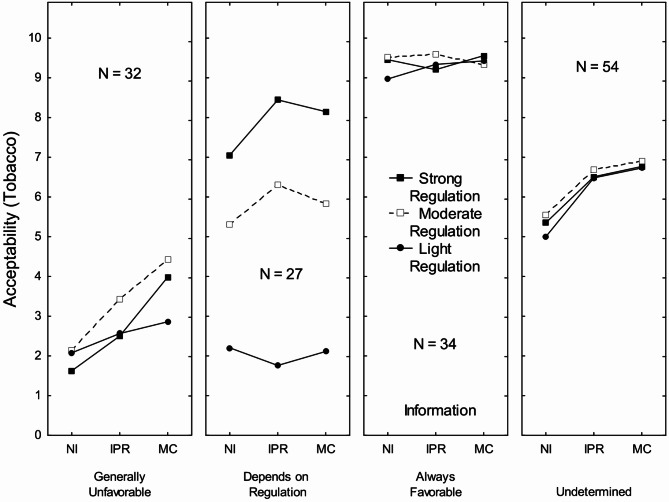
Results: Through cluster analysis, three qualitatively different positions were found in relation to control policies for each substance: Generally unfavorable, irrespective of policy (22% and 17%), Depends on regulation (18% and 22%), and Always favorable, irrespective of policy (23% and 25%). A substantial minority of participants (37% and 36%) expressed no opinion at all.
Conclusion: While qualitatively different positions on the acceptability of national policies to control tobacco and marijuana consumption were indeed observed among Colombian participants, the most frequent response seemed to be indifference (or indeterminacy), with other positions reflecting little more than systematic opposition or blind acquiescence. It would therefore be useful to make citizens aware that their opinions count, that their relative indifference to these issues is in itself a problem, and that it is by taking their perspectives into account that one can truly define and make effective public health policies that are understood and accepted by as many people as possible.
Keywords: Colombia; Control; Marijuana; National policies; Personal positions; Tobacco.
© 2025. The Author(s).
Conflict of interest statement
Declarations. Ethics approval and consent to participate: Ethical approval for the study was granted by the Ethics Committee of the Konrad Lorenz University, Colombia. Consent for publication: The authors have obtained consent to publish from the participants. Competing interests: The authors declare no competing interests.
Figures


References
-
- The World Bank. Prevalence of current tobacco use (% of adults)– Colombia. 2020. https://data.worldbank.org/indicator/SH.PRV.SMOK?locations=CO
-
- Who Framework Convention on Tobacco Control. Colombia: Tobacco use data among youth become available for the first time. 2018. https://untobaccocontrol.org/impldb/colombia-tobacco-use-data-among-yout...
-
- Colombia Reports. Colombia decriminalizes marijuana cultivation up to 20 plants. 2015. https://colombiareports.com/colombia-decriminalizes-marijuana-cultivatio...
-
- Statista. Prevalence of cannabis consumption in Colombia in 2019, by frequency of use. (2019. https://www.statista.com/statistics/1223133/colombia-prevalence-cannabis...
-
- Observatorio de Drogas de Colombia. Estudio nacional de consumo de sustancias psicoactivas en población escolar colombiana; 2016. https://www.unodc.org/documents/colombia/2018/Junio/CO03142016_estudio_c...
MeSH terms
Supplementary concepts
Grants and funding
LinkOut - more resources
Full Text Sources
Medical
