Effectiveness of dexmedetomidine as a premedication for pediatric patients undergoing outpatient dental surgery under general anaethesia-systematic review and meta-analysis
- PMID: 40183044
- PMCID: PMC11967424
- DOI: 10.7717/peerj.19216
Effectiveness of dexmedetomidine as a premedication for pediatric patients undergoing outpatient dental surgery under general anaethesia-systematic review and meta-analysis
Abstract
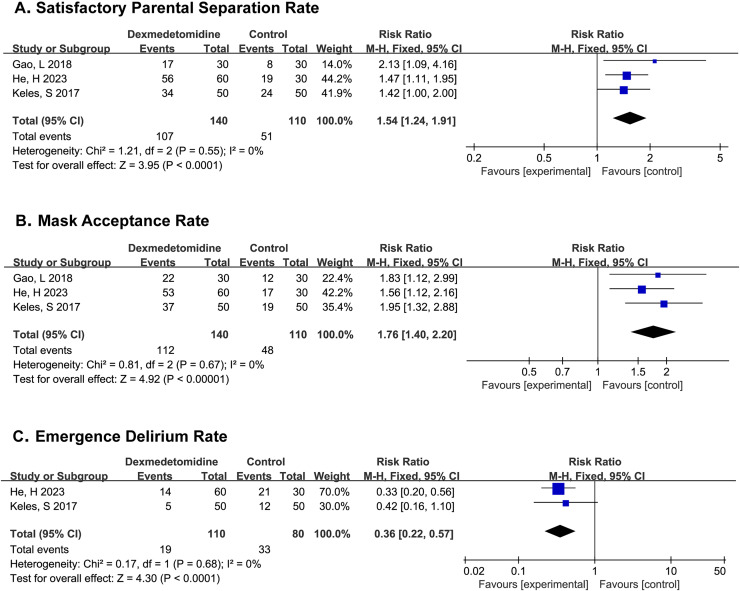
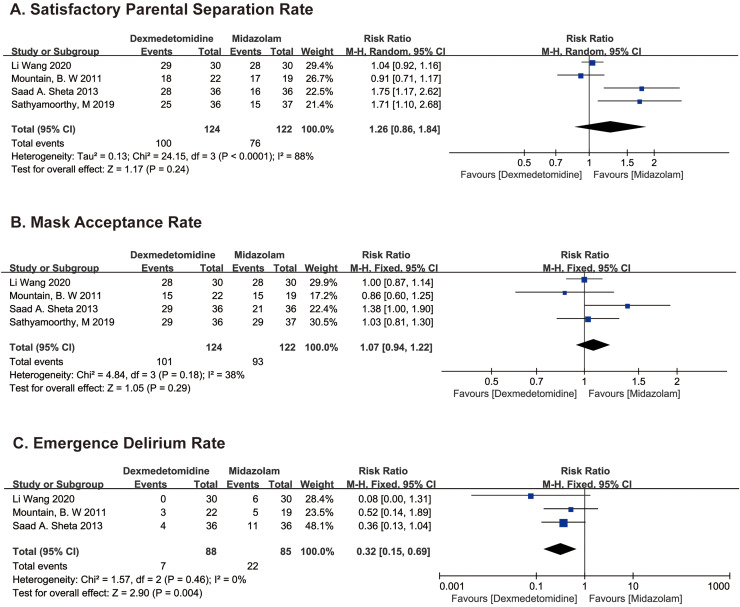
Pediatric patients undergoing outpatient dental surgery often exhibit instinctive resistance and fear in face of the unknown, which in turn creates obstacles to subsequent treatment. Appropriate sedation can increase compliance, decrease the incidence of adverse events, and lead to improved treatment outcomes. To evaluate the effectiveness of dexmedetomidine as pre-medication in children undergoing tooth extraction with general anesthesia, we searched databases including the Medline, Embase and Cochrane library for eligible trials. Randomized controlled trials of dexmedetomidine for premedication vs. placebo or midazolam in pediatric patients were included, while trials involving children having dental treatment under local anesthesia were excluded. Two review authors independently participated in the inclusion of trials and assessment of bias. Decisions were made based on group discussion. We finally included seven trials in this review, with a total of 496 pediatric patients. Three of the included trials compared dexmedetomidine with placebo. A meta-analysis indicated that dexmedetomidine was effective for preoperative sedation and for preventing emergence delirium; two of these studies reported no incidences of bradycardia and hypoxemia during study observation period. Four trials compared dexmedetomidine with midazolam, meta-analysis of these four trials gave risk ratios (RR) for successful parental separation, satisfactory mask acceptance and emergence delirium rate of 1.26 (95% CI [0.86-1.84]); 1.07(95% CI [0.94-1.22]); -0.18(95% CI [-0.29 to -0.07]), respectively. Only one study reported complications arising from administration of premedication. Based on the current evidence, we can conclude that the dexmedetomidine appears to be an effective premedication, offering the advantage of reducing the incidence of postoperative delirium compared to midazolam. However, high-quality clinical trials with larger sample sizes are needed to determine the selection of different medication modes and doses, as well as to study perioperative adverse reactions.
Keywords: Child; Emergence delirium; General anesthesia; Sedation.
© 2025 Zhang et al.
Conflict of interest statement
The authors declare that they have no competing interests.
Figures


References
-
- Azimaraghi O, Rudolph MI, Luedeke CM, Ramishvili T, Jaconia GD, Scheffenbichler FT, Chambers TA, Karaye IM, Eikermann M, Chao J, Jackson WM. Association of dexmedetomidine use with haemodynamics, postoperative recovery, and cost in paediatric anaesthesia: a hospital registry study. British Journal of Anaesthesia. 2024;133:326. doi: 10.1016/j.bja.2024.03.016. - DOI - PubMed
-
- Cai YH, Wang CY, Li Y, Chen J, Li J, Wu J, Liu HC. Comparison of the effects of oral midazolam and intranasal dexmedetomidine on preoperative sedation and anesthesia induction in children undergoing surgeries. Frontiers in Pharmacology. 2021;12:648699. doi: 10.3389/fphar.2021.648699. - DOI - PMC - PubMed
Publication types
MeSH terms
Substances
LinkOut - more resources
Full Text Sources