


Gut microbiota diversity among humans, elephants, livestock and wild herbivores in Chitwan National Park bears implications for conservation medicine
- PMID: 40185849
- PMCID: PMC11971256
- DOI: 10.1038/s41598-025-89402-5
Gut microbiota diversity among humans, elephants, livestock and wild herbivores in Chitwan National Park bears implications for conservation medicine
Abstract
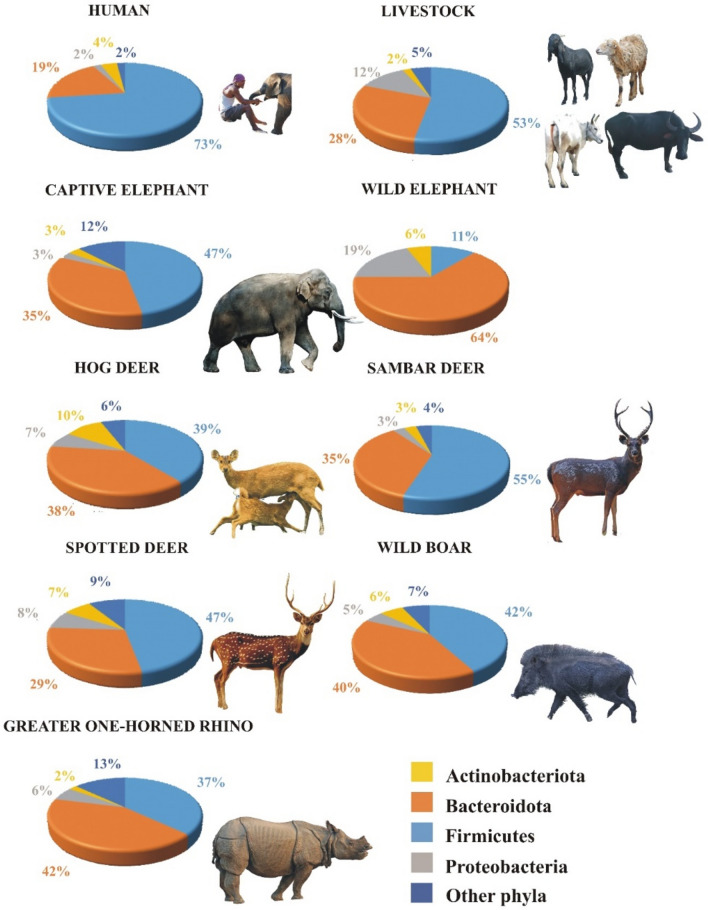
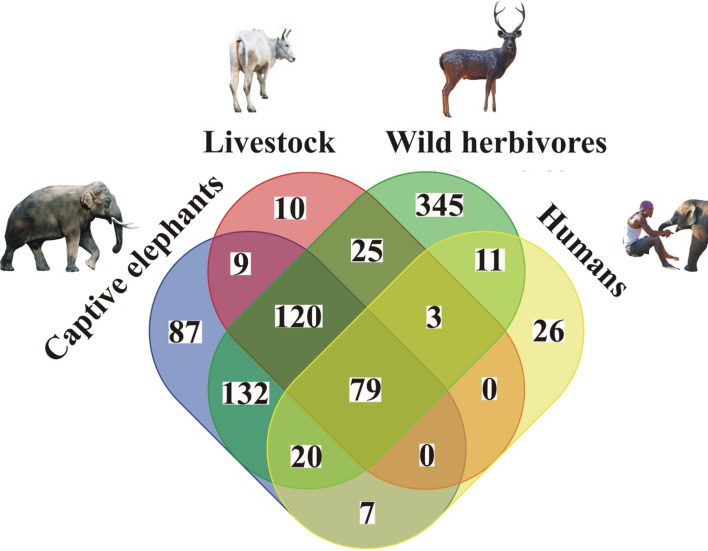
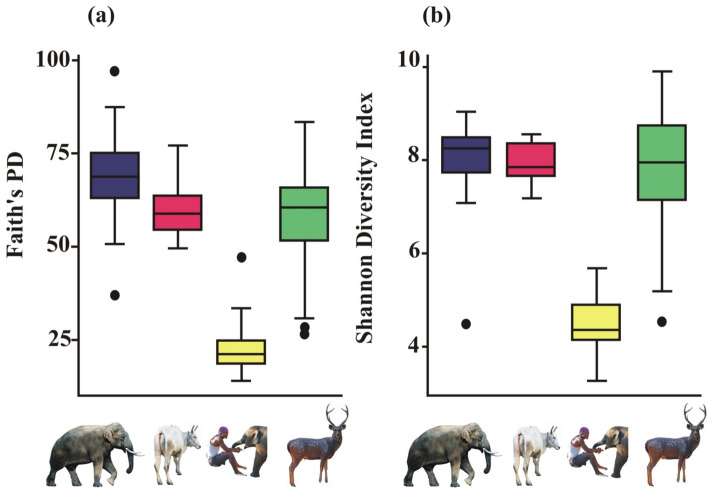
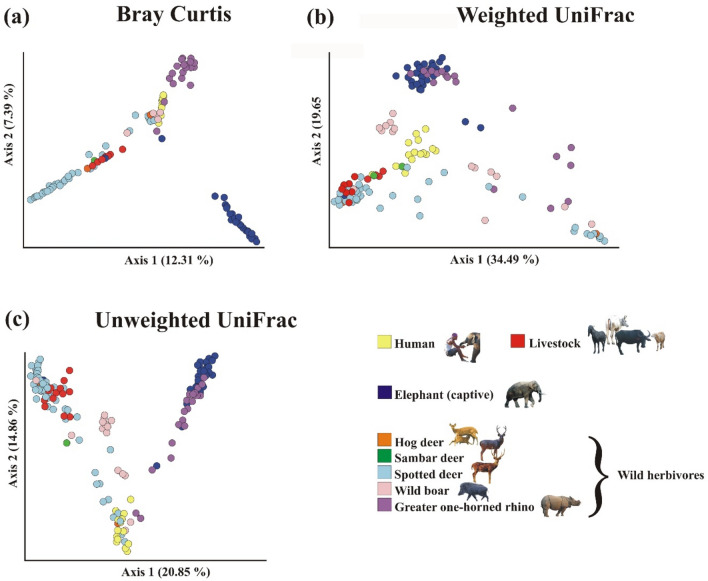
Gut microbiome influences host health and well-being. Co-occurring hosts may exchange disease-causing bacteria belonging to these microbial communities. Therefore, monitoring gut microbiota composition in wildlife and humans is paramount to prevent zoonotic diseases, thus protecting and strengthening public health. We characterized diversity and abundance of the gut microbiome bacterial component across mahouts (captive elephant trainers and handlers), their pachyderms, livestock and wild herbivores in and around Chitwan National Park (Nepal). Firmicutes and Bacteroidota were invariably the dominant phyla. In humans, the relative abundance of Firmicutes was higher, the alpha diversity lower and beta diversity different compared to other host categories. Livestock and wild herbivores displayed similar alpha and beta diversity due to the presence of Proteobacteria, Actinobacteriota and Verrucomicrobiota. Elephants had a higher alpha diversity, and a significant beta diversity compared to other mammals. Our results suggest that taxonomic affiliation and diet niche are the main drivers of gut microbiota composition. Nevertheless, Mycobacterium and other potentially pathogenic bacteria genera were detected in elephants and livestock other than wild herbivores. These findings shed light on microbiota sharing and interlinking in each environment, thereby highlighting the importance of conservation medicine to better our understanding of health in co-occurring host species.
Keywords: Bacterial function; Human–wildlife–livestock–environment interface; Microbiome; Nepal; One Health; Zoonosis.
© 2025. The Author(s).
Conflict of interest statement
Declarations. Competing interests: The authors declare no competing interests. Ethics statement: The ethical approval of the study was provided by the Nepal Ethical Review Board of Nepal Health Research Council (IRC number 312/2018). All individuals gave written informed consent before participation during the study. The experimental protocol used in the present study was approved by the Bioethics Committee of BIOPOLIS/CIBIO-InBIO (University of Porto). Studies were conducted in accordance with the principles of the Declaration of Helsinki.
Figures
References
-
- D’Argenio, V. & Salvatore, F. The role of the gut microbiome in the healthy adult status. Clin. Chim. Acta451, 97–102. 10.1016/J.CCA.2015.01.003 (2015). - PubMed
MeSH terms
Substances
Grants and funding
LinkOut - more resources
Full Text Sources
