


The effects of carotid plaque classification and bifurcation angle on plaque: a computational fluid dynamics simulation
- PMID: 40190413
- PMCID: PMC11969119
- DOI: 10.3389/fphys.2025.1509875
The effects of carotid plaque classification and bifurcation angle on plaque: a computational fluid dynamics simulation
Abstract
Objectives: To investigate the influence of plaque distribution and vascular bifurcation angle on hemodynamics within the carotid artery bifurcation and to explore the role these factors play in the development of vulnerable carotid plaques. The study aims to provide a more comprehensive understanding of how complex hemodynamic patterns affect plaque formation, vulnerability, and progression.
Methods: Patient-specific carotid bifurcation models were reconstructed using 3D rotational angiography and CT angiography, validated by digital subtraction angiography. Computational fluid dynamics (ANSYS Fluent) with non-Newtonian modeling simulated hemodynamics under patient-specific boundary conditions. Plaque morphology and hemodynamic parameters (TAWSS, OSI, ECAP) were quantified. Statistical analyses included Spearman's correlations and non-parametric tests for bifurcation angles/plaque locations.
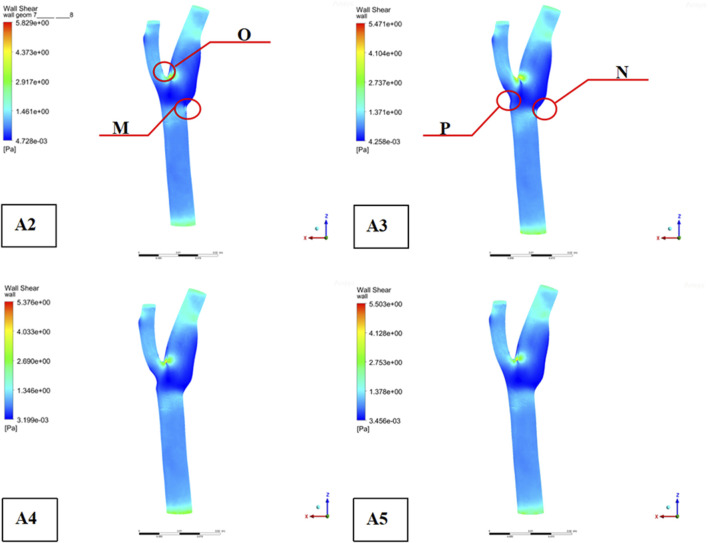
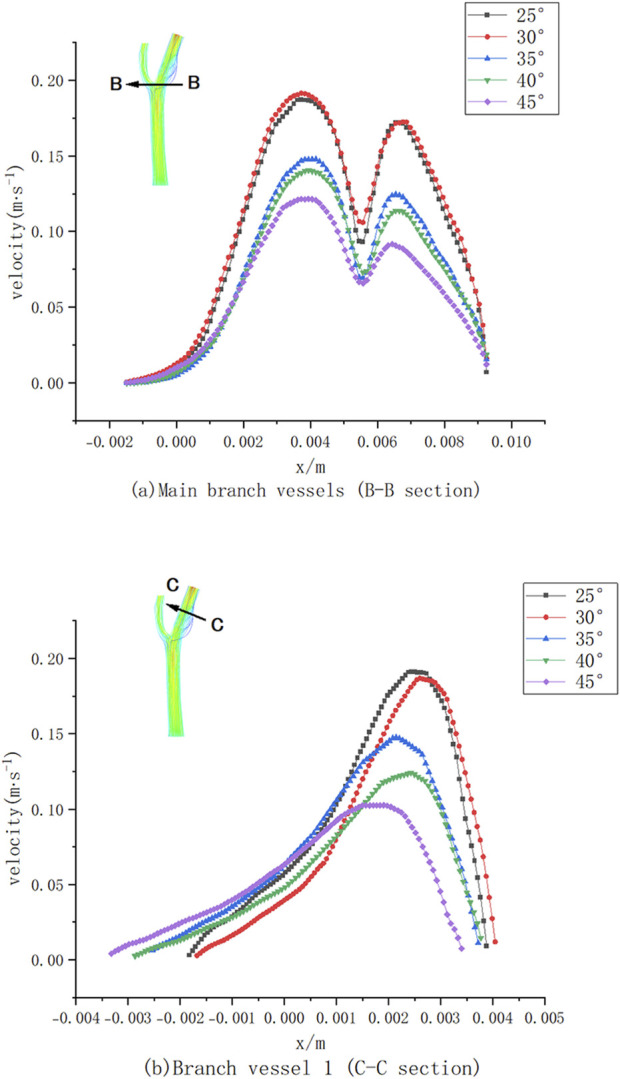
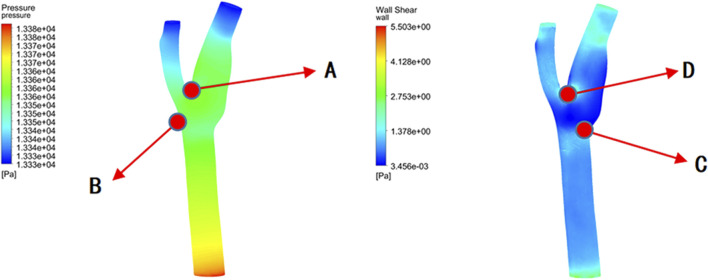
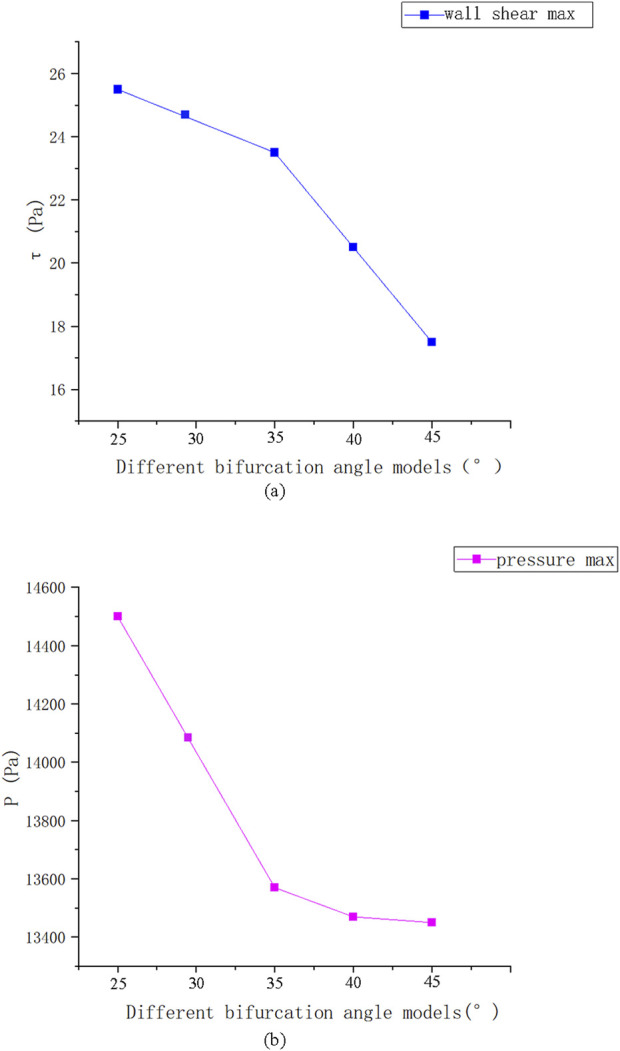
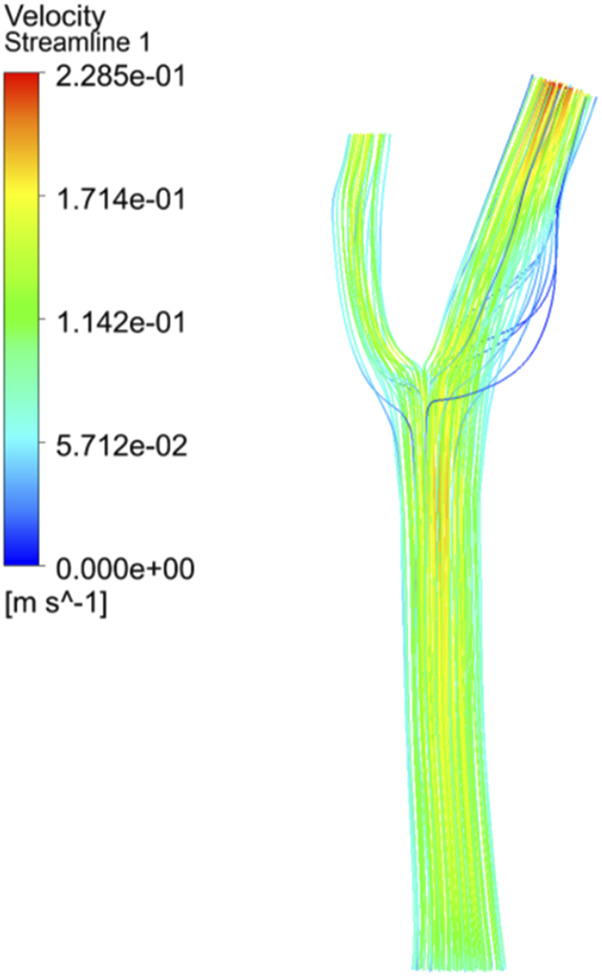
Results: Numerical simulations demonstrated that plaque subtypes and bifurcation angles critically modulate carotid hemodynamics. Elevated wall shear stress (WSS) upstream of plaques (sites M/N) increased rupture susceptibility, whereas low WSS at the outer bifurcation (site P) exacerbated atherogenesis. Larger bifurcation angles reduced peak velocities, expanded low-velocity zones, and diminished WSS, amplifying atherosclerosis risk. Vortex-driven low-shear regions prolonged platelet residence, enhancing thrombotic propensity. Fluid-structure interactions revealed arterial wall deformation near bifurcations, correlating with endothelial injury and plaque progression. These hemodynamic alterations underscore the biomechanical interplay driving plaque vulnerability and thrombosis in carotid atherosclerosis.
Conclusion: Carotid plaque vulnerability arises from bifurcation angle-dependent hemodynamic disturbances, where elevated upstream wall shear stress predisposes to rupture, while low-shear zones at the outer bifurcation accelerate atherogenesis. Vortex-driven platelet retention and fluid-structure interactions exacerbate endothelial dysfunction, underscoring hemodynamic targeting for clinical risk mitigation.
Keywords: carotid artery bifurcation; hemodynamics; plaque formation; shear stress; vascular bifurcation angle.
Copyright © 2025 Chen, Chen, Su, Pen, Luo and Zhong.
Conflict of interest statement
The authors declare that the research was conducted in the absence of any commercial or financial relationships that could be construed as a potential conflict of interest.
Figures
References
-
- AbuRahma A. F. (2021). “Overview of cerebrovascular disease,” in Noninvasive vascular diagnosis. Editors AbuRahma A. F., Perler B. A. (Cham: Springer; ).
-
- Ahmadpour M., Nooraeen A., Tafazzoli-Shadpour M., Taghizadeh H. (2021). Contribution of atherosclerotic plaque location and severity to the near-wall hemodynamics of the carotid bifurcation: an experimental study and FSI modeling. Biomechanics Model. Mechanobiol. 20 (3), 1069–1085. 10.1007/s10237-021-01431-x - DOI - PubMed
-
- Bantwal A., Singh A., Menon A. R., Kumar N. (2021). Pathogenesis of atherosclerosis and its influence on local hemodynamics: a comparative FSI study in healthy and mildly stenosed carotid arteries. Int. Eng. Sci. 167, 103525. 10.1016/j.ijengsci.2021.103525 - DOI
LinkOut - more resources
Full Text Sources
Research Materials
