


Carbohydrate flow during grain filling: Phytohormonal regulation and genetic control in rice (Oryza sativa)
- PMID: 40192007
- PMCID: PMC12016746
- DOI: 10.1111/jipb.13904
Carbohydrate flow during grain filling: Phytohormonal regulation and genetic control in rice (Oryza sativa)
Abstract
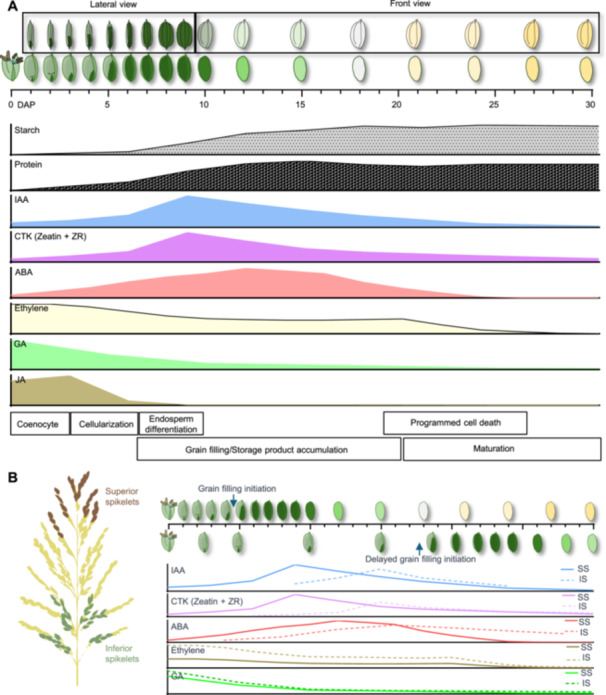
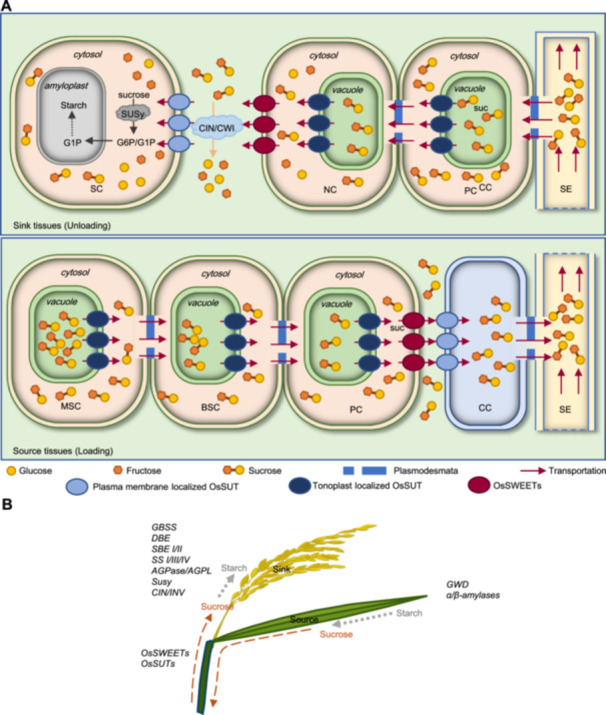
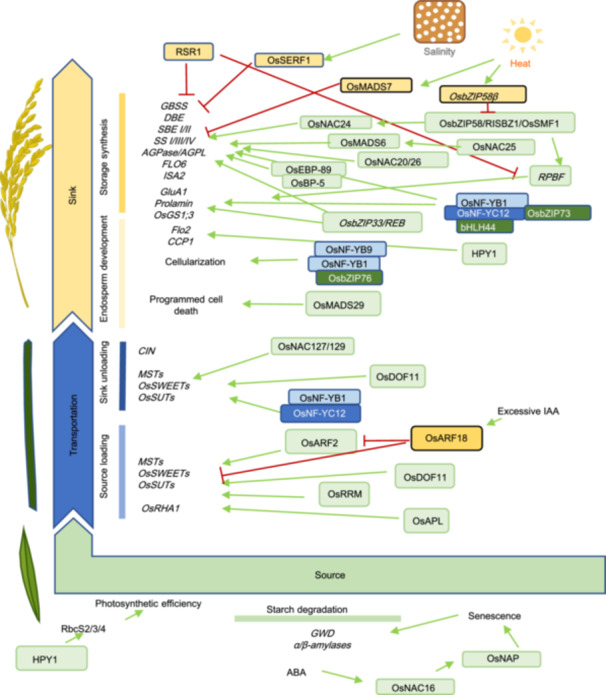
Both the filling and development of grain are key processes determining agriculture production and reproductive growth in rice. The processes of grain filling and endosperm development are crucial for the accumulation of major storage compounds in rice grains. This requires extensive remobilization of carbon reserves from source to sink and the precise regulation of sucrose-to-starch conversion. Both the developmental sequence of the panicle and environmental signals influence the carbon flow between the leaves, leaf sheath, stem, and spikelets during grain filling. This, in turn, affects endosperm development and the production of storage compounds. In this review, we synthesize recent insight into grain development in rice, focusing on the dynamic changes in phytohormones and how their homeostasis integrates developmental and environmental cues to control grain filling in the developing panicle. We also highlight recent advances in the genetic control of carbohydrate remobilization and the transcriptional regulatory networks governing carbohydrate metabolism and grain development in rice. The asynchronous initiation and imbalance in grain filling limit the full yield potential of cereal crops. The "superior/inferior spikelets" serve as a model system for understanding the regulatory mechanisms underlying grain filling and development. Systematic research on carbohydrate flow and phytohormone crosstalk could enhance our understanding of optimizing yield production in cereal crops. Additionally, a thorough analysis of key genetic regulatory mechanisms can offer a genetic foundation and targets for precisely adjusting grain filling traits, ultimately aiding in the development of high-yield crop varieties.
Keywords: carbohydrate; environmental response; genetic control; grain development; grain filling; phytohormonal regulation; rice.
© 2025 The Author(s). Journal of Integrative Plant Biology published by John Wiley & Sons Australia, Ltd on behalf of Institute of Botany, Chinese Academy of Sciences.
Conflict of interest statement
The authors declare no conflicts of interest.
Figures
References
-
- Abu‐Zaitoon, Y.M. , Bennett, K. , Normanly, J. , and Nonhebel, H.M. (2012). A large increase in IAA during development of rice grains correlates with the expression of tryptophan aminotransferase OsTAR1 and a grain‐specific YUCCA . Physiol. Plant. 146: 487–499. - PubMed
-
- Aoki, N. , Hirose, T. , Scofield, G.N. , Whitfeld, P.R. , and Furbank, R.T. (2003). The sucrose transporter gene family in rice. Plant Cell Physiol. 44: 223–232. - PubMed
-
- Arite, T. , Umehara, M. , Ishikawa, S. , Hanada, A. , Maekawa, M. , Yamaguchi, S. , and Kyozuka, J. (2009). d14, a strigolactone‐insensitive mutant of rice, shows an accelerated outgrowth of tillers. Plant Cell Physiol. 50: 1416–1424. - PubMed
Publication types
MeSH terms
Substances
Grants and funding
LinkOut - more resources
Full Text Sources
