


Clinical outcomes of mandibular body fracture management using wire-reinforced intraoral composite splints in 15 cats
- PMID: 40196811
- PMCID: PMC11973384
- DOI: 10.3389/fvets.2025.1552682
Clinical outcomes of mandibular body fracture management using wire-reinforced intraoral composite splints in 15 cats
Abstract
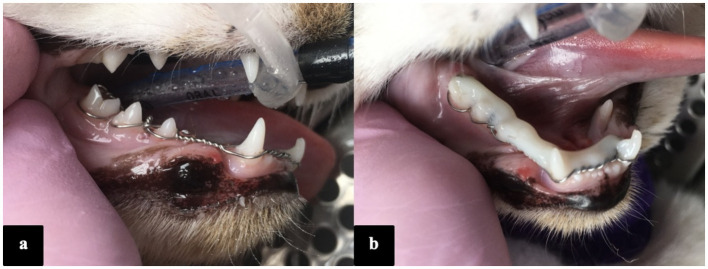
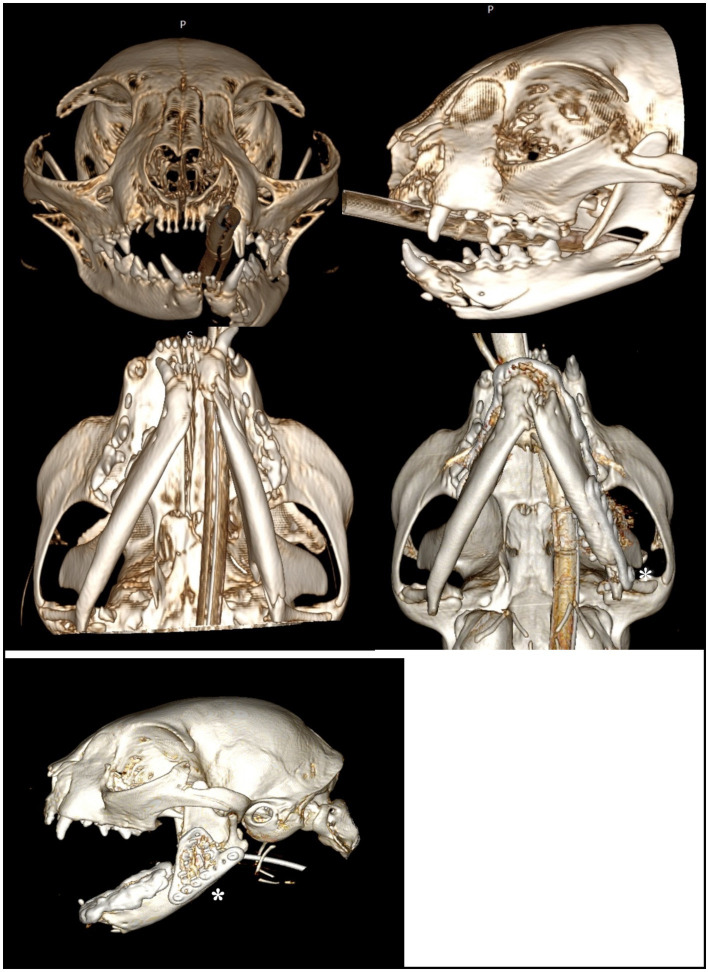
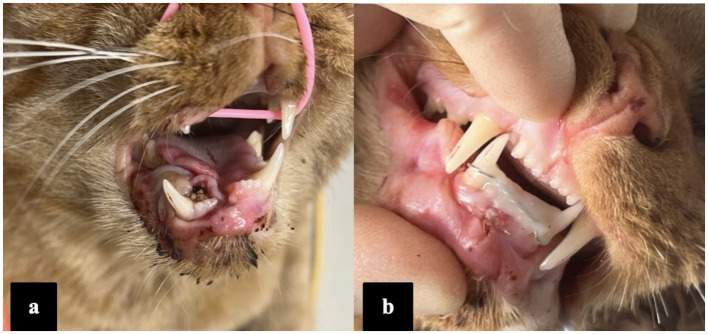
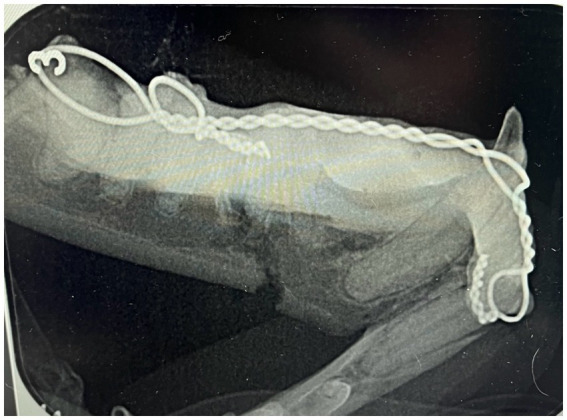
The study assesses the use of wire-reinforced intraoral composite splints (WRICS) for stabilising mandibular body fractures in feline patients. It reviews 15 cases treated at a referral centre, focusing on the effectiveness of WRICS in achieving stable fracture repair, occlusion, and patient comfort. The fractures were most commonly between the canine tooth and third premolar (73%). Results indicate that WRICS can provide effective stabilisation with a median healing time of 8 weeks. Normocclusion was achieved in 14 out of 15 cases. Major complications were found in two cases (13%) and were associated with soft tissue ulceration. This study supports WRICS as a minimally invasive, reliable approach to mandibular body fracture stabilisation in cats.
Keywords: composite; fracture; mandibular body; minimally invasive; occlusion; splint; wire.
Copyright © 2025 Pakula, Freeman and Perry.
Conflict of interest statement
The authors declare that the research was conducted in the absence of any commercial or financial relationships that could be construed as a potential conflict of interest.
Figures
References
-
- Constantaras ME, Charlier CJ. Maxillofacial injuries and diseases that cause an open mouth in cats. J Vet Dent. (2014) 31:168–76. doi: 10.1177/089875641403100305 - DOI
-
- Doblaré M, García JM, Gomez-Benito MJ. Modelling bone tissue fracture and healing: a review. Eng Fract Mech. (2004) 71:1809–40. doi: 10.1016/j.engfracmech.2003.08.003, PMID: - DOI
-
- Glyde M, Lidbetter D. Management of fractures of the mandible in small animals. In Pract. (2003) 25:570–85. doi: 10.1136/inpract.25.10.570 - DOI
LinkOut - more resources
Full Text Sources
Miscellaneous
