


Risk factors and mortality in children with severe pertussis: the role of exchange transfusion in a PICU
- PMID: 40197276
- PMCID: PMC11974208
- DOI: 10.1186/s13052-025-01951-7
Risk factors and mortality in children with severe pertussis: the role of exchange transfusion in a PICU
Abstract
Objective: Although multiple risk factors have been reported for adverse outcomes in children with severe pertussis, their predictive values and the benefits of interventions such as exchange transfusion remain poorly understood. Therefore, we aimed to comprehensively evaluate the risk factors associated with mortality in children with severe pertussis and assess the potential benefits of exchange transfusion therapy.
Methods: A retrospective analysis of 170 pertussis patients admitted to the Pediatric Intensive Care Unit (PICU) between January 2018 and June 2024 was performed.
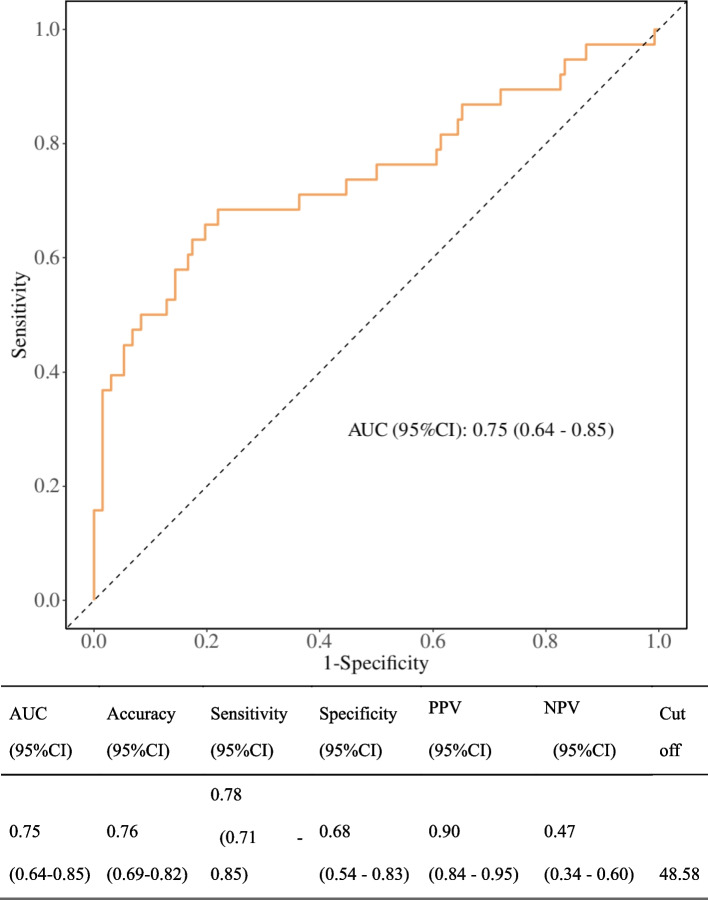
Results: Among the 170 patients, 38 (22.35%) died. The death group exhibited significantly higher white blood cell (WBC) counts (67.31 vs. 28.41 × 10^9/L, P < 0.001), neutrophils (29.95 vs. 11.61 × 10^9/L, P < 0.001), and C-reactive protein (CRP) (29 vs. 8 mg/L, P < 0.001). Additionally, sepsis (39.47% vs. 9.09%, P < 0.001), shock (63.16% vs. 6.06%, P < 0.001), ARDS (23.68% vs. 2.27%, P < 0.001), and acute kidney injury (21.05% vs. 0.76%, P < 0.001) were more prevalent in the death group. ROC analysis showed that WBC counts had a predictive value for mortality (AUC = 0.75, sensitivity = 0.78, specificity = 0.68), with an optimal cutoff of 48.58 × 10^9/L.
Conclusion: High WBC counts are significantly correlated with increased mortality risk in severe pertussis children, with a threshold of 48.58 × 10^9/L marking high risk. Although exchange transfusion can reduce WBC counts and improve symptoms, its benefit is limited in patients with severe secondary infections, necessitating tailored treatment strategies.
Keywords: Children; Exchange transfusion; Mortality; PICU; Pertussis; Risk factors.
© 2025. The Author(s).
Conflict of interest statement
Declarations. Ethics approval and consent to participate: This study was approved by the Ethics Committee (Institutional Review Board of Children's Hospital of Chongqing Medical University). The ethical considerations for this study are based on the guidelines provided by the World Medical Association (WMA) and the International Committee on Medical Ethics and Safety (CIOMS). Consent for publication: N/A. Competing interests: The authors have no relevant financial or non-financial interests to disclose.
Figures
Similar articles
-
Severe pertussis infections in pediatric intensive care units: a multicenter study.Eur J Pediatr. 2025 Jan 15;184(2):138. doi: 10.1007/s00431-025-05978-0. Eur J Pediatr. 2025. PMID: 39812867
-
The clinical analysis and indications for exchange transfusion in 158 children with pertussis characterized by marked leukocytosis.Ital J Pediatr. 2025 Jul 15;51(1):224. doi: 10.1186/s13052-025-02077-6. Ital J Pediatr. 2025. PMID: 40660389 Free PMC article.
-
Critical pertussis illness in children: a multicenter prospective cohort study.Pediatr Crit Care Med. 2013 May;14(4):356-65. doi: 10.1097/PCC.0b013e31828a70fe. Pediatr Crit Care Med. 2013. PMID: 23548960 Free PMC article.
-
Severe pertussis and hyperleukocytosis: is it time to change for exchange?Transfusion. 2014 Jun;54(6):1630-3. doi: 10.1111/trf.12519. Epub 2013 Dec 16. Transfusion. 2014. PMID: 24330004 Review.
-
Fatal malignant pertussis with hyperleukocytosis in a Chinese infant: A case report and literature review.Medicine (Baltimore). 2018 Apr;97(17):e0549. doi: 10.1097/MD.0000000000010549. Medicine (Baltimore). 2018. PMID: 29703037 Free PMC article. Review.
Cited by
-
Clinical Characteristics and Risk Factors for Pertussis in Children.Cureus. 2025 May 20;17(5):e84485. doi: 10.7759/cureus.84485. eCollection 2025 May. Cureus. 2025. PMID: 40539153 Free PMC article.
References
-
- Wood N, McIntyre P. Pertussis: review of epidemiology, diagnosis, management and prevention. Paediatr Respir Rev. 2008;9:201–12. 10.1016/j.prrv.2008.05.010. - PubMed
-
- Yeung KHT, Duclos P, Nelson EAS, Hutubessy RCW. An update of the global burden of pertussis in children younger than 5 years: a modelling study. Lancet Infect Dis. 2017;17:974–80. 10.1016/S1473-3099(17)30390-0. - PubMed
-
- Lashkari HP, Karuppaswamy S, Khalifa K. Pertussis-related hyperleukocytosis: role of hyperhydration and exchange transfusion. Clin Pediatr (Phila). 2012;51:987–90. 10.1177/0009922811410971. - PubMed
-
- Straney L, Schibler A, Ganeshalingham A, Alexander J, Festa M, Slater A, et al. Burden and Outcomes of Severe Pertussis Infection in Critically Ill Infants. Pediatr Crit Care Med. 2016;17:735–42. 10.1097/PCC.0000000000000851. - PubMed
MeSH terms
LinkOut - more resources
Full Text Sources
Medical
Research Materials
Miscellaneous
