PD-1 inhibition for relapse after allogeneic transplantation in acute myeloid leukemia and myelodysplastic syndrome
- PMID: 40198769
- PMCID: PMC12332914
- DOI: 10.1182/bloodadvances.2024015200
PD-1 inhibition for relapse after allogeneic transplantation in acute myeloid leukemia and myelodysplastic syndrome
Abstract
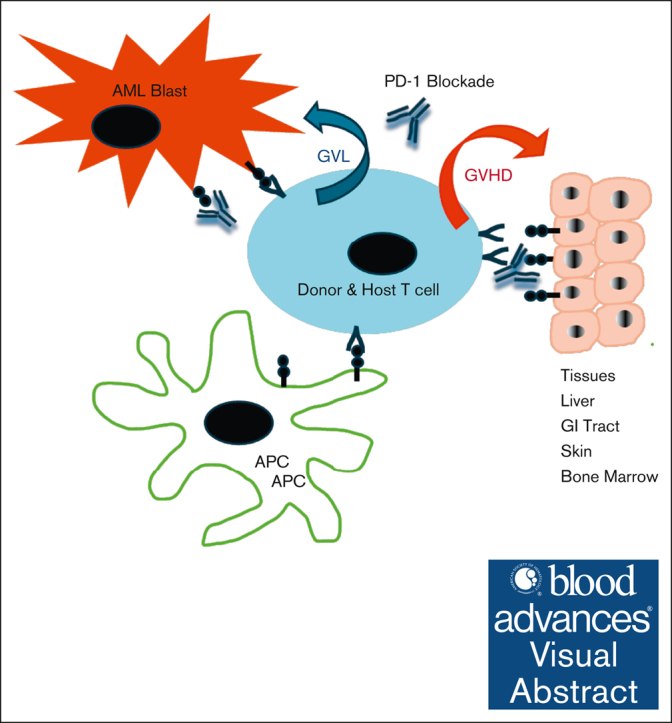
Relapse of acute myeloid leukemia (AML) and myelodysplastic syndrome (MDS) remains the primary source of mortality after allogeneic hematopoietic stem cell transplantation (HCT). Targeting programmed death-1 (PD-1) for reversing T-cell exhaustion and restoring the graft-versus-leukemia (GVL) effect may have logistical advantages over donor lymphocyte infusion. In a prospective phase 1B clinical trial, pembrolizumab was administered every 3 weeks to 16 patients with AML (n = 12) and MDS (n = 4) in relapse after HCT to assess graft-versus-host disease (GVHD), clinical response, and survival. The median time to relapse after HCT was 5.5 months and the median pretreatment bone marrow blast percentage was 21.5%. The overall response rate was 31.3% for patients receiving pembrolizumab, consisting of 3 complete remissions (18.8%) and 2 partial remissions (13.5%). The median duration of response was 610 days. A significantly greater proportion of patients with mixed CD3 chimerism had a clinical response than those with full donor chimerism (50% vs 0%; P = .03). Immune toxicities were frequent, with 37.5% of patients developing severe (grade 3-4) GVHD after pembrolizumab, of which most had resistance to corticosteroids and contributed to death in 4 patients (25%). The 1-year overall survival (OS) was 37.5% and event-free survival was 31.3%. For AML, 1-year OS was 50.0%. In this trial, PD-1 inhibition led to durable remission in one-third of the patients experiencing early relapse after HCT, suggesting that this approach may augment the GVL response. Responses were exclusively observed in the setting of mixed CD3 donor chimerism. Immune toxicities (GVHD) were a barrier to successful treatment outcome. This trial was registered at www.ClinicalTrials.gov as #NCT03286114.
© 2025 American Society of Hematology. Published by Elsevier Inc. Licensed under Creative Commons Attribution-NonCommercial-NoDerivatives 4.0 International (CC BY-NC-ND 4.0), permitting only noncommercial, nonderivative use with attribution. All other rights reserved.
Conflict of interest statement
Conflict-of-interest disclosure: The authors declare no competing financial interests.
Figures


Comment in
-
Targeting PD-1 for HCT relapse: an immunologic knife's edge.Blood Adv. 2025 Aug 12;9(15):3907-3908. doi: 10.1182/bloodadvances.2025016709. Blood Adv. 2025. PMID: 40737037 Free PMC article. No abstract available.
References
-
- Schroeder T, Czibere A, Platzbecker U, et al. Azacitidine and donor lymphocyte infusions as first salvage therapy for relapse of AML or MDS after allogeneic stem cell transplantation. Leukemia. 2013;27(6):1229–1235. - PubMed
-
- Schmid C, Labopin M, Nagler A, et al. Donor lymphocyte infusion in the treatment of first hematological relapse after allogeneic stem-cell transplantation in adults with acute myeloid leukemia: a retrospective risk factors analysis and comparison with other strategies by the EBMT Acute Leukemia Working Party. J Clin Oncol. 2007;25(31):4938–4945. - PubMed
Publication types
MeSH terms
Substances
Associated data
Grants and funding
LinkOut - more resources
Full Text Sources
Medical
Research Materials
Miscellaneous