


The synergistic activity of fisetin on quercetin improves testicular recover in ischemia-reperfusion injury in rats
- PMID: 40199993
- PMCID: PMC11978994
- DOI: 10.1038/s41598-025-96413-9
The synergistic activity of fisetin on quercetin improves testicular recover in ischemia-reperfusion injury in rats
Abstract
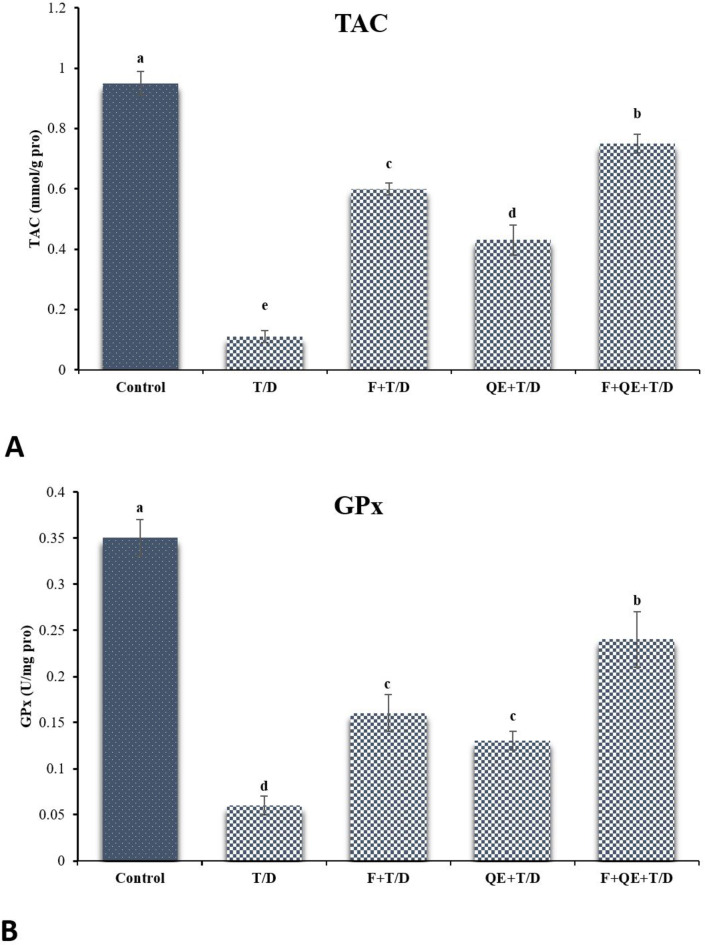
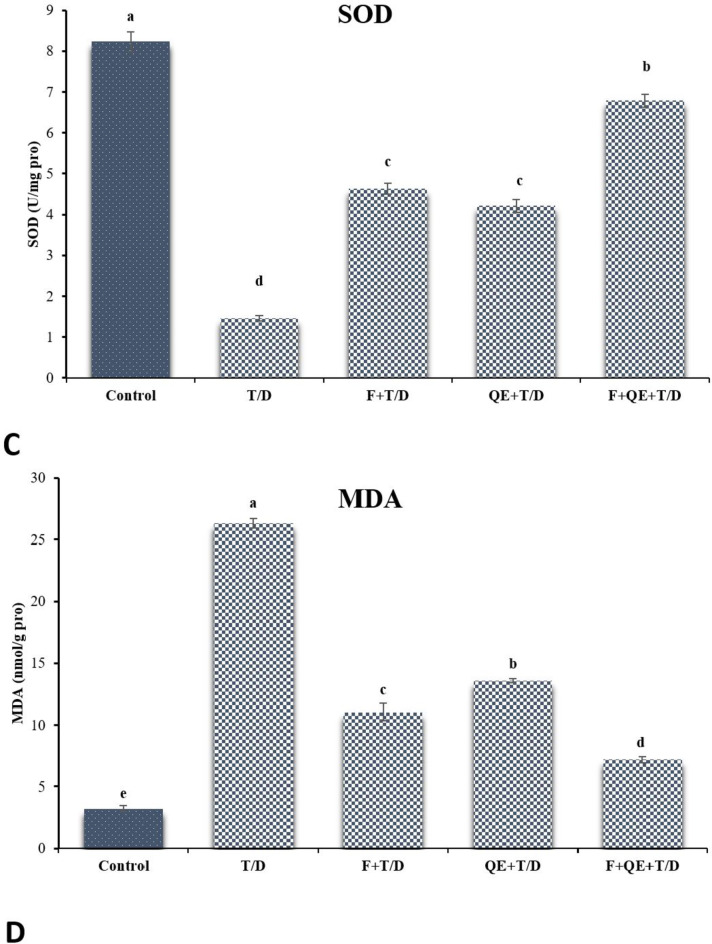
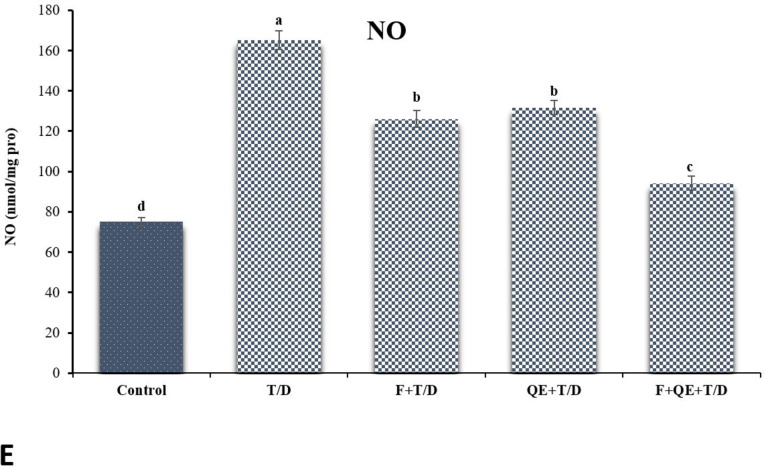
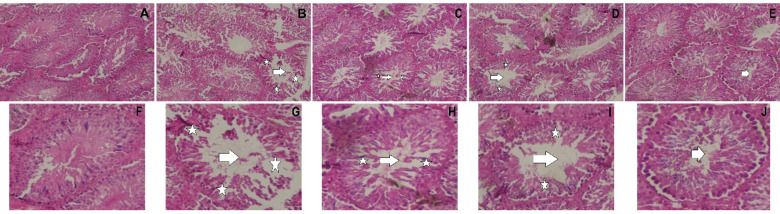
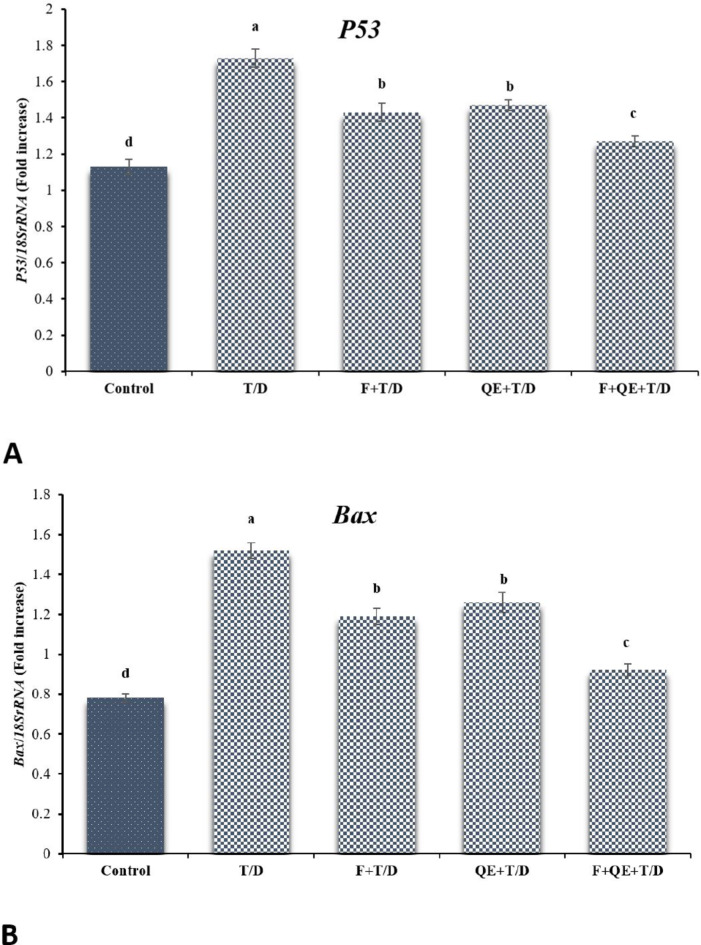
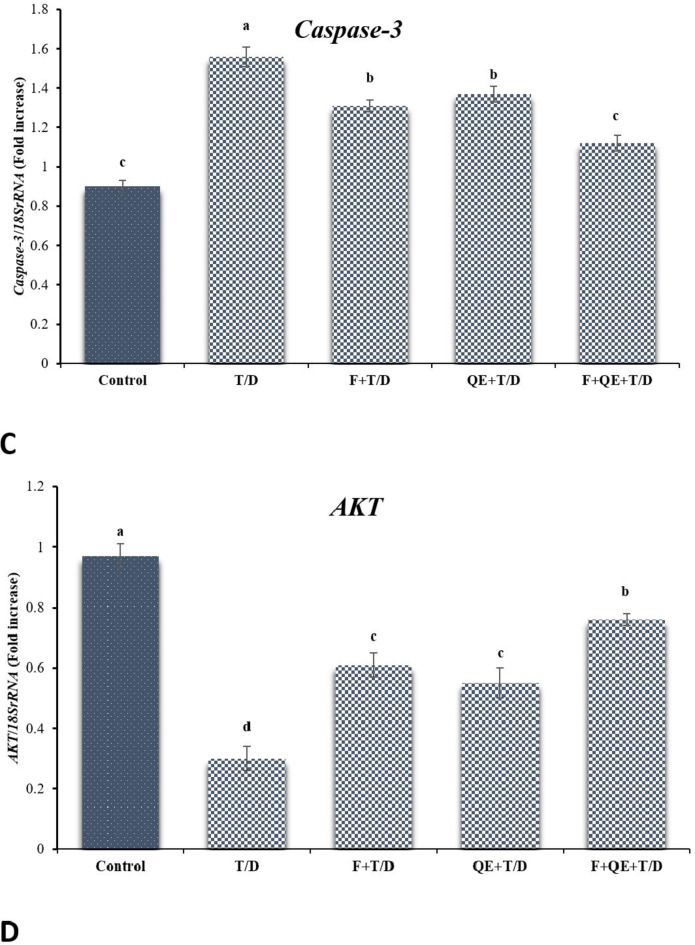
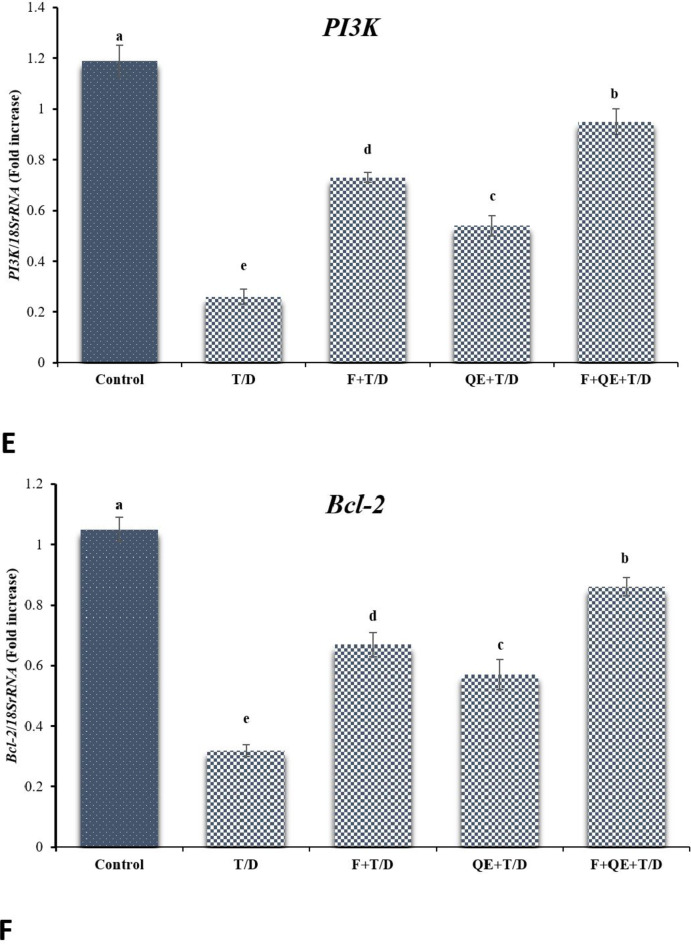
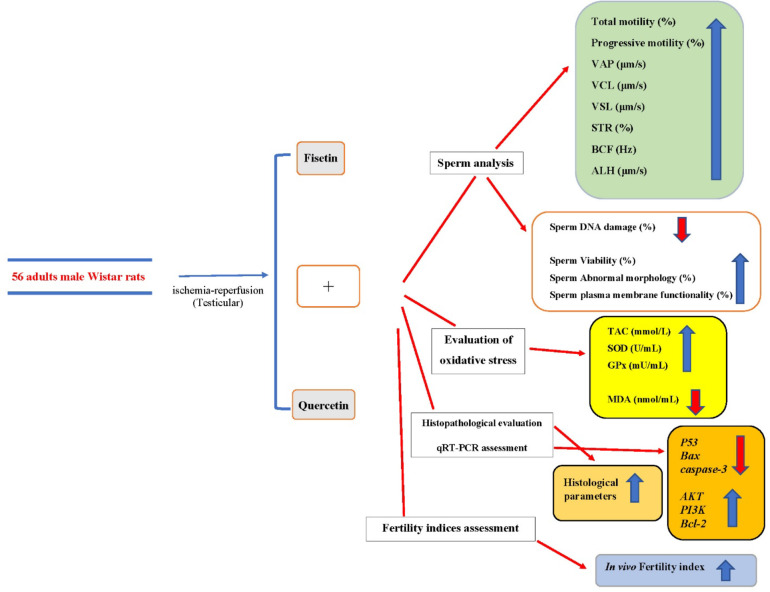
This study examines a potential treatment for testicular ischemia-reperfusion (I/R) injury using fisetin (FIS) and quercetin (QUE) in a rat model. Male rats were divided into five groups: a control group, a torsion/detorsion (T/D) group, and three experimental groups treated with FIS, QUE, or a combination of FIS + QUE. Sperm parameters, oxidative stress markers, histopathological features, RT-PCR analysis of apoptotic and antiapoptotic gene expression, and fertility index were evaluated. The results demonstrated that FIS + QUE, FIS, and QUE significantly improved sperm motility and concentration, leading to a higher fertility index, than the reduced metrics in the T/D group. Additionally, levels of MDA and NO were significantly lowered, while CAT, SOD, GPx, and TAC levels increased in the FIS + QUE, FIS, and QUE groups. Histopathological, RT-PCR and fertility analyses also revealed evidence of apoptosis and testicular damage in the T/D group, shown by significant increases in P53, Bax, and caspase-3, along with marked decreases in AKT, PI3K, and Bcl-2. Treatment with FIS and QUE, particularly in combination, significantly improved outcomes, indicating a strong synergistic effect that helps repair damage and enhance reproductive function after T/D injury.
Keywords: Fisetin; Ischemia-reperfusion; Oxidative stress; Quercetin; Rat; Testicular torsion.
© 2025. The Author(s).
Conflict of interest statement
Declarations. Competing interests: The authors declare no competing interests. Ethics approval and consent to participate: The Animal Ethics Committee of Urmia University approved the experiments, and all methods were carried out in accordance with the relevant guidelines and regulations (IR-UU-2361/PD/3). Additionally, the study adhered to the ARRIVE guidelines (Animals in Research: Reporting In Vivo Experiments) and complied with institutional and national regulations for the care and use of laboratory animals.
Figures

References
-
- Howe, A. S. & Palmer, L. S. Testis torsion: recent lessons. Can. J. Urol.23, 8602 (2016). - PubMed
MeSH terms
Substances
LinkOut - more resources
Full Text Sources
Research Materials
Miscellaneous
