


Tertiary butylhydroquinone regulates oxidative stress in spleen injury induced by gas explosion via the Nrf2/HO-1 signaling pathway
- PMID: 40200066
- PMCID: PMC11978986
- DOI: 10.1038/s41598-025-97096-y
Tertiary butylhydroquinone regulates oxidative stress in spleen injury induced by gas explosion via the Nrf2/HO-1 signaling pathway
Abstract
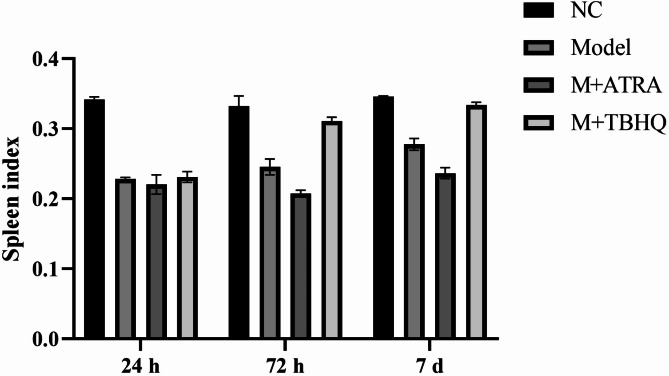
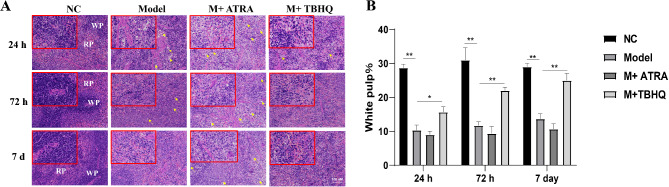
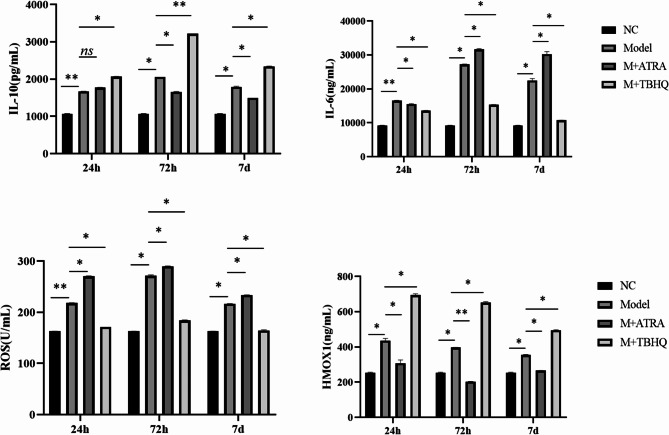
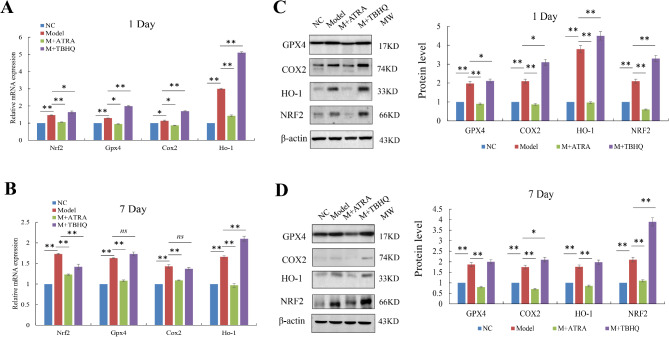
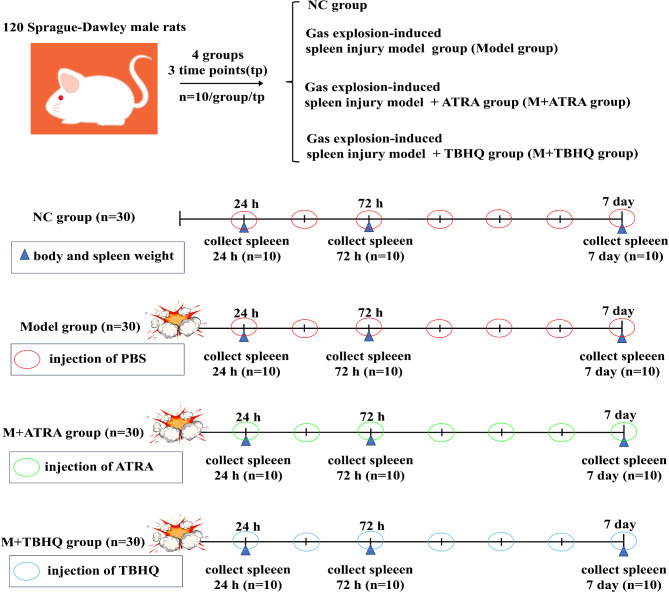
Gas explosion is a recurrent event in coal mining that cause severe spleen damage. This study aimed to investigate the role and mechanism of oxidative stress in gas explosion-induced spleen injury. 120 male Sprague-Dawley (SD) rats were randomly divided into a control group (NC), a gas explosion-induced spleen injury model group (Model), an Nrf2 inhibitor group (Model + ATRA), and an Nrf2 induction group (Model + TBHQ). After explosion, the rats of the inhibitor group and induction group were immediately given intraperitoneal injection of all-trans-retinoicacid (ATRA, 5 mg/kg) or tertiary butylhydro-quinone (TBHQ, 1 mg/kg) once. Then, the rats were anesthetized with blood taken from the abdominal aorta at 24 h, 72 h and 7 days. The results showed that gas explosion reduced the spleen index. The expression of oxidative stress-related genes and proteins Nrf2, HO-1, COX2 and GPX4 were increased significantly (P < 0.05) after gas explosion. Compared with the model group, TBHQ improved the spleen index, and reduced inflammation. Moreover, the expression of inflammatory factor IL-6 and ROS was decreased (P < 0.05), HMOX1 and the expression of oxidative stress-related genes and proteins were increased (P < 0.05), but the opposite results were observed in the inhibitor group. Taken together, we firstly found that TBHQ may regulate the degree of oxidative stress in spleen injury induced by gas explosion through the Nrf2/HO-1 signaling pathway.
Keywords: Gas explosion; Oxidative stress; Spleen injury; Tertiary butylhydroquinone (TBHQ).
© 2025. The Author(s).
Conflict of interest statement
Declarations. Competing interests: The authors declare no competing interests. Ethical approval: This study was performed in strict accordance with the recommendations in the Guide for the Care and Use of Laboratory Animals of the National Institutes of Health (Bethesda, MD, USA). Eighth Edition, 2010. The animal use protocol has been reviewed and approved by the Institutional Animal Care and Use Committee (IACUC) of Xinxiang Medical University (XYLL-20220077).
Figures
References
-
- Song, Y. & Zhang, Q. The quantitative studies on gas explosion suppression by an inert rock dust deposit. J. Hazard. Mater.353, 62–69 (2018). - PubMed
-
- Dong, X. et al. Short-term effect of gas explosion in real roadway environment on rats’ brain neural behavior. Wei Sheng Yan Jiu. 49, 889–894 (2020). - PubMed
MeSH terms
Substances
Grants and funding
LinkOut - more resources
Full Text Sources
Research Materials
