


Habitat analysis of iron deposition in the basal ganglia for diagnosing cognitive impairment in chronic kidney disease: evidence from a case-control study
- PMID: 40200199
- PMCID: PMC11980340
- DOI: 10.1186/s12880-025-01656-7
Habitat analysis of iron deposition in the basal ganglia for diagnosing cognitive impairment in chronic kidney disease: evidence from a case-control study
Abstract
Background: Chronic kidney disease induces alterations in the heterogeneity of iron deposition within the basal ganglia. Quantitative analysis of the heterogeneity of iron deposition within the basal ganglia may be valuable for diagnosing chronic kidney disease-related cognitive impairment.
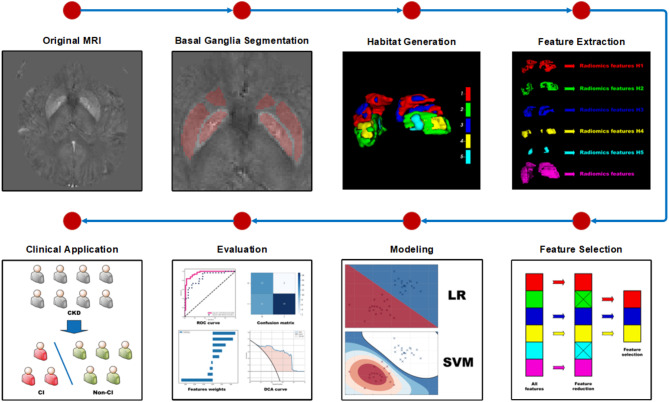
Methods: In this prospective observational cohort study, quantitative susceptibility mapping (QSM) was performed in chronic kidney disease patients. Susceptibility values of each nucleus within the basal ganglia were measured. Radiomic features were extracted from habitats of the basal ganglia on QSM images. Habitat-based models for diagnosing cognitive impairment were constructed using the random forest algorithm. Logistic regression was employed to build the clinical model and the combined model. The performance of each model was evaluated by the receiver operating characteristic (ROC) analysis.
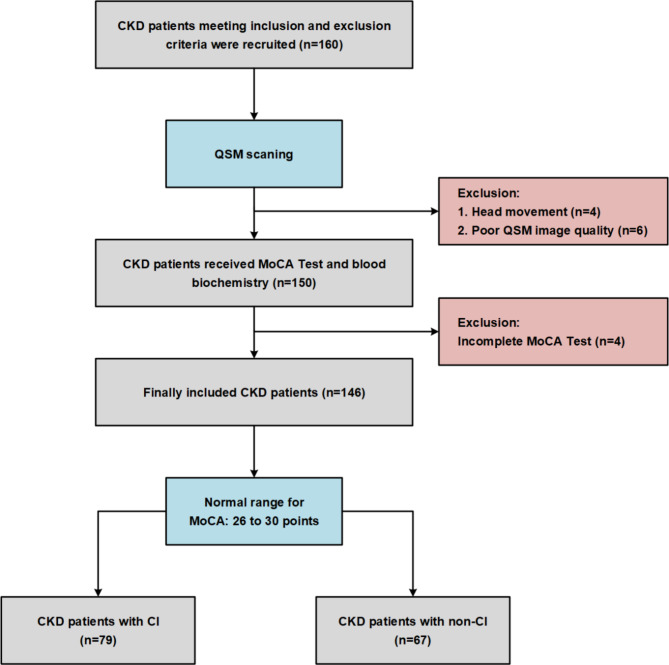
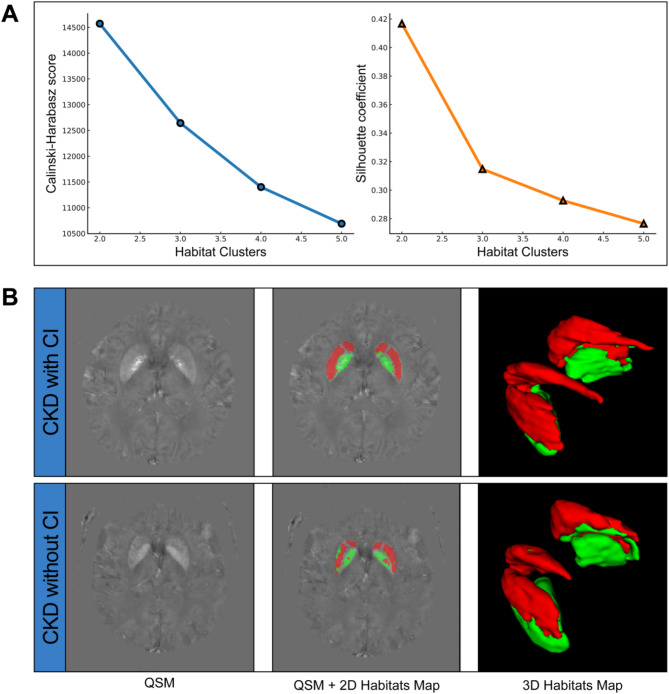
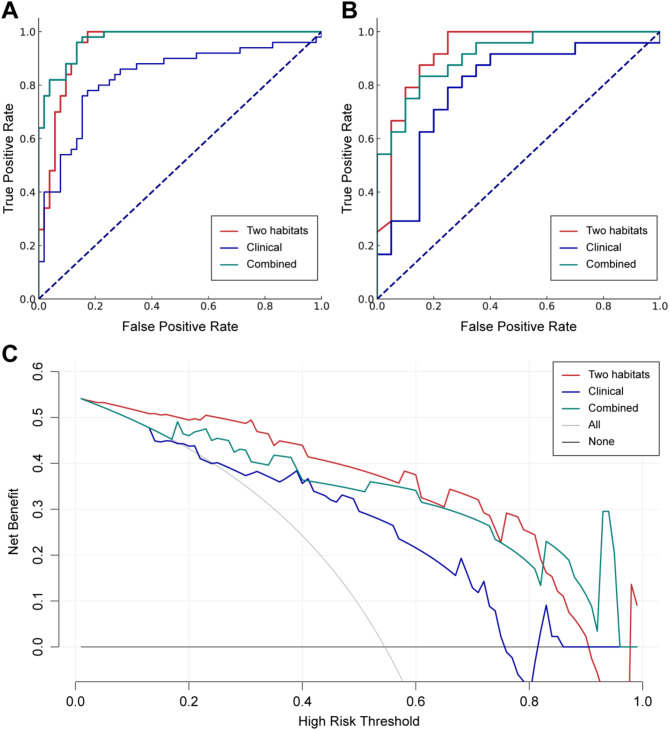
Results: A total of 146 patients (mean age, 51 ± 13 years; 92 male) were included, of which 79 had cognitive impairment. The two habitats-based model achieved an area under the curve of 0.926 (95% CI 0.842-1.000) on the test set, the highest among all prediction models. The two-habitat maps indicated that chronic kidney disease had two distinct patterns of impact on iron deposition in the basal ganglia region. The capability of the two habitats-based model to identify chronic kidney disease-related cognitive impairment was significantly superior to that of the susceptibility values measured in various nuclei (all p < 0.05).
Conclusions: This study innovatively applied a habitat-based quantitative analysis technique to QSM, successfully constructing a model that accurately diagnoses chronic kidney disease-related cognitive impairment.
Trial registration: This study was approved by the Beijing Friendship Hospital Ethics Board (ClinicalTrials.gov Identifier: NCTO5137470) and conducted in accordance with the Declaration of Helsinki ethical standards.
Keywords: Basal ganglia; Chronic kidney disease; Cognitive impairment; Quantitative susceptibility mapping; Radiomics.
© 2025. The Author(s).
Conflict of interest statement
Declarations. Ethics approval and consent to participate: This study was approved by the Beijing Friendship Hospital Ethics Board (ClinicalTrials.gov Identifier: NCTO5137470) and was conducted in accordance with the ethical standards of the Declaration of Helsinki. Written informed consent was obtained from all subjects (patients) prior to participation in the study. Consent for publication: Not applicable. Competing interests: The authors declare no competing interests.
Figures
References
Publication types
MeSH terms
Substances
Grants and funding
- 82202099 and 52227814/National Natural Science Foundation of China
- ZYLX201824 and ZYLX202101/Beijing Municipal Administration of Hospitals Clinical Medicine Development of Special Funding Support
- SML20150101/Beijing Municipal Administration of Hospital's Mission Plan
- YYZZ202129, yyqcjh2023-7/Beijing Friendship Hospital, Capital Medical University
- CCMU2022ZKYXY011/Training Fund for Open Projects at Clinical Institutes and Departments of Capital Medical University
LinkOut - more resources
Full Text Sources
Medical
