


Reliability of clinical impressions and optimal genetic diagnostic strategies of heritable connective tissue disorders with ocular involvement in a large Chinese cohort
- PMID: 40200375
- PMCID: PMC11980178
- DOI: 10.1186/s40246-025-00749-2
Reliability of clinical impressions and optimal genetic diagnostic strategies of heritable connective tissue disorders with ocular involvement in a large Chinese cohort
Abstract
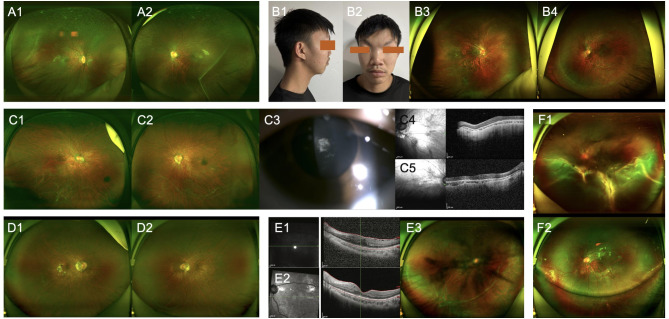
Purpose: This study aimed to elucidate the reliability of clinical impressions based on ocular manifestations in patients suspected of heritable connective tissue disorders (HCTDs) compared to the final genetic diagnosis. Furthermore, it sought to determine the optimal diagnostic strategy for patients with HCTDs through pathogenicity analysis.
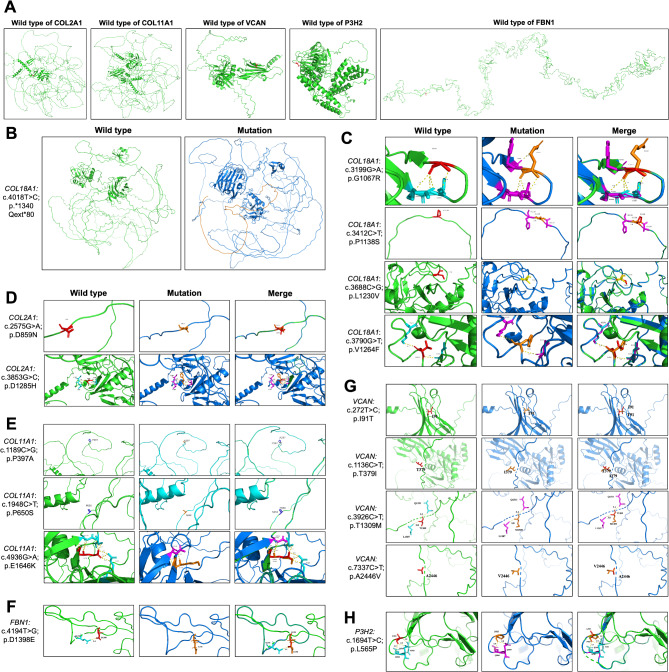
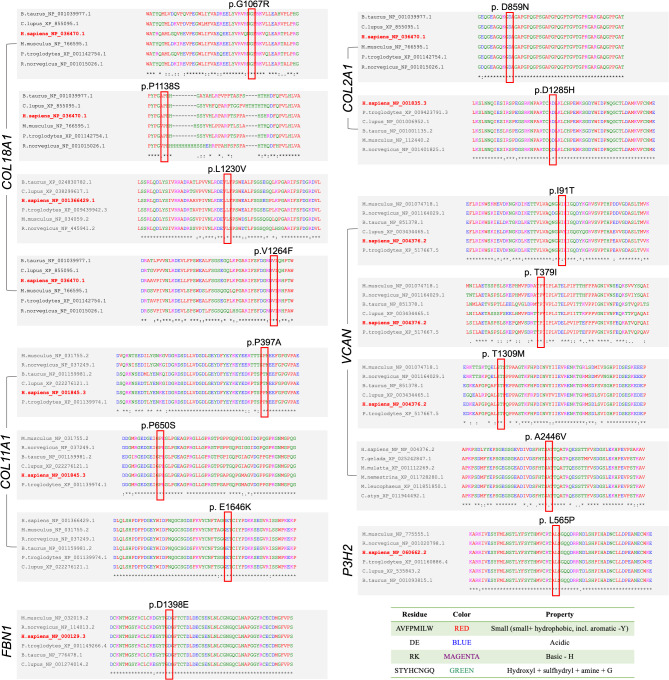
Methods: Clinical characteristics of 58 patients suspected of HCTDs were analyzed to establish provisional clinical diagnoses. Subsequently, next-generation sequence and Sanger sequence was performed to obtain genetic diagnoses. Pathogenicity of identified variants was assessed through conservation analysis and the functional impact, which was predicted using three-dimensional protein structure modeling.
Results: The provisional clinical diagnosis was concordant with the molecular diagnostic result in only 21 patients. Independent of the initial clinical impression, a probable genetic diagnosis was achieved for all 58 patients following comprehensive re-analysis of next-generation sequence data, combined with pathogenicity assessment using three-dimensional protein structure and conservation analysis of suspicious positive variants.
Conclusion: This study broadens the mutational spectrum of HCTDs with 31 novel variants. By employing innovative methodologies to delineate phenotype-genotype relationships, including the detection of potentially pathogenic variants, this work may inform future diagnostic strategies and guide comprehensive disease and organ system monitoring. Ongoing refinement and vigilant clinical oversight remain essential for patients and their families.
Keywords: Genetic diagnosis; Heritable connective tissue disorders; Knobloch syndrome; Severe myopia; Stickler syndrome; Wagner syndrome.
© 2025. The Author(s).
Conflict of interest statement
Declarations. Ethics approval and consent to participate: Approval for data collection and analysis was granted by the Institutional Review Board of the Eye and ENT Hospital of Fudan University, Shanghai, China on November 26, 2020. The ethical approval number was [2020]2020119. Informed consent was obtained from all individual participants or their parents or legal guardian in the case of children under 16 included in the study. Consent for publication: All authors read and approved the final manuscript. Competing interests: The authors declare no competing interests.
Figures
References
-
- Robertson SP, Twigg SRF, Sutherland-Smith AJ, Biancalana V, Gorlin RJ, Horn D, et al. Localized mutations in the gene encoding the cytoskeletal protein filamin A cause diverse malformations in humans. Nat Genet. 2003;33:487–91. 10.1038/ng1119. - PubMed
-
- Colombi M, Dordoni C, Chiarelli N, Ritelli M. Differential diagnosis and diagnostic flow chart of joint hypermobility syndrome/ehlers-danlos syndrome hypermobility type compared to other heritable connective tissue disorders. Am J Med Genet C Semin Med Genet. 2015;169 C:6–22. 10.1002/ajmg.c.31429. - PubMed
MeSH terms
Supplementary concepts
Grants and funding
LinkOut - more resources
Full Text Sources
Medical
