


A maternal and child health administrative cohort in Scotland: the utility of linked administrative data for understanding early years' outcomes and inequalities
- PMID: 40200992
- PMCID: PMC11977605
- DOI: 10.23889/ijpds.v9i2.2402
A maternal and child health administrative cohort in Scotland: the utility of linked administrative data for understanding early years' outcomes and inequalities
Abstract
Introduction: The early years are considered one of the most impactful points in the life course to intervene to improve population health and reduce health inequalities because, for example, both ill health and social disadvantage can track into adulthood. Scotland's outstanding systems for data linkage offer untapped potential to further our understanding of when and why inequalities in child health, development and wellbeing emerge. This understanding is vital for the consideration of policy options for their reduction.
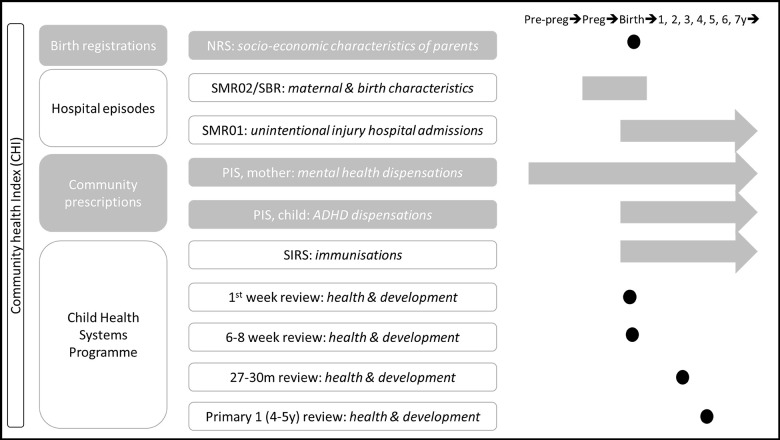
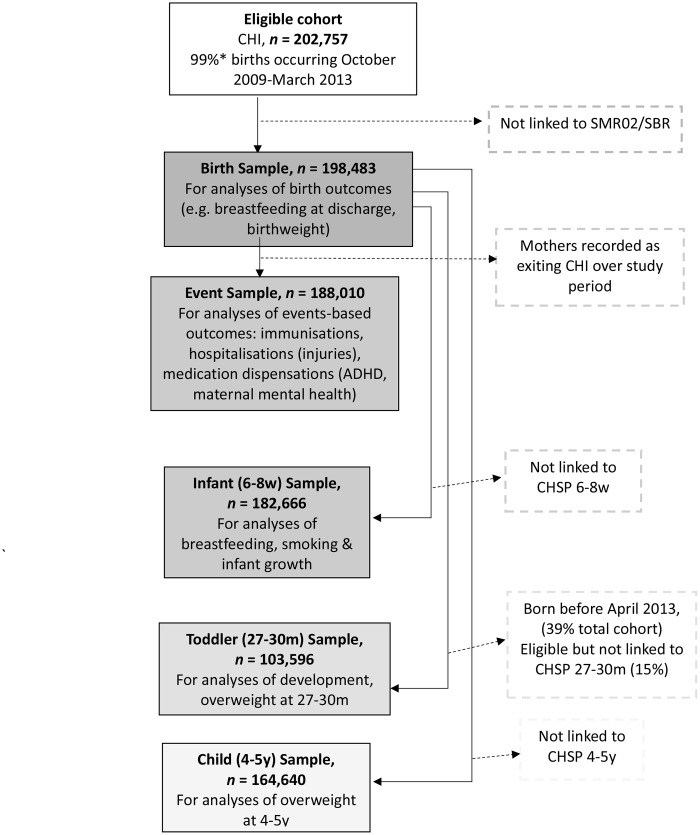
Methods: Birth registrations, hospital episodes, dispensed community prescriptions, child health reviews and immunisation records were linked for 198,483 mother-child pairs for babies born in Scotland from October 2009 to the end of March 2013, followed up until April 2018 (average age 6 years).
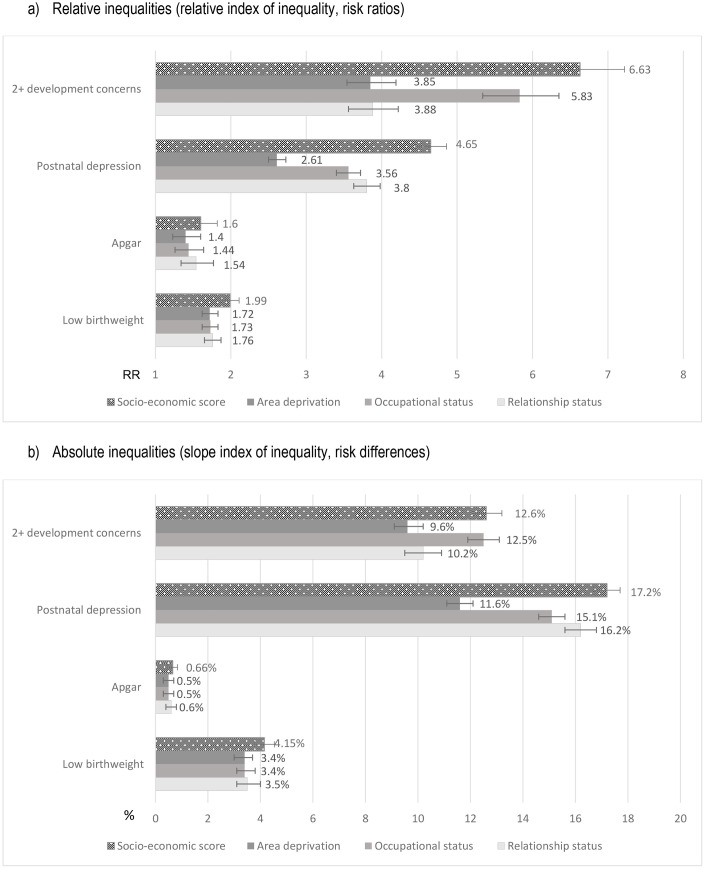
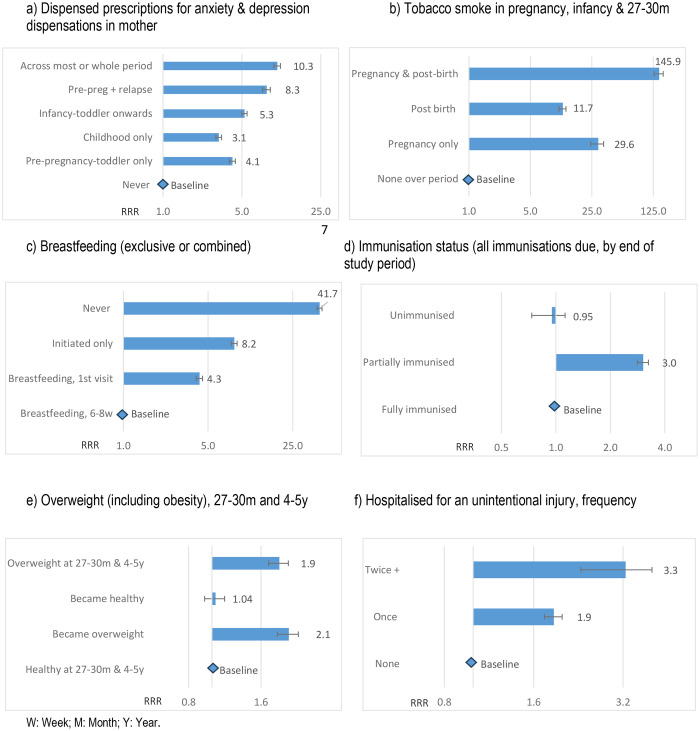
Results: Outcomes include birthweight and newborn health, dispensed prescriptions for mental health medications, tobacco smoke exposure, infant feeding, immunisations, hospitalisation for unintentional injuries, socio-emotional, cognitive and motor development, and overweight and obesity. Several measures are repeated throughout childhood allowing examination of timing, change and persistence. Socio-economic circumstances (SECs) include neighbourhood deprivation, relationship status of the parents, and occupational status. Descriptive analyses highlight large inequalities across all outcomes. Inequalities are greater when measured by family-level as opposed to area-level, aspects of socio-economic circumstances and for persistent or more severe outcomes. For example, 41.4% of the most disadvantaged children (living with a lone, economically inactive mother in the most deprived fifth of areas) were exposed to tobacco smoke in utero and in infancy/toddlerhood compared to <1% in the least disadvantaged children (living with a married, managerial/professional mother in the least deprived quintile of areas).
Conclusion: This novel linkage provides a longitudinal picture of health throughout the early years and how this varies according to family- and area-level measures of SECs. Future linkages could include other family members (e.g. siblings, grandmothers) and other sectors (e.g. education, social care). The creation of additional cohorts would allow for long-term and efficient evaluation of policies as natural experiments.
Keywords: admin data; child health; cohort; inequalities; maternal health.
Conflict of interest statement
Conflicts of interest: The authors have no conflicts of interest to declare except for the funding noted above.
Figures
References
-
- Center on the Developing Child at Harvard University. The Foundations of Lifelong Health Are Built in Early Childhood. Harvard University: Center on the Developing Child; 2010. https://developingchild.harvard.edu/resources/the-foundations-of-lifelon....
-
- Allen G. Early Intervention: Smart Investment, Massive Savings. The Second Independent Report to Her Majesty’s Government London: HM Government; 2011. https://assets.publishing.service.gov.uk/government/uploads/system/uploa....
-
- Power C, Atherton K, Strachan DP, Shepherd P, Fuller E, Davis A, et al.. Life-course influences on health in British adults: effects of socio-economic position in childhood and adulthood. International journal of epidemiology. 2007;36:532–9. - PubMed
-
- Law C. Lifecourse influences on children’s futures. In: Graham H, editor. Understanding Health Inequalities: Open University Press; 2009.
-
- Heckman JJ, Stixrud J, Urzua S. The effects of cognitive and noncognitive abilities on labor market outcomes and social behavior. Journal of Labor Economics. 2006;24(3):411–82. 10.1086/504455 - DOI
MeSH terms
LinkOut - more resources
Full Text Sources
Medical
Miscellaneous