


Ascaris lumbricoides infection in captive black sakis (Chiroptes utahickae): a case report and implications for zoonotic transmission
- PMID: 40201056
- PMCID: PMC11977788
- DOI: 10.29374/2527-2179.bjvm008924
Ascaris lumbricoides infection in captive black sakis (Chiroptes utahickae): a case report and implications for zoonotic transmission
Abstract
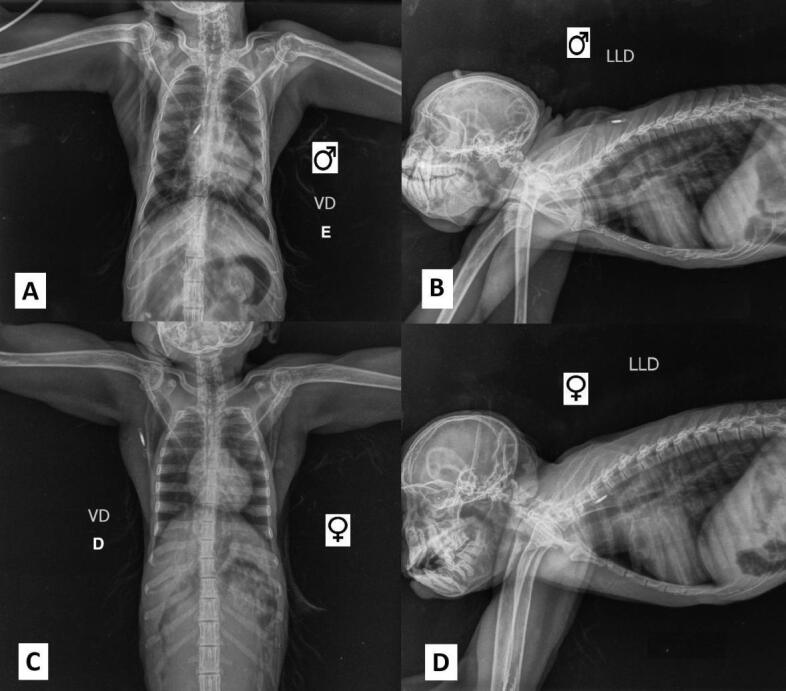
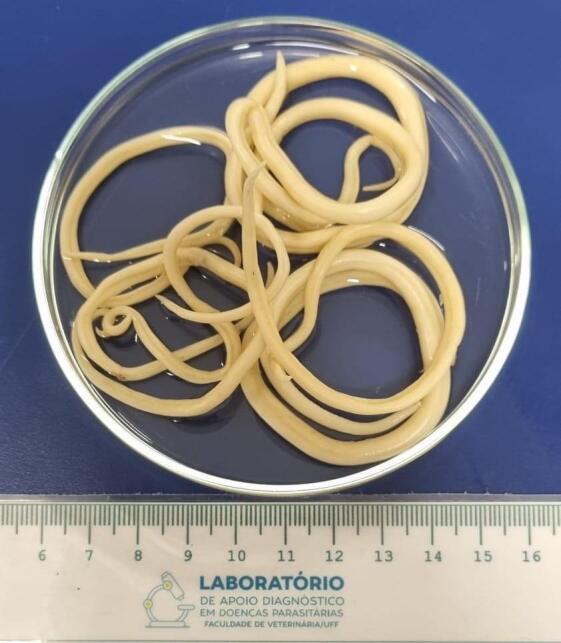
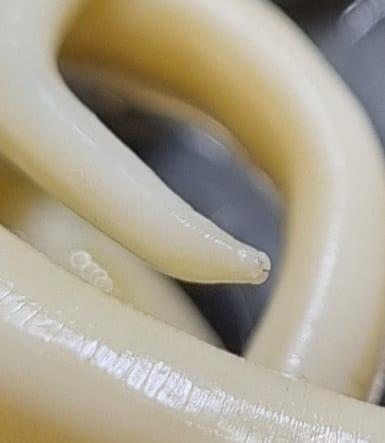
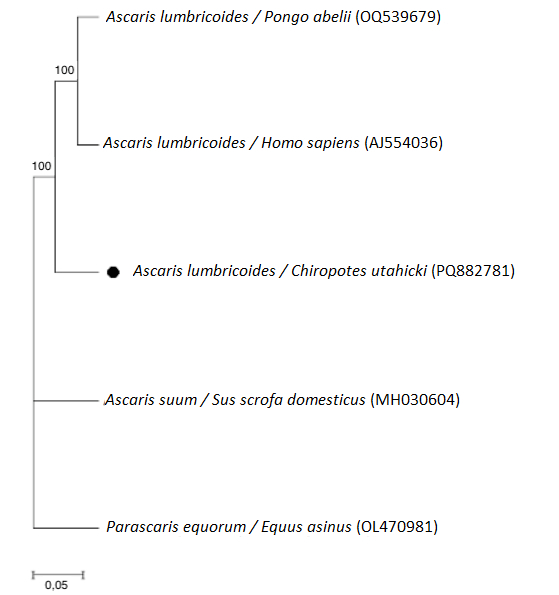
Ascaris lumbricoides infections represent a major global health challenge, affecting both humans and non-human primates. In non-human primates, A. lumbricoides infections pose a significant threat to conservation efforts, as they can impact both captive and wild populations, causing complications ranging from mild to severe. This study reports the case of two black sakis (Chiroptes utahickae) kept under human care in a zoo-a male and a female-presented for routine examination due to weight loss. Ultrasonography revealed a substantial intestinal infestation of large roundworms. The female was treated with pyrantel pamoate, and the male with fenbendazole, both with successful outcomes. The worms were sent for morphological and molecular identification, and the animals were submitted for new examinations. This case underscores the importance of preventive veterinary check-ups in zoos, particularly for parasites that pose zoonotic risks, to ensure both animal and human health.
Infecções por Ascaris lumbricoides representam um grande desafio para a saúde global, afetando tanto humanos quanto primatas não humanos. Em primatas não humanos, essas infecções representam uma ameaça significativa para os esforços de conservação, pois podem impactar tanto populações cativas quanto selvagens, causando complicações que variam de leves a graves. Este estudo relata o caso de dois cuxiús-pretos (Chiropotes utahickae) mantidos sob cuidados humanos em um zoológico—um macho e uma fêmea—apresentados para exame de rotina devido à perda de peso. A ultrassonografia evidenciou uma infestação intestinal substancial por vermes redondos de grande porte. A fêmea foi tratada com pamoato de pirantel e o macho com fenbendazol, ambos com sucesso. Os helmintos foram enviados para identificação morfológica e molecular, e os animais foram submetidos a novos exames. Este caso destaca a importância de check-ups veterinários preventivos em zoológicos, especialmente para parasitas com potencial zoonótico, a fim de garantir a saúde humana e animal.
Keywords: parasitism; primates; zoonosis.
Conflict of interest statement
Conflict of interests: BEPB, ACTA, BPM, BAS, ACB, IFBM, LAB – No conflict of interests.
Figures




References
-
- Bacelar P. A. A., Santos J. P., Calegar D. A., Silva D. A., Leal D. N., Evangelista B. B. C., Reis E. R. C., Mallet J. R. S., Carvalho-Costa F. A., Jaeger L. H., Monteiro K. J. L. A molecular and morphological study of Ascaris suum in a human-pig contact scenario in northeastern Brazil. Revista Brasileira de Parasitologia Veterinária. 2023;32(3):e005623. doi: 10.1590/s1984-29612023057. - DOI - PMC - PubMed
-
- Bais B., Tak L., Mahla S. Study of preventive health measures for wildlife in captivity: A review of management approaches. International Journal of Avian & Wildlife Biology. 2017;2(3):73–75.
-
- Brooker S. J., Pullan R. L. In: Ascaris: The neglected parasite. Holland C., editor. New York: Elsevier; 2013. Ascaris lumbricoides and ascariasis: Estimating numbers infected and burden of disease. pp. 343–362. - DOI
Publication types
LinkOut - more resources
Full Text Sources