


Galacto-oligosaccharides alleviate experimental lactose intolerance associated with gut microbiota in mice
- PMID: 40201439
- PMCID: PMC11975899
- DOI: 10.3389/fmicb.2025.1530156
Galacto-oligosaccharides alleviate experimental lactose intolerance associated with gut microbiota in mice
Abstract
Introduction: Galacto-oligosaccharides (GOS) are beneficial for alleviating lactose intolerance (LI). GOS have the ability to modify the composition of the intestinal microbiota. The development of intestinal diseases could be influenced by the composition of the gut microbiota. Nevertheless, it remains unclear whether gut microbiota exerts an effect when GOS alleviate LI, whether alterations in composition of the intestinal microbiota influence inflammatory response and lactose digestion.
Methods: We first investigated the effects of GOS on mice with established lactose intolerance. Next, we demonstrated that prophylactic supplementation with GOS also conferred similar benefits.
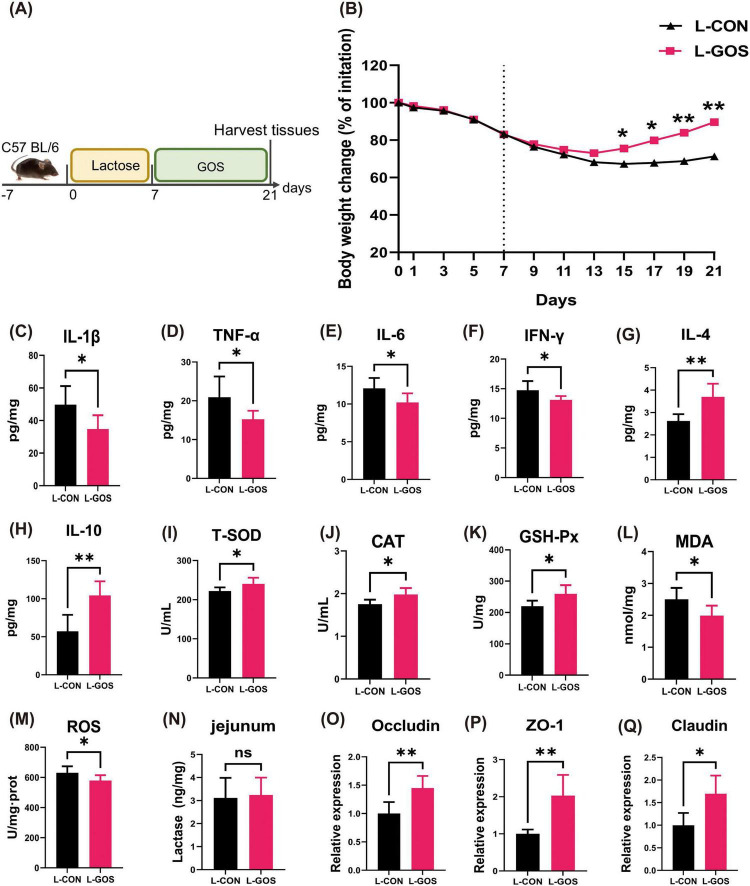
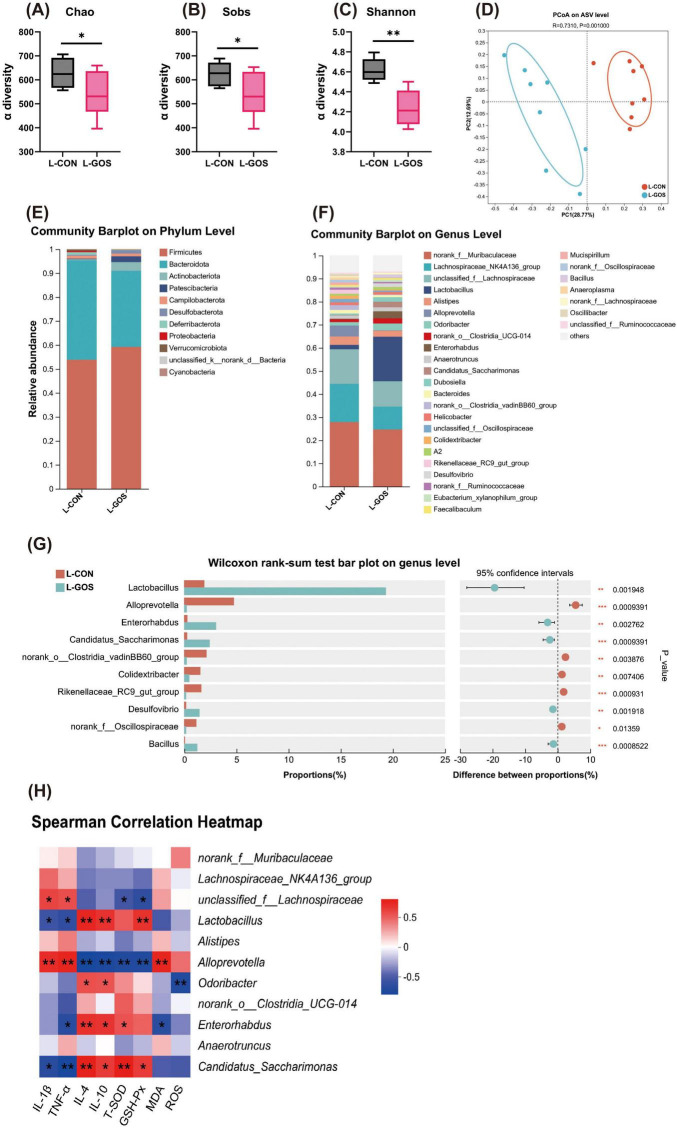
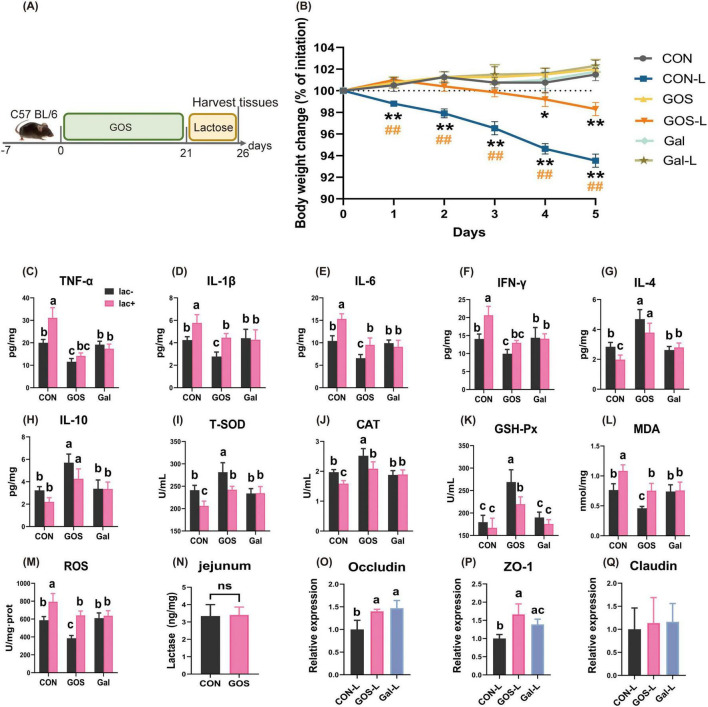
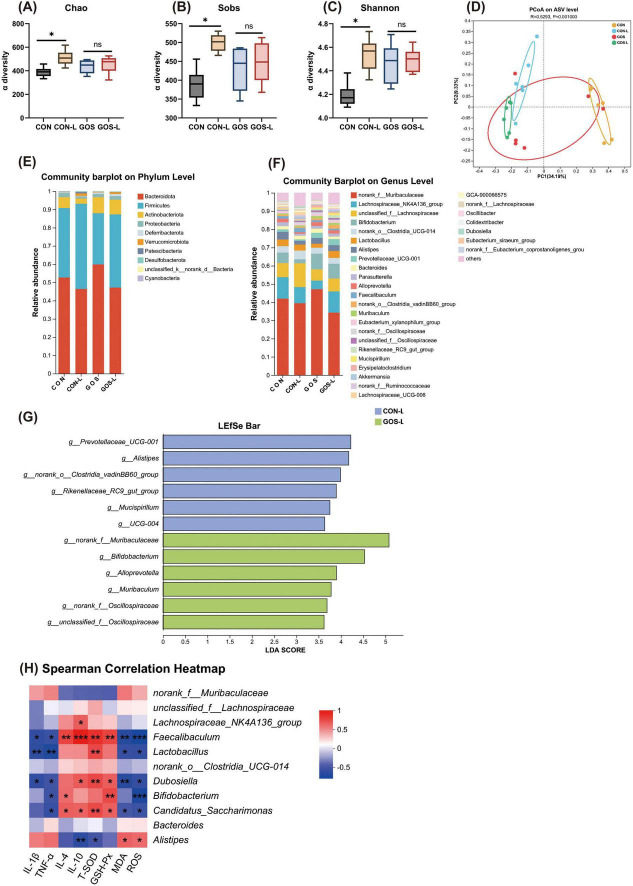
Results: The results showed that GOS enhanced anti-inflammatory, antioxidant, and gut barrier function. We observed that GOS mediated a change in the gut microbiome by increasing the abundance of Lactobacillus. GOS pre-supplementation reduced incident LI, enhanced anti-inflammatory, antioxidant, and gut barrier function, and markedly altered the gut microbiome by significantly enriching Bifidobacterium. Collectively, the alleviation of LI by GOS suggests an intimate involvement of probiotics.
Discussion: This study demonstrates that GOS ameliorated LI in a gut microbiota-dependent manner. Our findings provide novel evidence that GOS substitute for lactase and serve as a potential modulator of the gut microbiota for the prevention of LI.
Keywords: galacto-oligosaccharides; gut microbiota; lactase; lactose intolerance; mice.
Copyright © 2025 Li, Wang, Guo, Wang, Cao, Cao and Dong.
Conflict of interest statement
The authors declare that the research was conducted in the absence of any commercial or financial relationships that could be construed as a potential conflict of interest. The authors declared that they were an editorial board member of Frontiers, at the time of submission. This had no impact on the peer review process and the final decision.
Figures
References
-
- Almeida C. C., Lorena S. L., Pavan C. R., Akasaka H. M., Mesquita M. A. (2012). Beneficial effects of long-term consumption of a probiotic combination of Lactobacillus casei Shirota and Bifidobacterium breve Yakult may persist after suspension of therapy in lactose-intolerant patients. Nutr. Clin. Pract. 27 247–251. 10.1177/0884533612440289 - DOI - PubMed
-
- Andersen J. M., Barrangou R., Abou Hachem M., Lahtinen S., Goh Y. J., Svensson B., et al. (2011). Transcriptional and functional analysis of galactooligosaccharide uptake by lacS in Lactobacillus acidophilus. Proc. Natl. Acad. Sci. U S A. 108 17785–17790. 10.1073/pnas.1114152108 - DOI - PMC - PubMed
-
- Azcarate-Peril M. A., Ritter A. J., Savaiano D., Monteagudo-Mera A., Anderson C., Magness S. T., et al. (2017). Impact of short-chain galactooligosaccharides on the gut microbiome of lactose-intolerant individuals. Proc. Natl. Acad. Sci. U S A. 114 E367–E375. 10.1073/pnas.1606722113 - DOI - PMC - PubMed
-
- Azcarate-Peril M. A., Roach J., Marsh A., Chey W. D., Sandborn W. J., Ritter A. J., et al. (2021). A double-blind, 377-subject randomized study identifies Ruminococcus, Coprococcus, Christensenella, and Collinsella as long-term potential key players in the modulation of the gut microbiome of lactose intolerant individuals by galacto-oligosaccharides. Gut Microbes 13:1957536. 10.1080/19490976.2021.1957536 - DOI - PMC - PubMed
LinkOut - more resources
Full Text Sources
