


Global, regional, and National Burden of chronic kidney disease attributable to dietary risks from 1990 to 2021
- PMID: 40201583
- PMCID: PMC11975581
- DOI: 10.3389/fnut.2025.1555159
Global, regional, and National Burden of chronic kidney disease attributable to dietary risks from 1990 to 2021
Abstract
Background: Dietary risks are increasingly reported as a cause of chronic kidney disease (CKD). However, the trends in the burden of CKD attributable to dietary risks have yet to be fully elucidated.
Methods: This study extracted two major indicators related to CKD caused by dietary risks from the Global Burden of Disease (GBD) database for the years 1990 to 2021, including deaths and disability-adjusted life years (DALYs). It used estimated annual percentage change (EAPC) and percentage change to assess the trends in the burden of CKD caused by dietary risks. The relationship between Socio-demographic Index (SDI) and disease burden was also further analyzed. Additionally, we utilized the contemporary age-period-cohort model from NORDPRED to project future burden of CKD attributable to dietary risks.
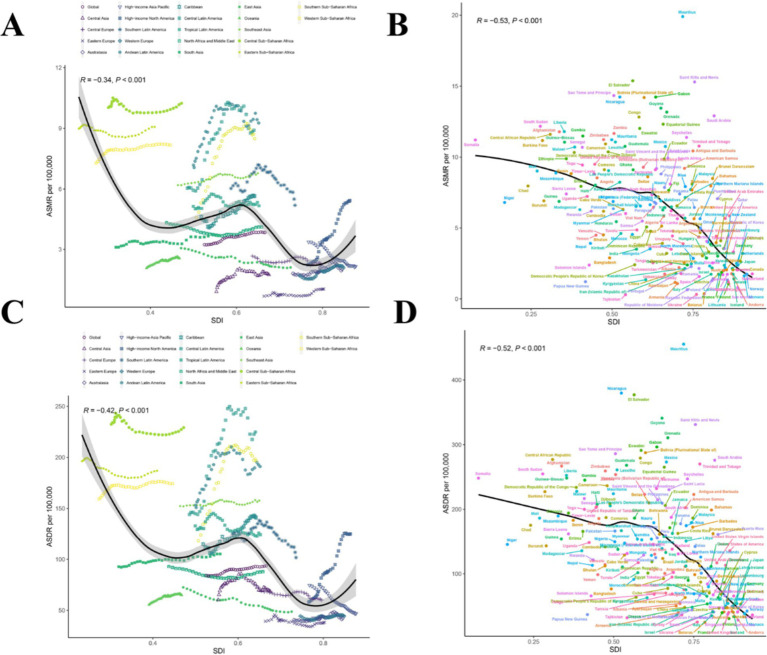
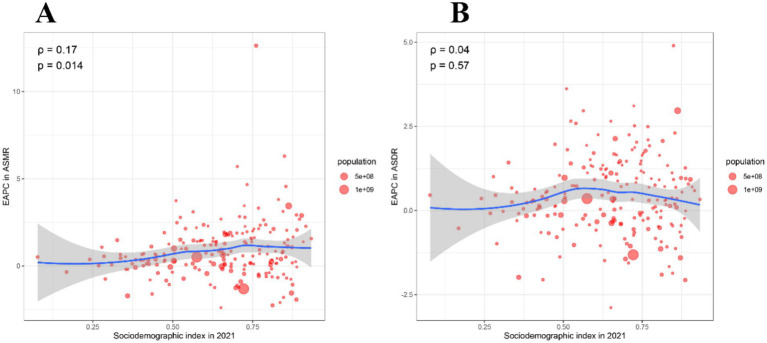
Results: In 2021, globally, the number of deaths due to CKD caused by dietary risks was 317,010, and the number of DALYs was 7,971,281, approximately 2-3 times that of 1990, and it was expected to continue to rise before 2040. The global death rates and DALY rates of CKD related to dietary risks had increased, with EAPCs of 0.63 (95% CI: 0.57 to 0.69) and 0.39 (95% CI: 0.35 to 0.42), respectively. From a gender perspective, men were more likely to suffer from CKD due to dietary risks. From an age pattern perspective, in 2021, the number of deaths due to CKD caused by dietary risks peaked among men aged 70-74 and women aged 85-89. Additionally, the highest number of DALYs due to CKD caused by dietary risks was observed among men and women aged 65-69. In terms of socioeconomic factors, from 1990 to 2021, as the SDI increased, the age-standardized death rates and DALY rates due to CKD caused by dietary risks generally decreased. Among the seven dietary habits related to dietary risks, low vegetable intake, low fruit intake, and high sodium intake had the greatest impact.
Conclusion: In summary, over the past 32 years, the burden of CKD attributable to dietary risks has rapidly increased globally, and it is expected to continue rising until 2040. Therefore, interdisciplinary actions involving education, policy, and healthcare should be taken to mitigate this growing trend.
Keywords: CKD; DALYs; deaths; dietary risks; disease burden.
Copyright © 2025 Wang, Chen, Wang, Han, Hou and Wang.
Conflict of interest statement
The authors declare that the research was conducted in the absence of any commercial or financial relationships that could be construed as a potential conflict of interest.
Figures



References
-
- Legrand K, Speyer E, Stengel B, Frimat L, Ngueyon Sime W, Massy ZA, et al. Perceived health and quality of life in patients with CKD, including those with kidney failure: findings from National Surveys in France. Am J Kidney Dis. (2020) 75:868–78. doi: 10.1053/j.ajkd.2019.08.026, PMID: - DOI - PubMed
-
- Brown EA, Zhao J, McCullough K, Fuller DS, Figueiredo AE, Bieber B, et al. Burden of kidney disease, health-related quality of life, and employment among patients receiving peritoneal Dialysis and in-center hemodialysis: findings from the DOPPS program. Am J Kidney Dis. (2021) 78:489–500.e1. doi: 10.1053/j.ajkd.2021.02.327, PMID: - DOI - PubMed
LinkOut - more resources
Full Text Sources
Miscellaneous
