


The mechanism underlying streptozotocin injection for the development of a nontransgenic Alzheimer's disease animal model
- PMID: 40201829
- PMCID: PMC11974322
- DOI: 10.5455/OVJ.2025.v15.i2.8
The mechanism underlying streptozotocin injection for the development of a nontransgenic Alzheimer's disease animal model
Abstract
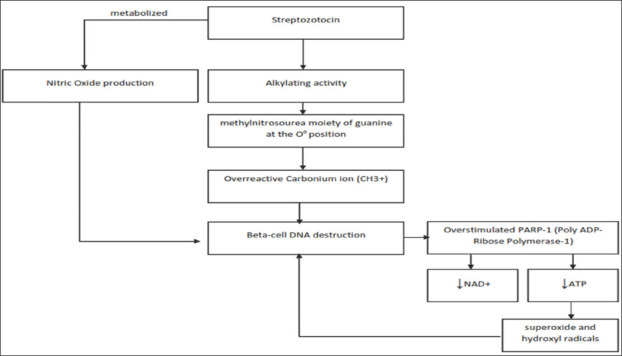
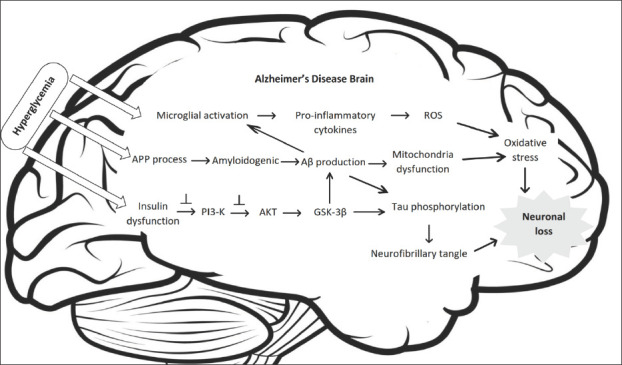
Streptozotocin (STZ) is a widely used chemical agent in biomedical research. It is primarily known for its ability to induce high blood glucose levels in animal models by selectively destroying pancreatic beta cells. Nonetheless, many studies have also used STZ to generate animal models of diabetic complications, such as Alzheimer's disease (AD) animal models. STZ induction promotes hyperglycemia, which activates numerous mechanism pathways that result in the production of pathogenic AD characteristics, including beta-amyloid accumulation and neurofibrillary tangles. Numerous theories exist to elucidate the mechanisms underlying diabetes and AD; however, studies on the potential of an animal model of STZ-induced AD remain limited. Thus, this review summarizes the pathogenesis associated with STZ exposure, particularly in AD animal model studies related to diabetes. More specifically, this study will discuss the relationship between increased blood glucose levels after STZ injection and the process of beta-amyloid formation and insulin dysfunction in the brain.
Keywords: Beta-amyloid; Brain; Hyperglycemia; Neuron; Tau protein.
Conflict of interest statement
The authors declare that they have no conflicts of interest related to the publication of this manuscript.
Figures
References
-
- Abdollahi M., Hosseini A. Streptozotocin. In Encyclopedia of Toxicology. In: Wexler P., editor. 3rd. Oxford: Academic Press; 2014. pp. 402–404.
-
- Bathina S., Srinivas N., Das U.N. Streptozotocin produces oxidative stress, inflammation and decreases BDNF concentrations to induce apoptosis of RIN5F cells and type 2 diabetes mellitus in Wistar rats. Biochem. Biophys. Res. Commun. 2017;486(2):406–13. - PubMed
Publication types
MeSH terms
Substances
LinkOut - more resources
Full Text Sources
Medical