


Chatbot to Support the Mental Health Needs of Pregnant and Postpartum Women (Moment for Parents): Design and Pilot Study
- PMID: 40202166
- PMCID: PMC11999380
- DOI: 10.2196/72469
Chatbot to Support the Mental Health Needs of Pregnant and Postpartum Women (Moment for Parents): Design and Pilot Study
Abstract
Background: Maternal mental health disorders are prevalent, yet many individuals do not receive adequate support due to stigma, financial constraints, and limited access to care. Digital interventions, particularly chatbots, have the potential to provide scalable, low-cost support, but few are tailored specifically to the needs of perinatal individuals.
Objective: This study aimed to (1) design and develop Moment for Parents, a tailored chatbot for perinatal mental health education and support, and (2) assess usability through engagement, usage patterns, and user experience.
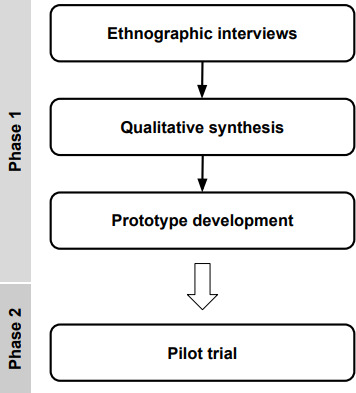
Methods: This study used a human-centered design to develop Moment for Parents, a rules-based chatbot to support pregnant and postpartum individuals. In phase 1, ethnographic interviews (n=43) explored user needs to inform chatbot development. In phase 2, a total of 108 pregnant and postpartum individuals were recruited to participate in a pilot test and had unrestricted access to the chatbot. Engagement was tracked over 8 months to assess usage patterns and re-engagement rates. After 1 month, participants completed a usability, relevance, and satisfaction survey, providing key insights for refining the chatbot.
Results: Key themes that came from the ethnographic interviews in phase 1 included the need for trusted resources, emotional support, and better mental health guidance. These insights informed chatbot content, including mood-based exercises and coping strategies. Re-engagement was high (69/108, 63.9%), meaning users who had stopped interacting for at least 1 week returned to the chatbot at least once. A large proportion (28/69, 40.6%) re-engaged 3 or more times. Overall, 28/30 (93.3%) found the chatbot relevant for them, though some noted repetitive content and limited response options.
Conclusions: The Moment for Parents chatbot successfully engaged pregnant and postpartum individuals with higher-than-typical retention and re-engagement patterns. The findings underscore the importance of flexible, mood-based digital support tailored to perinatal needs. Future research should examine how intermittent chatbot use influences mental health outcomes and refine content delivery to enhance long-term engagement and effectiveness.
Keywords: chatbot; digital health; digital tool; human-centered design; maternal health; perinatal support.
© Kelsey McAlister, Lara Baez, Jennifer Huberty, Marianna Kerppola. Originally published in JMIR Formative Research (https://formative.jmir.org).
Conflict of interest statement
References
-
- Maternal mental health. World Health Organization. [28-03-2025]. https://www.who.int/teams/mental-health-and-substance-use/promotion-prev... URL. Accessed.
-
- Perinatal mental health and substance use disorders [white paper] Americal Psychiatric Association. 2023. [28-03-2025]. https://www.psychiatry.org/getmedia/344c26e2-cdf5-47df-a5d7-a2d444fc1923... URL. Accessed.
-
- Reproductive health: symptoms of depression among women. CDC. [28-03-2025]. https://www.cdc.gov/reproductive-health/depression/index.html URL. Accessed.
MeSH terms
LinkOut - more resources
Full Text Sources
Medical
