


Advanced gustometer design for reliable recording of gustatory event-related potentials in healthy young adults
- PMID: 40206410
- PMCID: PMC11979289
- DOI: 10.3389/fnins.2025.1534296
Advanced gustometer design for reliable recording of gustatory event-related potentials in healthy young adults
Abstract
Introduction: This study introduces an advanced gustometer to record Gustatory Event-Related Potentials (GERPs) in healthy young adults. We aimed to validate its functionality and reliability.
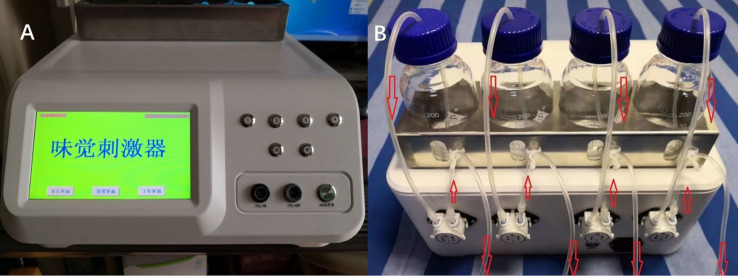
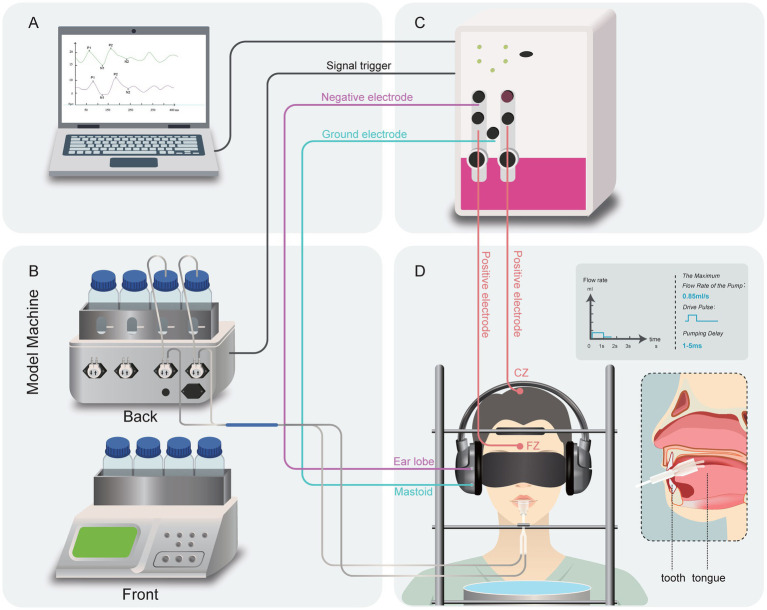
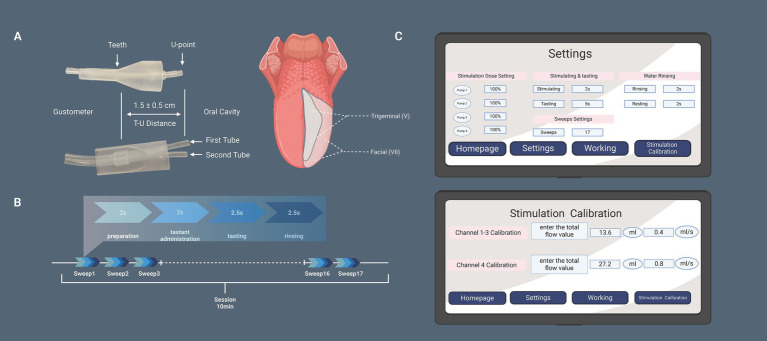
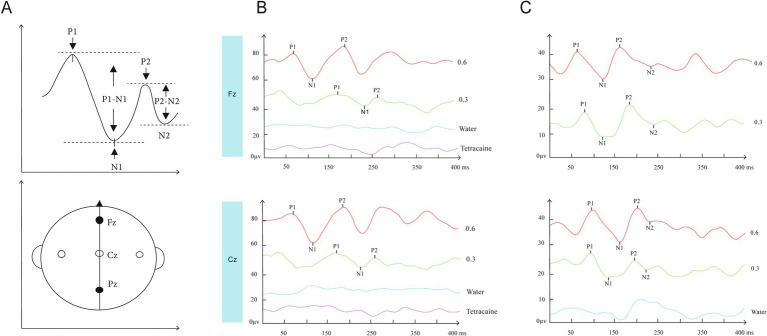
Methods: The gustometer includes a programmable controller, a human-machine interface, a modular pump system, and supporting hardware. The Neuro-Audio EEG platform recorded EEG data from 46 volunteers. Psychophysical gustatory tests assessed gustatory function. GERPs were tested using distilled water as a control and sodium chloride solutions (0.3 and 0.6%) as tastants. Tetracaine anesthetized the tongue surface to observe waveform changes and confirm GERP specificity. GERP responses were recorded at the Fz and Cz sites, focusing on the latency and amplitude of GERP P1 and P2 waves and their correlation with psychophysical test results. No stable waveforms were recorded with distilled water.
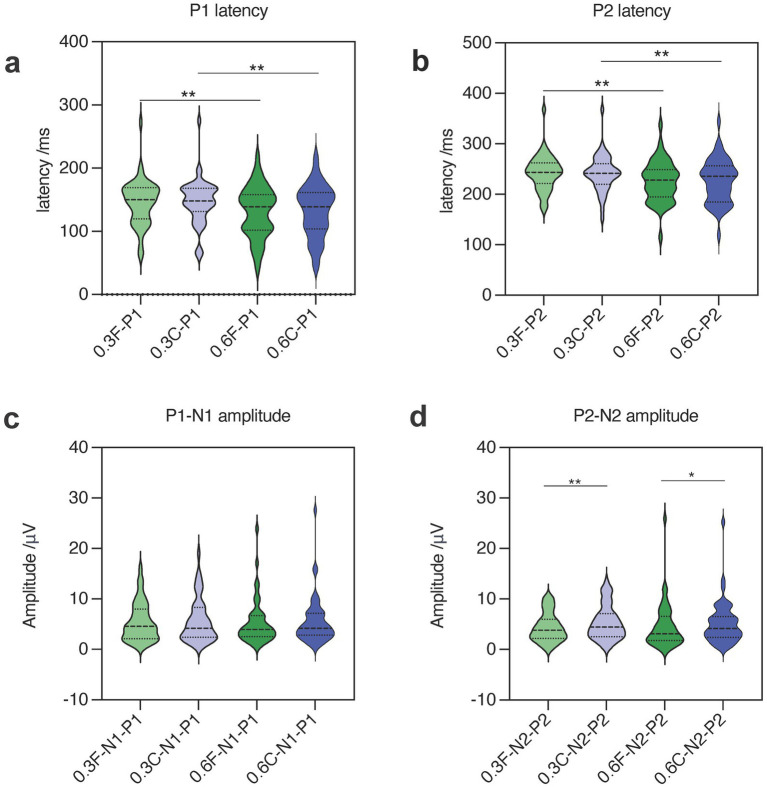
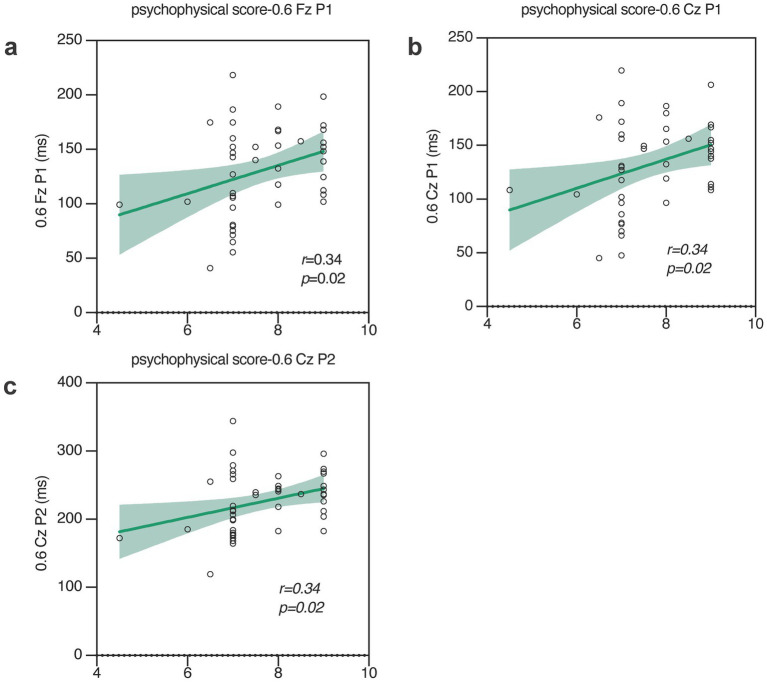
Results: All subjects displayed stable GERP waveforms following salty stimulation. These waveforms disappeared post-anesthesia, confirming GERP specificity. The recorded GERP comprised P1-N1-P2 components. The latency of P1 and P2 waves decreased with increasing salt concentration (p < .05). No significant differences in latency were observed between the Fz and Cz sites. Additionally, 48% of subjects showed increased P1-N1 and P2-N2 amplitudes with higher salty stimulation. The latency of P1 and P2 positively correlated with psychophysical test results.
Discussion: This novel gustometer effectively evoked reliable GERP waveforms. The study validated the consistency of GERP amplitude and latency with psychophysical tests, highlighting the gustometer's potential for clinical and research applications in gustatory system.
Keywords: gustatory event-related potentials; gustometer; psychophysical tests; salty stimulation; taste.
Copyright © 2025 Chen, Zhou, Li and Liu.
Conflict of interest statement
CL was employed by Beijing Yuda Medical Technology Co., Ltd. The remaining authors declare that the research was conducted in the absence of any commercial or financial relationships that could be construed as a potential conflict of interest.
Figures
References
-
- Bujas Z. (1980). Adequate stimulation of taste receptors and summated cortical responses in man. Acta Instituti Psychologici Universitatis Zagrabiensis, 87-91, 3–10.
-
- Deems D. A., Doty R. L., Settle R. G., Moore-Gillon V., Shaman P., Mester A. F., et al. (1991). Smell and taste disorders, a study of 750 patients from the University of Pennsylvania Smell and taste center. Arch. Otolaryngol. Head Neck Surg. 117, 519–528. doi: 10.1001/archotol.1991.01870170065015, PMID: - DOI - PubMed
LinkOut - more resources
Full Text Sources
