


Antimicrobial resistance in Escherichia coli and Staphylococcus aureus at human-animal interfaces on Chongming Island, Shanghai: A One Health perspective
- PMID: 40206836
- PMCID: PMC11980626
- DOI: 10.1016/j.onehlt.2024.100910
Antimicrobial resistance in Escherichia coli and Staphylococcus aureus at human-animal interfaces on Chongming Island, Shanghai: A One Health perspective
Abstract
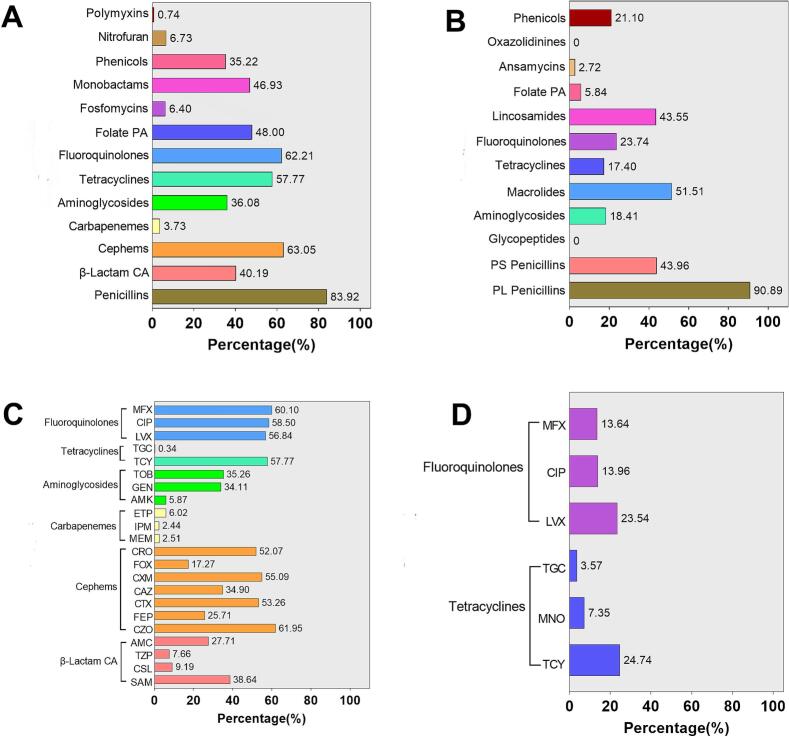
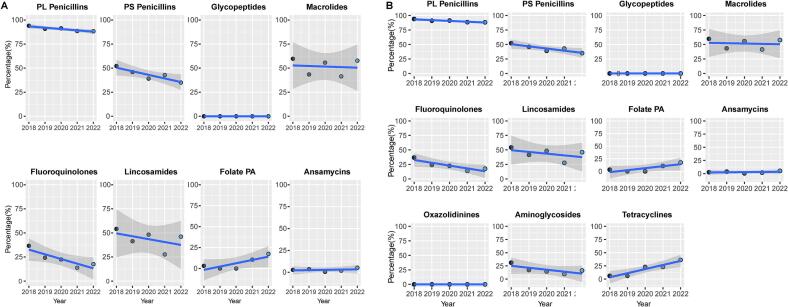
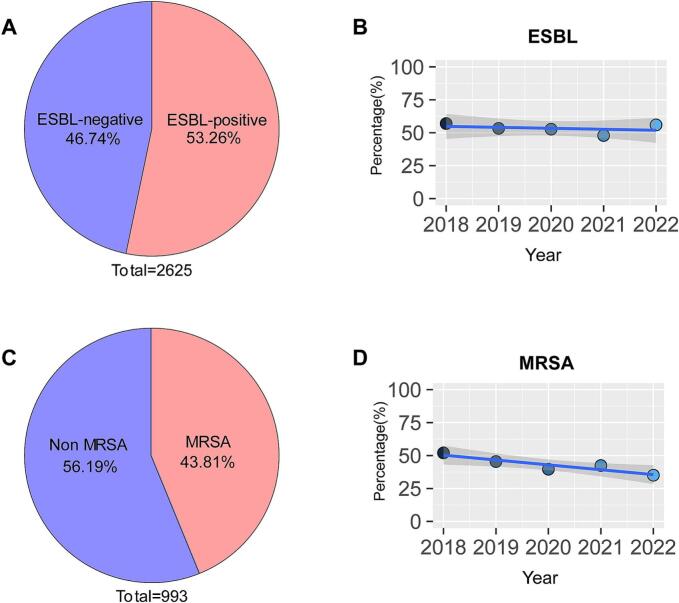
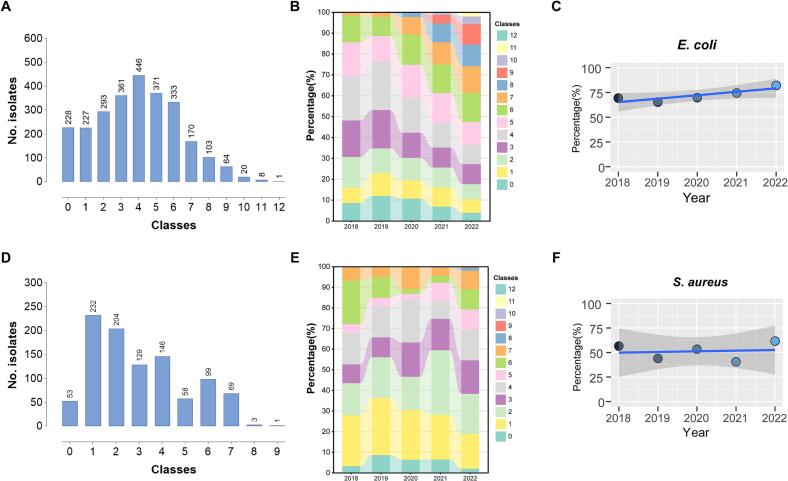
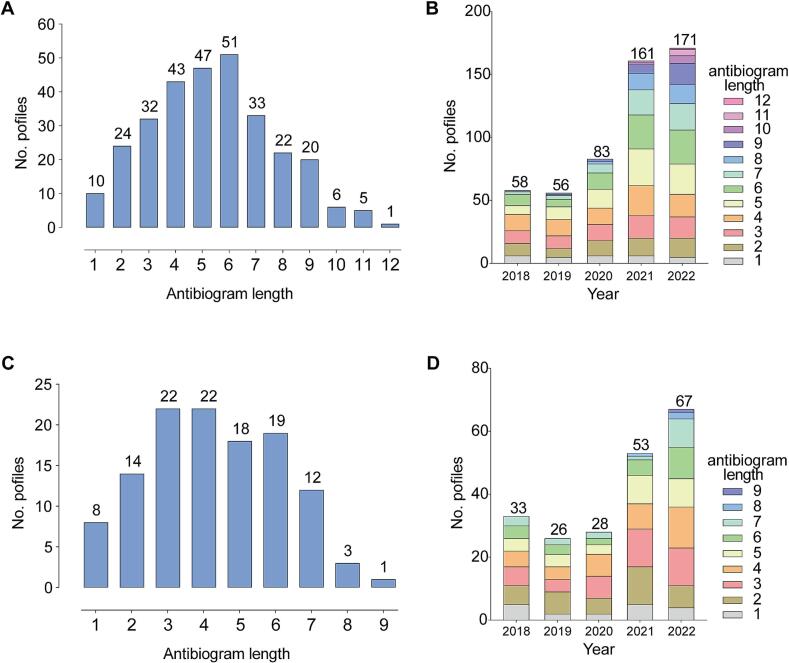
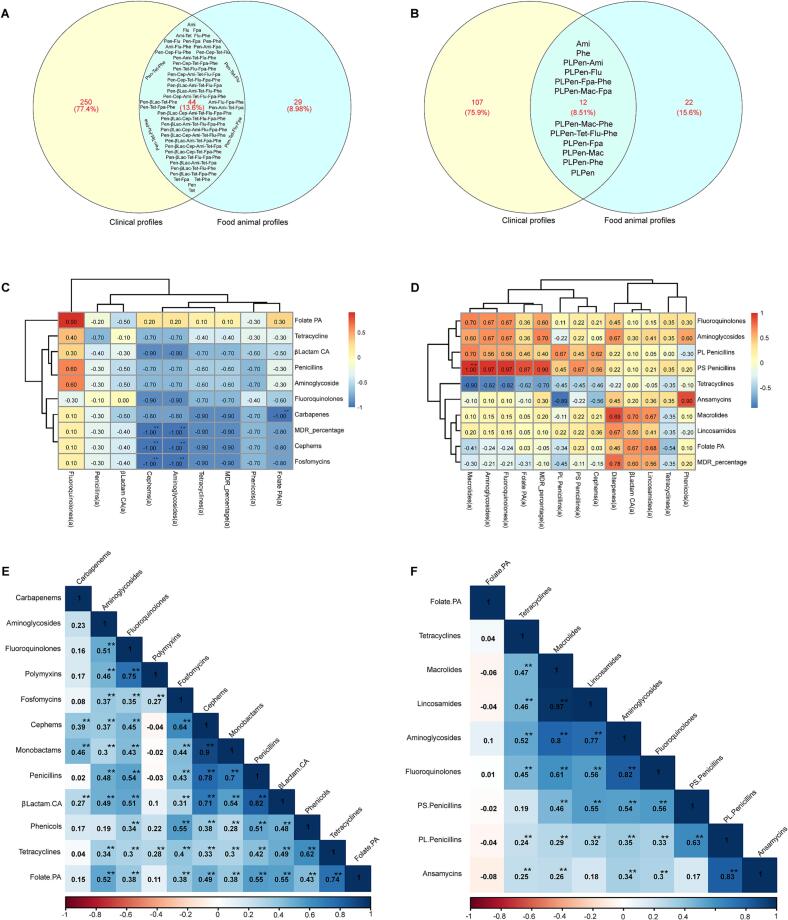
Antimicrobial resistance (AMR) is a significant concern within the One Health framework due to its ability to spread across multiple interfaces. Phenotypic data remains the primary type for AMR surveillance, but exploring association across multiple interfaces poses certain challenges. In this study, AMR phenotypic data of clinical and food animal E. coli and S. aureus from Chongming Island over the past five years were analyzed to determine key characteristics of AMR and explore its association at the human-animal interface. The clinical E. coli isolates showed significant resistance to penicillins (83.92 %), cephems (63.05 %), fluoroquinolones (62.21 %), and tetracyclines (57.77 %), while S. aureus exhibited high resistance to penicillinase-labile penicillins (90.89 %), macrolides (51.51 %), penicillinase-stable penicillins (43.96 %), and lincosamides (43.55 %). Extended-spectrum β-lactamase (ESBL)-producing E. coli isolates accounted for 53.26 % (1398/2526), while methicillin-resistant Staphylococcus aureus (MRSA) prevalence was 43.81 % (435/993). Notably, there has been an increase in the proportion of E. coli isolates resistant to 8 to 12 antimicrobial classes, and in the proportion of S. aureus isolates resistant to 5 to 9 classes. Certain multi-drug resistance (MDR) phenotypes were first identified in food animal isolates and later emerged in clinical settings. Meanwhile, several MDR phenotypes were shared between the two interfaces, with 44 identified in E. coli and 12 in S. aureus. Further co-occurrence analysis in E. coli and S. aureus identified several co-occurrence phenotypic pairs or clusters, potentially mediated by a single plasmid or multiple plasmids within a bacterium, indicating potential associations at the human-animal interface. To summarize, a heightened prevalence of MDR in clinical E. coli and S. aureus has been observed, with some MDR profiles appearing in food animals before emerging in clinical settings. The co-occurrence of phenotypic pairs or clusters underscores the potential for AMR association and transmission between humans and food animals. Within the One Health framework, integrating genomic data into AMR monitoring is a crucial next step.
Keywords: Clinical isolates; Escherichia coli; Food animals; Multidrug resistance; Staphylococcus aureus.
© 2024 The Authors.
Conflict of interest statement
The authors of the present study declare no competing interests.
Figures
References
-
- WHO Antimicrobial Resistance. 2023. https://www.who.int/news-room/fact-sheets/detail/antimicrobial-resistance
LinkOut - more resources
Full Text Sources
Molecular Biology Databases
Miscellaneous
