


Stroke risk in ADPKD patients treated by dialysis: a retrospective study
- PMID: 40207103
- PMCID: PMC11976528
- DOI: 10.1093/ckj/sfaf028
Stroke risk in ADPKD patients treated by dialysis: a retrospective study
Abstract
Background and hypothesis: The risk of ischaemic or haemorrhagic strokes in patients living with end-stage renal disease and receiving replacement therapy is more than double that of non-dialysed individuals. Autosomal dominant polycystic kidney disease (ADPKD) is an inherited systemic disorder associated with renal and non-renal manifestations, including intracerebral aneurysms. The role of underlying nephropathy in determining the onset of the stroke is unclear.
Methods: All patients who started dialysis between 1 January 2015 and 31 December 2019 were included in the analysis. Data were retrieved from the REIN registry and the French national Health Data System (SNDS). Cases of stroke were extracted from the SNDS by using ICD-10 codes. The first stroke observed during the follow-up, irrespective of its nature, was considered as the event of the main analysis, based on a semi-parametric survival model.
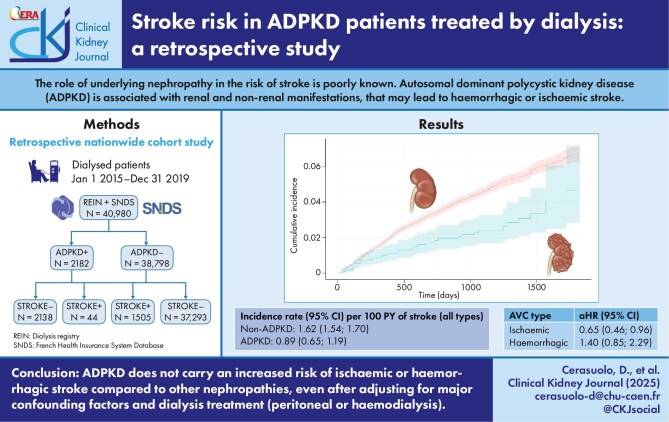
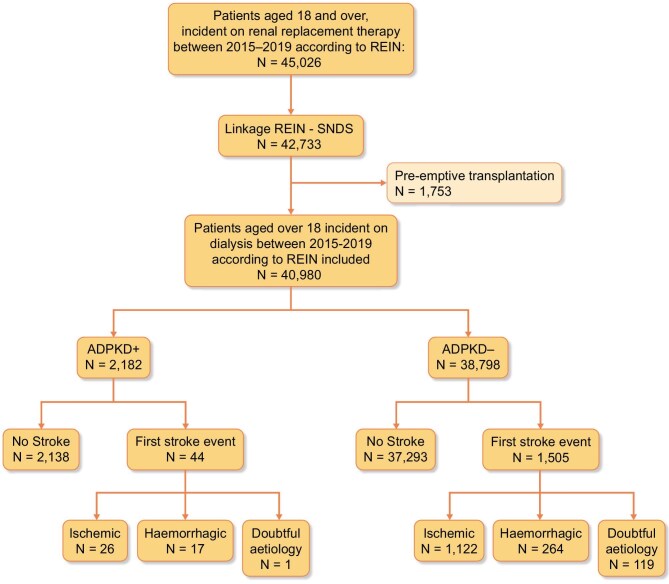
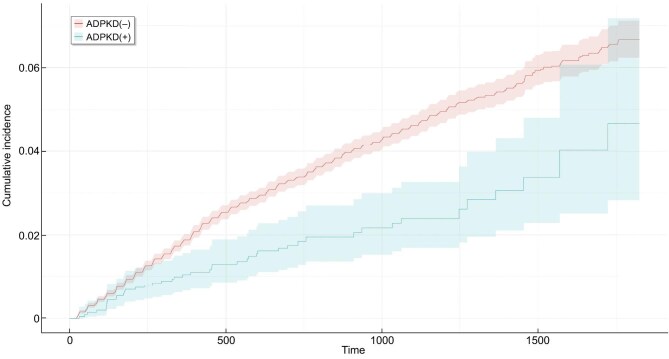
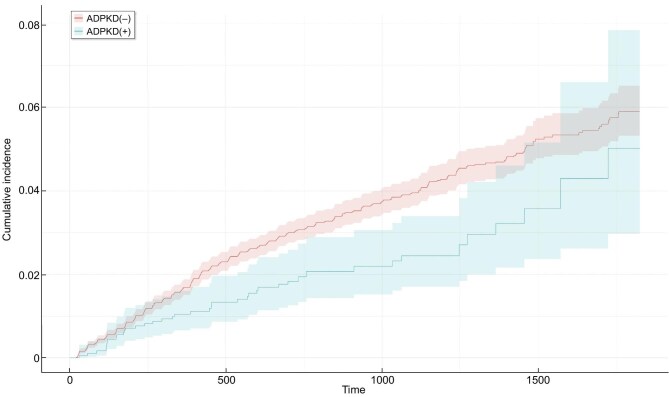
Results: The analysis included 40 980 patients on dialysis. Overall, 1549 patients experienced stroke during the follow-up. The first stroke was ischaemic in 1148 (74.1%) and haemorrhagic in the remaining 281 patients. The cumulative incidence of stroke on dialysis was 1.58 per 100 person-years (95% CI = 1.51, 1.70). Among 2182 ADPKD patients, only 44 (2%) experienced stroke. ADPKD was not significantly associated with an increased risk of all types of stroke, after considering major risk factors.
Conclusions: We found no increase in the risk of stroke in ADPKD patients under dialysis. We believe that the findings of our study support a similar screening strategy in ADPKD patients on dialysis compared with patients not on dialysis.
Keywords: autosomal dominant polycystic kidney disease; dialysis; haemorrhagic stroke; ischaemic stroke; renal replacement therapy.
© The Author(s) 2025. Published by Oxford University Press on behalf of the ERA.
Conflict of interest statement
The authors have nothing to declare. The results presented in this paper have not been published previously in whole or part.
Figures
References
LinkOut - more resources
Full Text Sources
