


Repurposing Laboratory Plastic into Functional Fibrous Scaffolds via Green Electrospinning for Cell Culture and Tissue Engineering Applications
- PMID: 40207865
- PMCID: PMC12152829
- DOI: 10.1021/acsbiomaterials.5c00146
Repurposing Laboratory Plastic into Functional Fibrous Scaffolds via Green Electrospinning for Cell Culture and Tissue Engineering Applications
Abstract
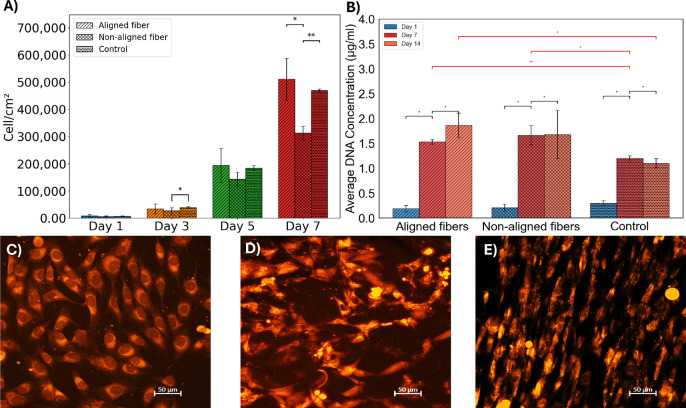
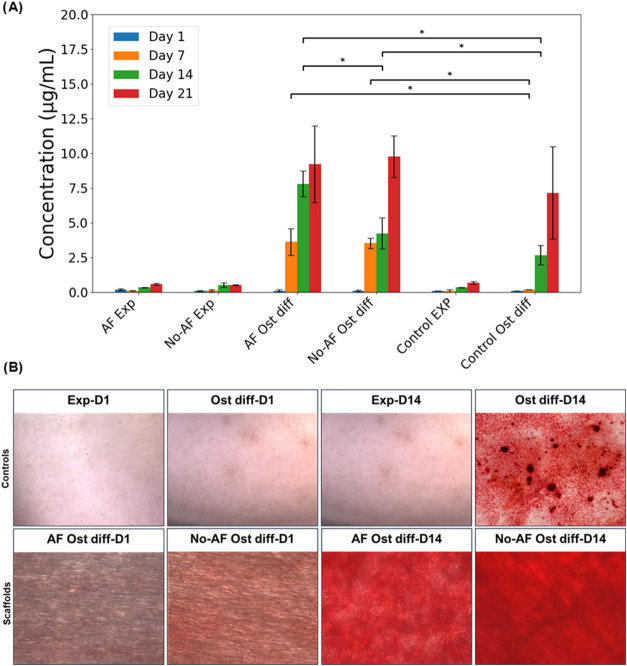
Cell culture for tissue engineering is a global and flexible research method that relies heavily on plastic consumables, which generates millions of tons of plastic waste annually. Here, we develop an innovative sustainable method for scaffold production by repurposing spent tissue culture polystyrene into biocompatible microfiber scaffolds, while using environmentally friendly solvents. Our new green electrospinning approach utilizes two green, biodegradable and low-toxicity solvents, dihydrolevoglucosenone (Cyrene) and dimethyl carbonate (DMC) to process laboratory cell culture petri dishes into polymer dopes for electrospinning. Scaffolds produced from these spinning dopes, produced both aligned and non-aligned microfiber configurations, were examined in detail. The scaffolds exhibited mechanical properties comparable to cancellous bones whereby aligned scaffolds achieved an ultimate tensile strength (UTS) of 4.58 ± 0.34 MPa and a Young's modulus of 11.87 ± 0.54 MPa, while the non-aligned scaffolds exhibited a UTS of 4.27 ± 0.92 MPa and a Young's modulus of 20.37 ± 4.85. To evaluate their potential for cell-culture, MG63 osteoblast-like cells were seeded onto aligned and non-aligned scaffolds to assess their biocompatibility, cell adhesion, and differentiation, where the cell viability, DNA content, and proliferation were monitored over 14 days. DNA quantification demonstrated an eight-fold increase from 0.195 μg/mL (day 1) to 1.55 μg/mL (day 14), with a significant rise in cell metabolic activity over 7 days, and no observed cytotoxic effects. Confocal microscopy revealed elongated cell alignment on aligned fiber scaffolds, while rounded, disoriented cells were observed on non-aligned fiber scaffolds. Alizarin Red staining and calcium quantification confirmed osteogenic differentiation, as evidenced by mineral deposition on the scaffolds. This research therefore demonstrates the feasibility of this new method to repurpose laboratory polystyrene waste into sustainable cell culture tissue engineering scaffolds using eco-friendly solvents. Such an approach provides a route for cell culture for tissue engineering related activities to transition towards more sustainable and environmentally conscious scientific practices, thereby aligning with the principles of a circular economy.
Keywords: biomaterials; cell-scaffold interaction; electrospinning; green solvent; sustainable tissue engineering; tissue engineering.
Figures
References
-
- Legrand, T. Sovereignty Renewed: Transgovernmental Policy Networks and the Global- Local Dilemma. In The Oxford Handbook of Global Policy and Transnational Administration; Oxford University Press, 2019; pp 200–220.
-
- Caiado R. G. G., Filho W. L., Quelhas O. L. G., de Mattos Nascimento D. L., Ávila L. V.. A Literature-Based Review on Potentials and Constraints in the Implementation of the Sustainable Development Goals. J. Cleaner Prod. 2018;198:1276–1288. doi: 10.1016/j.jclepro.2018.07.102. - DOI
-
- Kwon G., Cho D.-W., Park J., Bhatnagar A., Song H.. A Review of Plastic Pollution and Their Treatment Technology: A Circular Economy Platform by Thermochemical Pathway. Chem. Eng. J. 2023;464:142771. doi: 10.1016/j.cej.2023.142771. - DOI
MeSH terms
Substances
LinkOut - more resources
Full Text Sources