


Alertness After Night Shifts Among Workers in the Aluminium Industry
- PMID: 40209666
- PMCID: PMC12321355
- DOI: 10.1097/JOM.0000000000003412
Alertness After Night Shifts Among Workers in the Aluminium Industry
Abstract
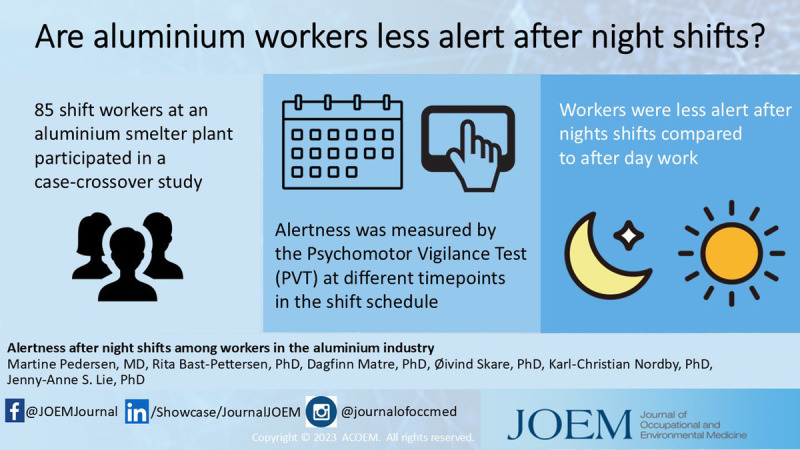
Objective: This case-crossover study aimed to evaluate changes in alertness following night shifts among workers in the aluminium industry, and the potential impact of the number of consecutive night shifts and shift length.
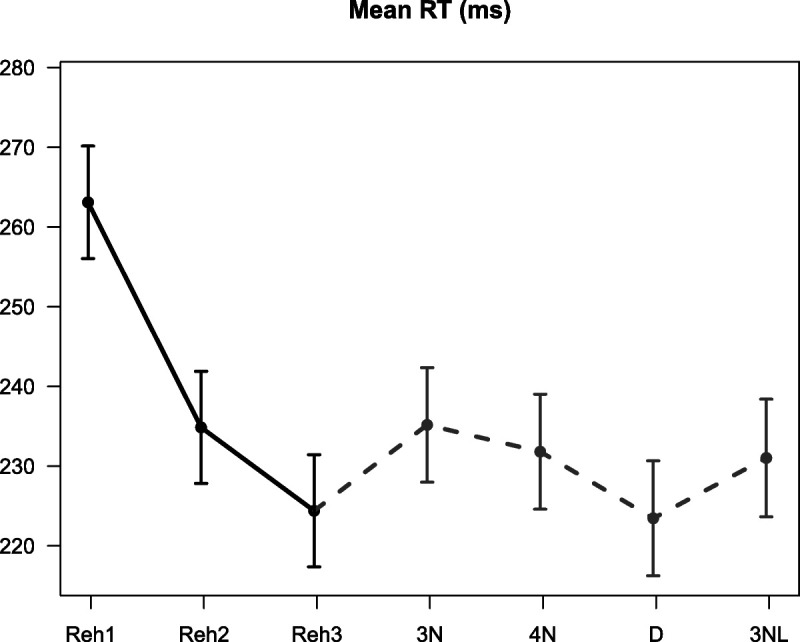
Methods: We estimated alertness on 87 aluminium workers by a 3-minute version of the Psychomotor Vigilance Test after both day and night shifts. Linear mixed models were used for statistical analysis.
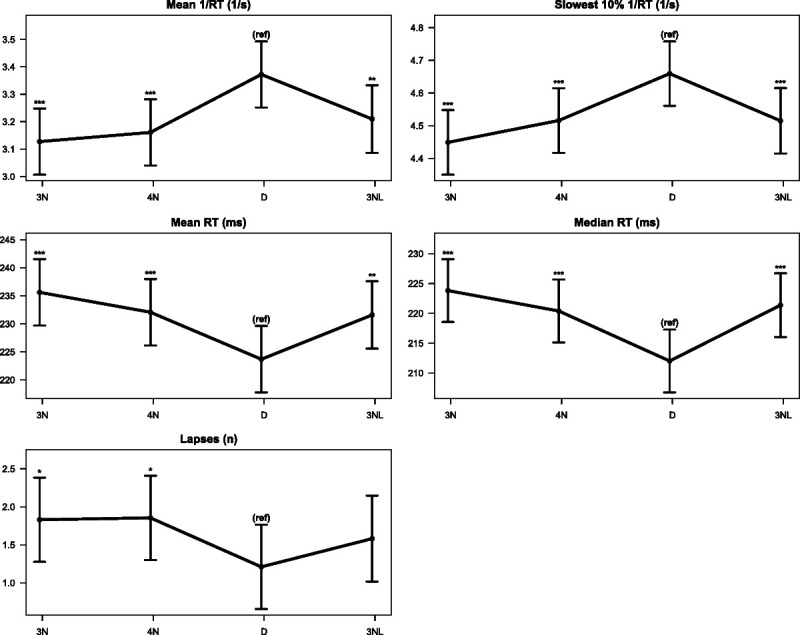
Results: The level of alertness was significantly lower after three and four consecutive night shifts, compared with after a day shift. No significant differences in alertness were observed between three and four consecutive night shifts, nor between periods of three consecutive 8 + 8 + 8-hour versus 8 + 12 + 12-hour night shifts.
Conclusions: Our findings indicate reduced alertness after three and four consecutive night shifts, compared with after day work. No significant dose-response effect was observed.
Keywords: neurobehavioral performance; night work; occupational health; psychomotor vigilance task; reaction time; shift work; working time.
Copyright © 2025 The Author(s). Published by Wolters Kluwer Health, Inc. on behalf of the American College of Occupational and Environmental Medicine.
Conflict of interest statement
Conflict of interest: None declared.
Figures

References
-
- Kecklund G, Axelsson J. Health consequences of shift work and insufficient sleep. BMJ 2016;355:i5210. - PubMed
-
- Letz R, Pieper WA, Morris RD. NES test performance in a large US Army veteran sample: relationships with both demographic factors and traditional neuropsychological measures. Neurotoxicol Teratol 1996;18:381–390. - PubMed
MeSH terms
Substances
LinkOut - more resources
Full Text Sources
