Myopia: a review of current concepts, association with nonophthalmological conditions, and treatment strategy in children and adolescents
- PMID: 40211863
- PMCID: PMC12326048
- DOI: 10.3345/cep.2025.00115
Myopia: a review of current concepts, association with nonophthalmological conditions, and treatment strategy in children and adolescents
Abstract
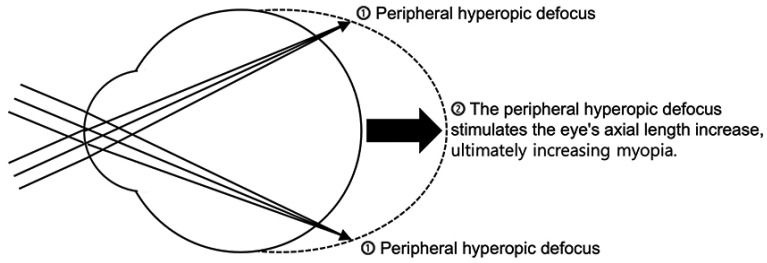
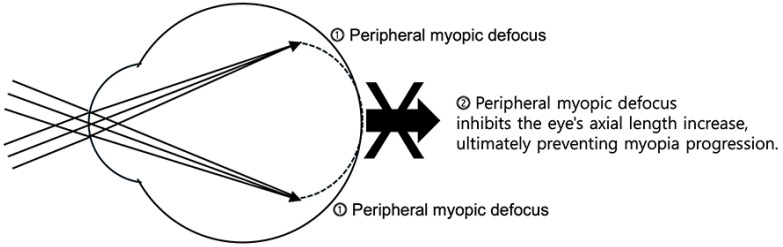
Myopia, among the most common vision disorders worldwide, is projected to affect approximately 50% of the world's population by 2050. Its prevalence is particularly high in East Asia, posing a considerable public health challenge. In particular, high myopia, defined as ≤-6.0 diopters, significantly increases an individual's lifetime risk of vision-threatening complications. Moreover, recent studies revealed that nonophthalmological factors such as body stature, sleep patterns, and nutritional status are strongly correlated with the progression of myopia, particularly in childhood and adolescence, underscoring the need for a systemic approach to its control. Current therapeutic approaches include optical correction, pharmacological treatment, and increased outdoor activity. Optically, defocus-incorporated multisegment spectacle lenses and orthokeratology have shown efficacy at controlling the progression of myopia through peripheral retinal defocus and corneal reshaping, respectively. Pharmacologically, atropine eye drops, especially at low concentrations (0.05%), have demonstrated efficacy at myopia control with minimal side effects, making them a preferred treatment option for progressive myopia. Behaviorally, increased outdoor activity (minimum 2 hours daily) and decreased excessive near work, particularly on digital devices, can help prevent the progression of myopia. Furthermore, studies have aimed to prevent the progression from premyopia to myopia.
Keywords: Mechanism; Myopia; Pathophysiology; Relationship with nonophthalmological conditions; Treatment and prevention.
Conflict of interest statement
No potential conflict of interest relevant to this article was reported.
Figures
References
-
- Holden BA, Fricke TR, Wilson DA, Jong M, Naidoo KS, Sankaridurg P, et al. Global prevalence of myopia and high myopia and temporal trends from 2000 through 2050. Ophthalmology. 2016;123:1036–42. - PubMed
-
- Meng W, Butterworth J, Malecaze F, Calvas P. Axial length of myopia: a review of current research. Ophthalmologica. 2011;225:127–34. - PubMed
LinkOut - more resources
Full Text Sources