


Ultrasound-Responsive Polymeric Piezoelectric Nanoparticles for Remote Activation and Neuronal Differentiation of Human Neural Stem Cells
- PMID: 40213071
- PMCID: PMC11934905
- DOI: 10.1002/smsc.202400354
Ultrasound-Responsive Polymeric Piezoelectric Nanoparticles for Remote Activation and Neuronal Differentiation of Human Neural Stem Cells
Abstract
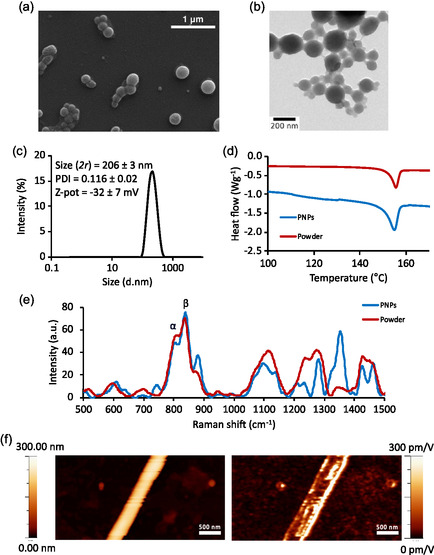
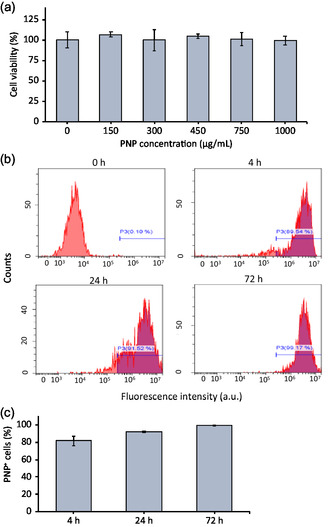
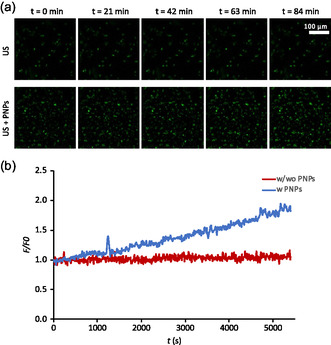
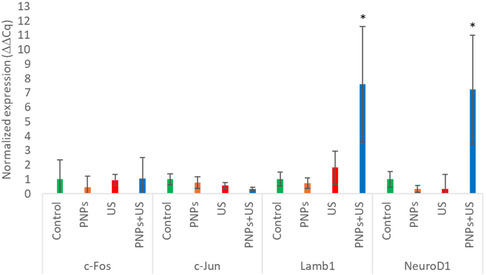
The regenerative capacity of the central nervous system (CNS) is limited. Understanding and enhancing the mechanisms that induce neural differentiation of neural stem cells (NSCs) is crucial for advancing regenerative medicine; one significant challenge in this effort is the remote delivery of pro-differentiation cues. In this framework, a nanotechnology-based solution able to remotely trigger the differentiation of human NSCs (hNSCs) into neurons is proposed. The approach involves organic piezoelectric nanotransducers, which can be remotely activated by low-intensity ultrasound (US) for local and noninvasive electrical stimulation. Highly biocompatible piezoelectric polymeric nanoparticles, when activated by US, demonstrate the ability to induce calcium influx, exit from the cell cycle, and neuronal differentiation in hNSCs, as evidenced by calcium imaging experiments and the expression analysis of the NeuN post-mitotic neural marker; additionally, an increased outgrowth of the developing axons is observed. Gene expression analysis moreover suggests that the neural differentiation mechanism induced by piezoelectric stimulation acts by upregulating the calcium signaling-sensitive NeuroD1 neural inducer and the Lamb1 marker, independently of the c-Jun/c-Fos pathway. Considering the high biocompatibility and the good piezoelectricity of the polymeric nanotransducers used in this work, it is believed that this "wireless" stimulation approach holds high potential in CNS regenerative medicine.
Keywords: neural differentiations; neural stem cells; piezoelectric nanoparticles; regenerative medicines; ultrasound‐responsive nanomaterials.
© 2024 The Author(s). Small Science published by Wiley‐VCH GmbH.
Conflict of interest statement
The authors declare no conflict of interest.
Figures


References
LinkOut - more resources
Full Text Sources
Miscellaneous