


Role of circulating tumor DNA and cell-free DNA biomarkers in diagnosis and prognosis of oral cancer - a systematic review
- PMID: 40217229
- PMCID: PMC11987223
- DOI: 10.1186/s12903-025-05898-3
Role of circulating tumor DNA and cell-free DNA biomarkers in diagnosis and prognosis of oral cancer - a systematic review
Abstract
Background: Oral squamous cell carcinoma is the most common malignant neoplasm of the oral cavity, contributing significantly to cancer-related mortality worldwide. Circulating tumor DNA could be a promising biomarker for the early diagnosis and prognosis of oral cancer.
Objective: The aim of this systematic review was to consolidate the existing literature on the role of circulating tumor DNA (ctDNA) and cell-free DNA (cfDNA) in the diagnosis and prognosis of oral cancer.
Methodology: The review protocol followed PRISMA guidelines. A systematic search was conducted across PubMed, Web of Science, Google Scholar and SCOPUS. Only English-language studies were included, while narrative reviews, HPV-positive OSCC, systematic reviews, meta-analyses, abstracts, and letters to the editor were excluded. Data were extracted on study design, country, sample size, participant characteristics, assessment methods, type of oral cancer and measured outcomes. Risk of bias was evaluated using Newcastle-Ottawa Scale (NOS).
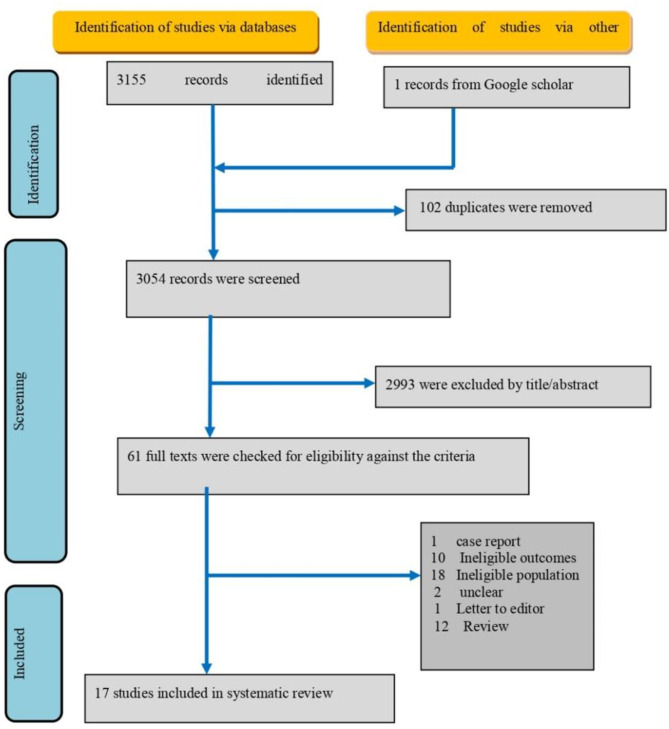
Results: A total of 3,155 records were identified, out of which 17 studies met the inclusion criteria. These comprised eleven cohort studies, one was a case series, two were descriptive studies, and three were case-control studies. The studies primarily addressed oral squamous cell carcinoma (OSCC) and head and neck squamous cell carcinoma (HNSCC). Findings revealed that elevated cfDNA levels are associated with poor prognosis, lymph node metastasis, larger tumor size and advanced disease stages. ctDNA acts as a predictive tool for monitoring cancer progression, treatment response, recurrence risk, and overall survival. Among 12 studies evaluated using NOS, 8 were of good quality, while 4 were fair quality.
Conclusion: ctDNA and cfDNA exhibit promising prognostic and diagnostic potential for OSCC and HNSCC. Elevated cfDNA levels correlate with poor prognosis, while ctDNA shows potential for monitoring cancer progression and treatment response.
Keywords: CfDNA; CtDNA; Diagnosis; Head and neck cancer; Oral squamous cell carcinoma; Prognosis.
© 2025. The Author(s).
Conflict of interest statement
Declarations. Ethics approval and consent to participate: Not applicable. Consent for publication: Not applicable. Competing interests: The authors declare no competing interests.
Figures
References
-
- Rocchetti F, Tenore G, Montori A, Cassoni A, Cantisani V, Di Segni M, et al. Preoperative evaluation of tumor depth of invasion in oral squamous cell carcinoma with intraoral ultrasonography: A retrospective study. oral surgery, oral medicine. Oral Pathol Oral Radiol. 2021;131(1):130–8. - DOI - PubMed
-
- Caprioli S, Casaleggio A, Tagliafico AS, Conforti C, Borda F, Fiannacca M, et al. High-Frequency intraoral ultrasound for preoperative assessment of depth of invasion for early tongue squamous cell carcinoma: Radiological–Pathological correlations. Int J Environ Res Public Health. 2022;19(22):14900. - DOI - PMC - PubMed
Publication types
MeSH terms
Substances
LinkOut - more resources
Full Text Sources
Medical
Miscellaneous
