


Micro-CT evaluation of dentinal microcrack formation in mesiobuccal canals of maxillary molars following instrumentation with heat-treated rotary and reciprocating systems
- PMID: 40217241
- PMCID: PMC11987477
- DOI: 10.1186/s12903-025-05929-z
Micro-CT evaluation of dentinal microcrack formation in mesiobuccal canals of maxillary molars following instrumentation with heat-treated rotary and reciprocating systems
Abstract
Background: The goal of root canal preparation is to eliminate microorganisms and debris from the root canal system, while providing space for the placement of root filling materials. However, the process can lead to the formation of dentin microcracks, increasing the risk of vertical root fractures. This study used micro-CT to evaluate the formation of dentinal microcracks following instrumentation with One Curve, EdgeOne Fire, and VDW.ROTATE systems.
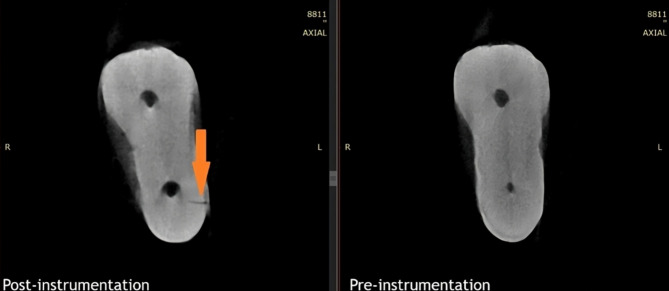
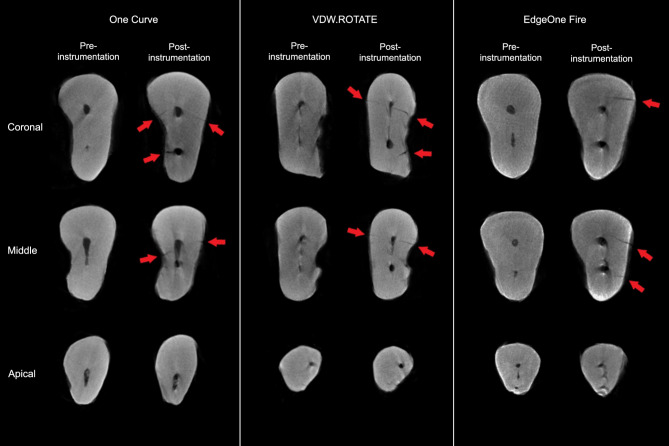
Methods: Thirty-three extracted maxillary molars with non-calcified Vertucci type 4 s mesiobuccal canals were included. After pre-instrumentation micro-CT scans, a single endodontist prepared the canals with three aforementioned rotary systems. Post-instrumentation scans were conducted and axial sections from both the pre- and post-preparation scans were analyzed by two blinded observers to identify newly formed microcracks. Cohen's Kappa coefficient assessed interobserver agreement and dentinal microcracks were evaluated using ANOVA, ANCOVA, Kruskal-Wallis, and McNemar's test (P < 0.05).
Results: All three rotary systems led to significant increases in dentinal microcracks post-instrumentation. While the VDW.ROTATE group showed a slightly higher percentage of cracked Sect. (72%), statistical analysis showed no significant difference between the groups (P = 0.35).
Conclusion: Preparation of maxillary molar root canals using different rotary systems resulted in the formation of dentin microcracks, with no significant correlation to the specific system used.
Keywords: Dentinal microcrack; Micro-CT; Reciprocating file systems; Root Canal Preparation; Rotary file systems.
© 2025. The Author(s).
Conflict of interest statement
Declarations. Ethics approval and consent to participate: This ex vivo study adhered to the principles outlined in the Declaration of Helsinki for research involving human tissues and was approved by the Ethics Committee of Shahid Beheshti University of Medical Sciences (IR.SBMU.DRC.REC.1401.071). Consent for publication: Not applicable. Competing interests: The authors declare no competing interests.
Figures
References
-
- Dennis D, Farahanny W, Prasetia W, Batubara F, Corresponding. Biological and mechanical principles of chemomechanical Preparation in root Canal therapy: a review. Int J Clin Dent. 2021;14:187–98.
-
- Selvan P, Aparajitha R, Ahamed A, Bhavani S, Rajaraman G. Comparative evaluation of shaping ability of sequential rotary, single rotary, and single reciprocating file systems in simulated curved canals using cone-beam computed tomography: an in vitro study. Endodontology. 2022;34:55. - DOI
MeSH terms
LinkOut - more resources
Full Text Sources
