


Advanced Diagnostic Methods in Necrotizing Sialometaplasia of the Parotid Glands: An Updated Literature Review and a Rare Case Report
- PMID: 40217739
- PMCID: PMC11989918
- DOI: 10.3390/jcm14072290
Advanced Diagnostic Methods in Necrotizing Sialometaplasia of the Parotid Glands: An Updated Literature Review and a Rare Case Report
Abstract
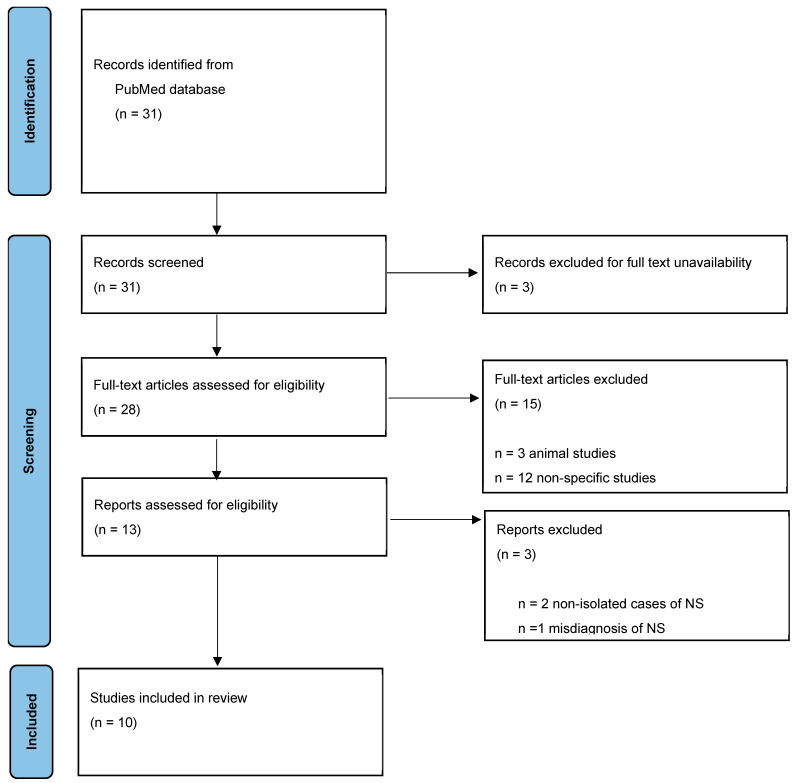
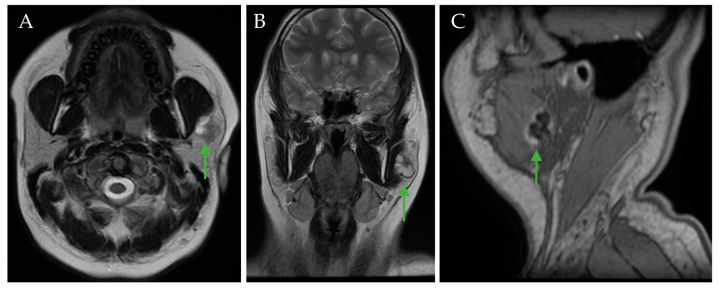
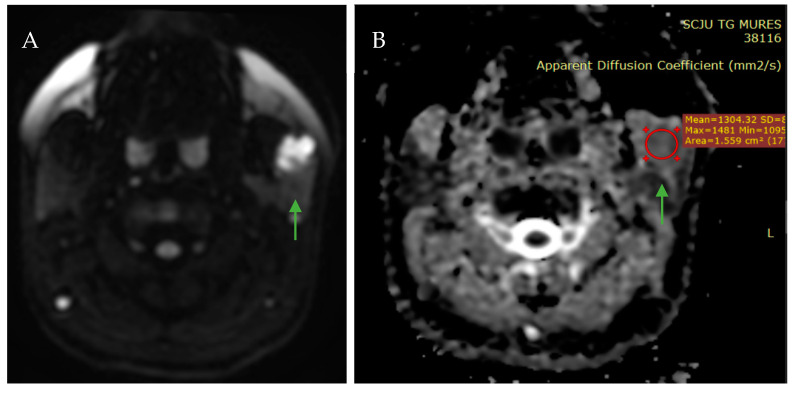
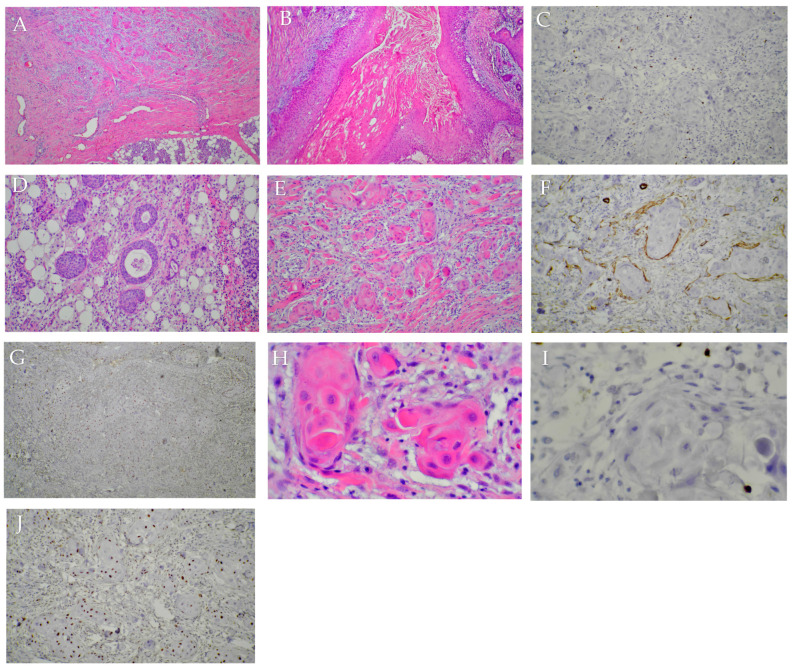
Background/Objectives: Necrotizing sialometaplasia (NS) is an inflammatory condition of the salivary glands that can closely mimic malignancy. While it predominantly affects the minor salivary glands of the hard palate, it can also occur in the parotid gland, leading to potential misdiagnosis and unnecessary treatment. This study aims to analyze the characteristics, diagnostic challenges, and management of parotid gland NS through a comprehensive literature review and a case report. Methods: A systematic literature review was conducted using PubMed, including all relevant publications up to December 2024. The research strategy focused on cases of NS affecting the parotid gland. Additionally, a rare case of misdiagnosed parotid NS is presented to highlight clinical and diagnostic challenges. Results: The review identified 30 patients, with a mean age of 49 years, and a nearly equal distribution between sexes. Their etiology was primarily linked to vascular insufficiency, often triggered by surgical trauma (20 cases), tumors (1 case), vascular fragility (4 cases), smoking (1 case), or other factors (4 cases). Clinically, NS can resemble squamous cell carcinoma, presenting with neck swelling, pain, and imaging features suggestive of malignancy. Histopathological assessment remains the gold standard for diagnosis. A rare case of a 23-year-old female misdiagnosed with squamous cell carcinoma emphasizes the importance of multiparametric MRI imaging and histological re-evaluation in atypical presentations. Conclusions: NS of the parotid gland is a rare but significant diagnostic challenge, due to its resemblance to malignant tumors. While conventional imaging may suggest a neoplastic process, advanced techniques such as DWI (Diffusion-Weighted Imaging) and ADC (Apparent Diffusion Coefficient) mapping can offer valuable noninvasive insights. A multidisciplinary approach, incorporating clinical history, imaging, and histopathological assessment, is essential in order to avoid unnecessary treatment. In cases where NS is suspected, a conservative approach with careful follow-up may be warranted to prevent overtreatment.
Keywords: multiparametric magnetic resonance imaging; necrotizing sialometaplasia; parotid gland.
Conflict of interest statement
The authors declare no conflict of interest.
Figures
References
Publication types
LinkOut - more resources
Full Text Sources
Miscellaneous
