


Assessment of Non-Cereal Products Gluten Cross-Contamination Exposure Risk in a Polish Female Population of Patients Diagnosed with Coeliac Disease
- PMID: 40219038
- PMCID: PMC11990444
- DOI: 10.3390/nu17071281
Assessment of Non-Cereal Products Gluten Cross-Contamination Exposure Risk in a Polish Female Population of Patients Diagnosed with Coeliac Disease
Abstract
Background/objectives: Following gluten-free diet is challenging, due to risk of gluten cross-contamination. The study aimed to assess the non-cereal products gluten cross-contamination exposure risk in patients with coeliac disease.
Methods: The study was conducted in a population of 699 Polish female members of the Polish Coeliac Society purchasing gluten-free products on-line (445 patients, 254 relatives). Participants were asked about frequency of buying and availability of gluten-free alternatives of non-cereal products characterized by the gluten cross-contamination risk ('hidden' gluten sources).
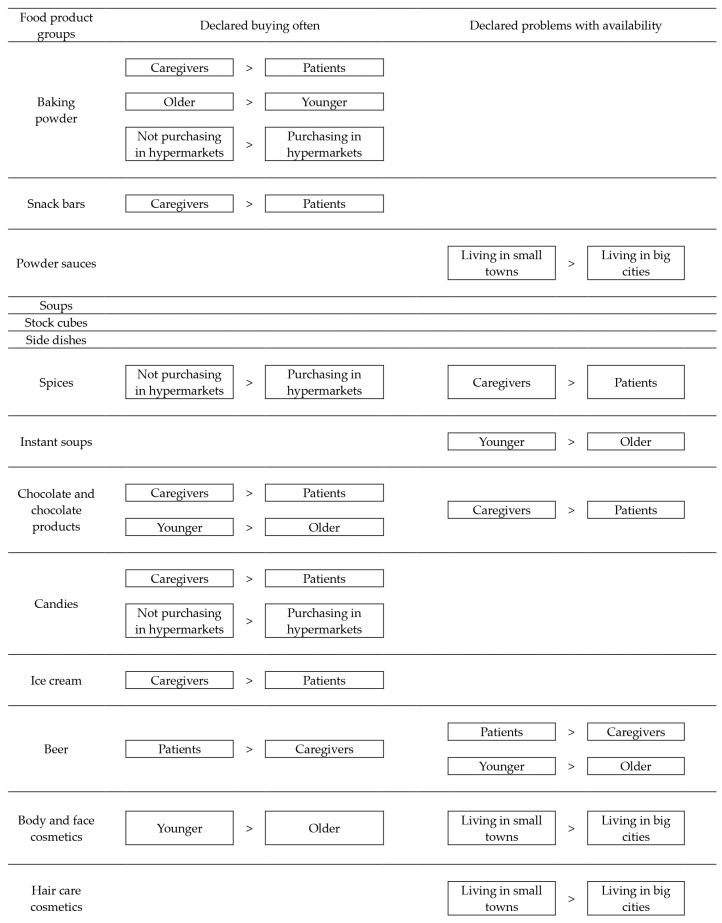
Results: The most frequently bought non-cereal gluten-free alternatives of the 'hidden' gluten sources were baking powders, spices, side dishes, ice cream, chocolate and chocolate products, snack bars and candies. The caregivers often declared buying 'often' gluten-free baking powder, snack bars, chocolate and chocolate products, candies, ice cream, as well as often declared problems with the availability of gluten-free spices, chocolate and chocolate products, while patients often declared buying 'often' gluten-free beer, as well as often declared problems with its availability. The older respondents often declared buying 'often' gluten-free baking powder, while younger respondents often declared buying 'often' gluten-free chocolate and chocolate products, as well as often declared problems with the availability of gluten-free instant soups, and beer. The respondents living in small towns/villages often declared problems with the availability of gluten-free powder sauces. The respondents not purchasing in hypermarkets often declared buying 'often' gluten-free baking powder, spices, candies. The respondents who most often purchased gluten-free products often declared problems with the availability of gluten-free side dishes, chocolate and chocolate products.
Conclusions: The majority of patients diagnosed with coeliac disease do not buy a number of gluten-free alternatives of the 'hidden' gluten sources, so they may be prone to gluten exposure, due to non-cereal products' gluten cross-contamination risk.
Keywords: availability; coeliac disease; consumers; cross-contamination; exposure; gluten; gluten-free products.
Conflict of interest statement
The authors declare no conflicts of interest.
Figures
References
MeSH terms
Substances
LinkOut - more resources
Full Text Sources
Medical
