


Nettle Leaf Water Extracts for Hepatoprotection: Insights into Bioactivity and Mitochondrial Function
- PMID: 40219059
- PMCID: PMC11990370
- DOI: 10.3390/plants14070992
Nettle Leaf Water Extracts for Hepatoprotection: Insights into Bioactivity and Mitochondrial Function
Abstract
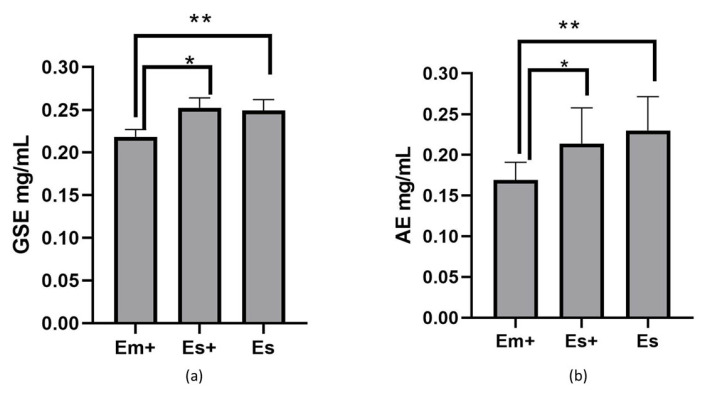
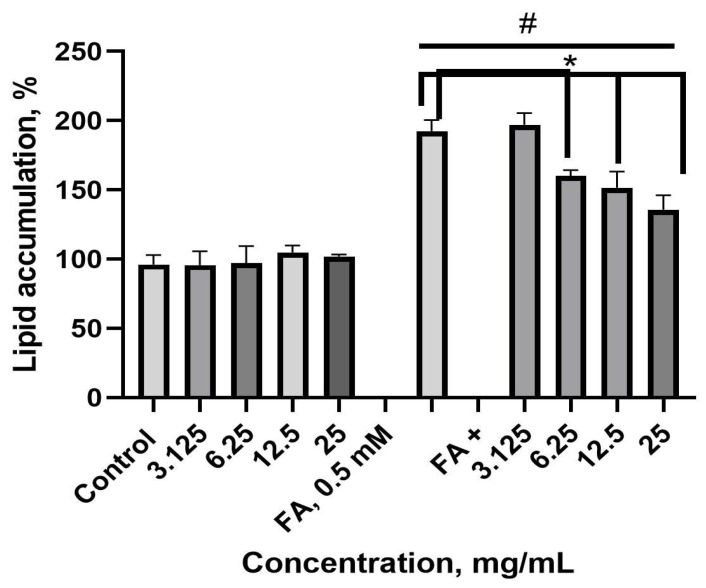
This study aimed to evaluate the hepatoprotective effects of nettle (Urtica dioica L.) leaf water extracts on oxygen consumption in the fatty acid oxidation (FAO) pathway using an in vitro fatty liver HepG2 cell model and employing an oxygraphy approach. It also examined the impact of these extracts on HepG2 cell lipid accumulation and viability under oxidative stress. The extracts were obtained via maceration with preservatives or by sonication with/without preservatives. Their chemical composition, including polyphenols, vitamins, and minerals, was analyzed. Bioactivity was confirmed through antioxidant and antiglycation in vitro assays. The extracts contained minerals, water-soluble vitamins, and polyphenols, primarily phenolic acids and rutin. Sonication increased the polyphenol yield, advanced glycation end-product (AGE) inhibition, and total antioxidant capacity compared to maceration. The added preservatives enhanced DPPH scavenging, while SOD-mimicking effects were comparable across extraction methods. In the liver steatosis model, the nettle extracts improved HepG2 cell viability under oxidative stress, reduced lipid accumulation, and enhanced mitochondrial oxygen consumption in the FAO pathway at mitochondria complex I. These findings demonstrate the impact of nettle leaf water extracts on oxygen flux in different oxidative phosphorylation states of the FAO pathway and deepen the understanding of nettle's protective role in hepatic steatosis. The obtained results confirm the hepatoprotective effects of nettles through multiple mechanisms, primarily involving antioxidant activity, modulation of lipid accumulation, and mitochondrial protection.
Keywords: AGE inhibition; antioxidants; hepatoprotection; mitochondria; nettle leaf extracts; oxidative stress; oxygraphy; phytochemicals.
Conflict of interest statement
Author Z.G.-C. was employed by the company Kinetics Nail Systems, Ltd. This company is not involved in the extraction and sale of plant extracts, so the company has no connection to this research. The remaining authors declare that the research was conducted in the absence of any commercial or financial relationships that could be construed as a potential conflict of interest.
Figures





References
-
- Devkota H.P., Paudel K.R., Khanal S., Baral A., Panth N., Adhikari-Devkota A., Jha N.K., Das N., Singh S.K., Chellappan D.K., et al. Stinging Nettle (Urtica dioica L.): Nutritional Composition, Bioactive Compounds, and Food Functional Properties. Molecules. 2022;27:5219. doi: 10.3390/molecules27165219. - DOI - PMC - PubMed
-
- Di Virgilio N., Papazoglou E.G., Jankauskiene Z., Di Lonardo S., Praczyk M., Wielgusz K. The potential of stinging nettle as a crop with multiple uses. Ind. Crops Prod. 2015;68:42–49. doi: 10.1016/j.indcrop.2014.08.012. - DOI
-
- Said A.A.H., Otmani I.S.E., Derfoufi S., Benmoussa A. Highlights on nutritional and therapeutic value of stinging nettle (Urtica dioica L.) Int. J. Pharm. Pharm. Sci. 2015;7:8–14.
-
- Taheri Y., Quispe C., Herrera-Bravo J., Sharifi-Rad J., Ezzat S.M., Merghany R.M., Shaheen S., Azmi L., Mishra A.P., Sener B., et al. Urtica dioica-Derived Phytochemicals for Pharmacological and Therapeutic Applications. Evid. Based Complement. Alternat Med. 2022;2022:4024331. doi: 10.1155/2022/4024331. - DOI - PMC - PubMed
Grants and funding
LinkOut - more resources
Full Text Sources
