Exploring Molecular Pathways in Exercise-Induced Recovery from Traumatic Brain Injury
- PMID: 40219599
- PMCID: PMC12001864
- DOI: 10.12659/MSM.946973
Exploring Molecular Pathways in Exercise-Induced Recovery from Traumatic Brain Injury
Abstract
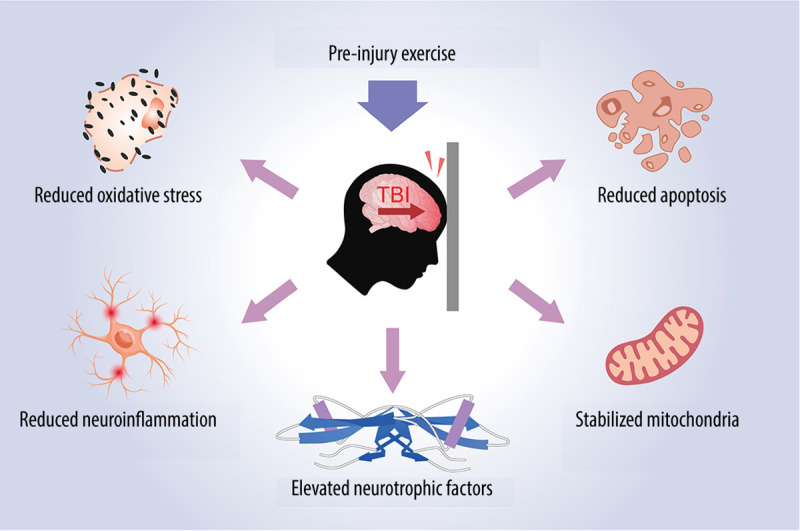
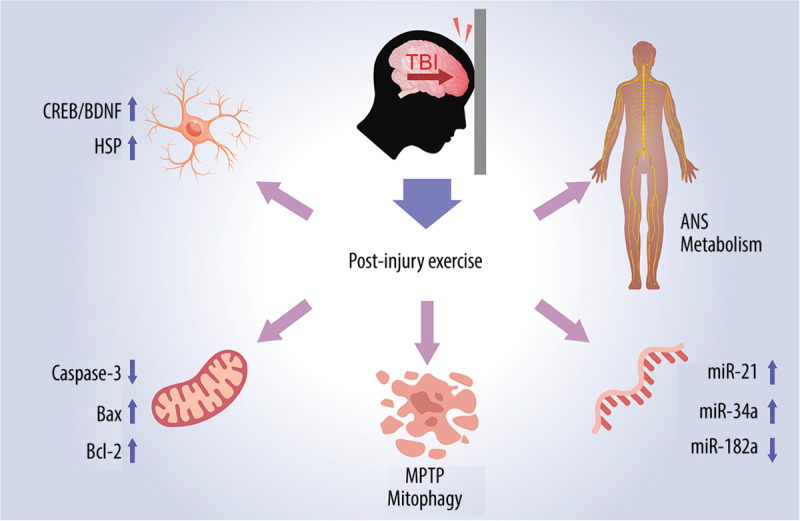
Traumatic brain injury (TBI) is functional damage or brain injury due to external forces and is a leading cause of death and disability in children and adults. It causes disruption of the blood-brain barrier (BBB), infiltration of peripheral blood cells, oxidative stress, neuroinflammation and apoptosis, neural excitotoxicity, and mitochondrial dysfunction. Studies have shown that PE can be applied as a non-pharmacological therapy and effectively improve functional recovery from TBI. Recovery from TBI can benefit from both pre- or post-TBI exercise through various mechanisms for neurorepair and rehabilitation of behavior and cognition, including alleviation of TBI-induced oxidative stress, upregulation of heat-shock proteins, reduction of TBI-induced inflammation, promotion of secretion of neurotrophic factors to facilitate neural regeneration, suppression of TBI-induced apoptosis to reduce brain injury, and stabilization of mitochondrial function for better cellular function. This review article provides an overview of the effect of pre- and post-TBI exercise on recovery of neurofunctions and cognition following TBI, summarizes the potential regulatory networks and cellular and biological processes involved in recovery of brain functions, and outlines the molecular mechanisms underlying exercise-induced improvement of TBI, including regulation of gene expression and activation of heat-shock proteins and neurotrophic factors under different exercise schemes. These mechanisms involve TBI-induced oxidative stress, upregulation of heat-shock proteins, inflammation, secretion of neurotrophic factors, and TBI-induced apoptosis. Due to high heterogeneity in human TBI, the outcome of exercise intervention is affected by the injury type and severity of TBI. More studies are needed to investigate the application of various exercise approaches that fits TBI under different circumstances, and to elucidate the detailed pathogenesis mechanisms of TBI to develop more patient-tailored interventions.
Conflict of interest statement
Figures
References
-
- Hackenberg K, Unterberg A. [Traumatic brain injury]. Nervenarzt. 2016;87(2):203–14. [in German] - PubMed