


Genomic and GEO data integration identifies PDGFB as a potential therapeutic target for sepsis
- PMID: 40221544
- PMCID: PMC11993713
- DOI: 10.1038/s41598-025-96655-7
Genomic and GEO data integration identifies PDGFB as a potential therapeutic target for sepsis
Abstract
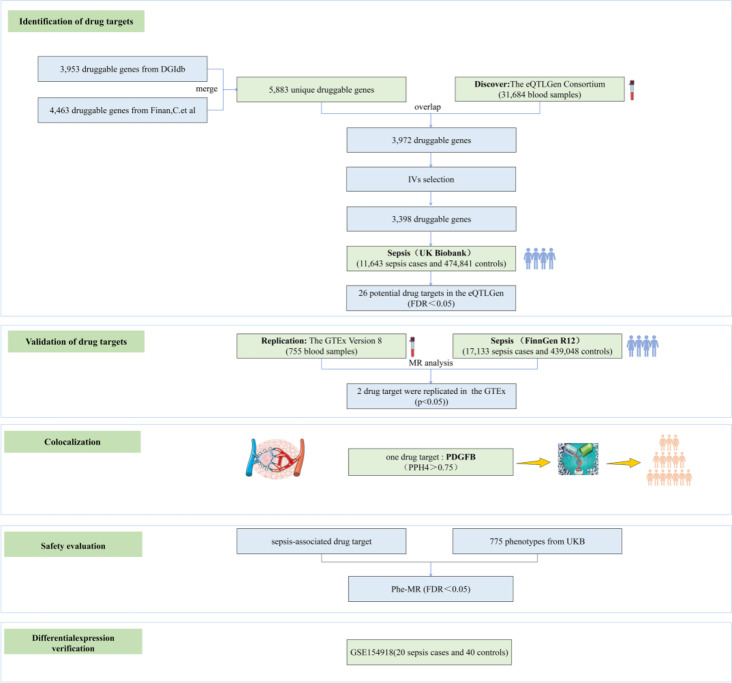
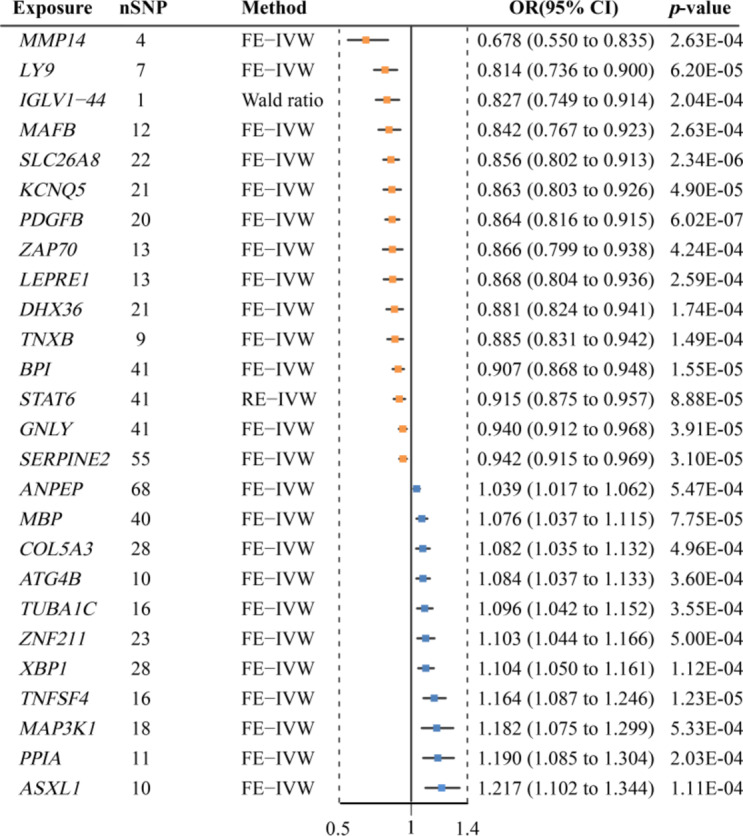
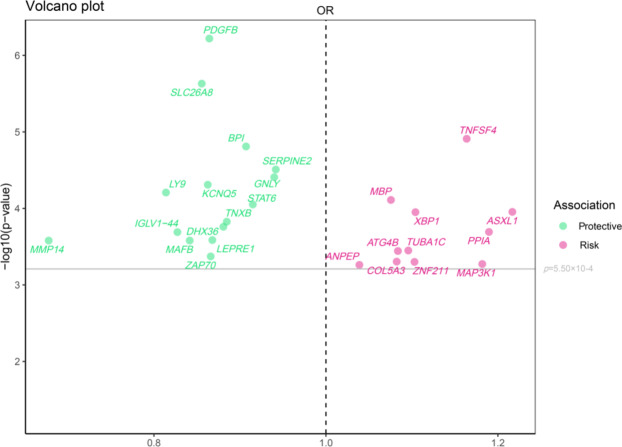
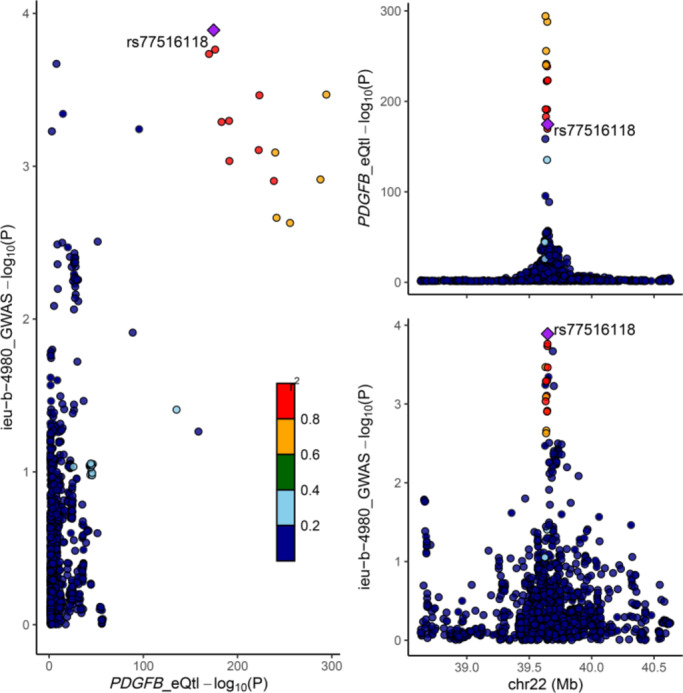
Sepsis is a major contributor to global health loss, yet effective therapeutic options remain scarce. This study aims to identify potential therapeutic targets for sepsis. We integrated data from the druggable genome, expression quantitative trait loci (eQTLs) from human blood, and genome-wide association studies on sepsis. Mendelian randomization (MR) was employed to investigate causal relationships between drug target genes and sepsis. The eQTLGen Consortium data served as the discovery set and was validated using genotype-tissue expression (GTEx) eQTLs. Sensitivity and colocalization analyses were conducted to support causal inferences. Additionally, phenome-wide MR (Phe-MR) was used to assess potential side effects of druggable genes. The expression levels of the target genes were validated using the GSE154918 dataset. In the discovery MR analysis phase, we identified 26 potential targets with significant expression in blood (PFDR < 0.05). PDGFB and BPI were further validated in the replication MR analysis. Colocalization analysis provided strong evidence (PPH4 > 0.75) supporting PDGFB as a therapeutic candidate for sepsis. Phe-MR analysis suggested that targeting PDGFB is unlikely to cause adverse effects. PDGFB downregulation was confirmed in sepsis groups via the GEO dataset. PDGFB is identified as a promising druggable target for sepsis treatment, supported by strong evidence of its therapeutic potential.
Keywords: PDGFB; GEO database; Genomic; Mendelian randomization; Sepsis.
© 2025. The Author(s).
Conflict of interest statement
Declarations. Competing interests: The authors declare no competing interests.
Figures
Similar articles
-
Mendelian randomization analysis identifies druggable genes and drugs repurposing for chronic obstructive pulmonary disease.Front Cell Infect Microbiol. 2024 Apr 10;14:1386506. doi: 10.3389/fcimb.2024.1386506. eCollection 2024. Front Cell Infect Microbiol. 2024. PMID: 38660492 Free PMC article.
-
Prioritizing drug targets in systemic lupus erythematosus from a genetic perspective: a druggable genome-wide Mendelian randomization study.Clin Rheumatol. 2024 Sep;43(9):2843-2856. doi: 10.1007/s10067-024-07059-3. Epub 2024 Jul 13. Clin Rheumatol. 2024. PMID: 38997544 Free PMC article.
-
Genetic analysis from multiple cohorts implies causality between 2200 druggable genes, telomere length, and leukemia.Comput Biol Med. 2024 Oct;181:109064. doi: 10.1016/j.compbiomed.2024.109064. Epub 2024 Aug 30. Comput Biol Med. 2024. PMID: 39216403
-
Mitochondrial-related genome-wide Mendelian randomization identifies putatively causal genes in the pathogenesis of sepsis.Surgery. 2025 May;181:109150. doi: 10.1016/j.surg.2025.109150. Epub 2025 Feb 10. Surgery. 2025. PMID: 39933430 Review.
-
Systems genetics for drug target discovery.Trends Pharmacol Sci. 2011 Oct;32(10):623-30. doi: 10.1016/j.tips.2011.07.002. Epub 2011 Aug 19. Trends Pharmacol Sci. 2011. PMID: 21862141 Free PMC article. Review.
References
-
- Vincent, J. L. et al. Assessment of the worldwide burden of critical illness: the intensive care over nations (ICON) audit. Lancet Respir Med.2(5), 380–386 (2014). - PubMed
-
- Torio, C. M. & Moore, B. J. National inpatient hospital costs: the most expensive conditions by payer, 2013. In Healthcare Cost and Utilization Project (HCUP) Statistical Briefs (Agency for Healthcare Research and Quality (US), 2006).
-
- Nelson, M. R. et al. The support of human genetic evidence for approved drug indications. Nat. Genet.47(8), 856–860 (2015). - PubMed
MeSH terms
Grants and funding
LinkOut - more resources
Full Text Sources
Medical
