


The involvement of cyclin-dependent kinase 7 (CDK7) and 9 (CDK9) in coordinating transcription and cell cycle checkpoint regulation
- PMID: 40223539
- PMCID: PMC12296136
- DOI: 10.1080/15384101.2025.2485844
The involvement of cyclin-dependent kinase 7 (CDK7) and 9 (CDK9) in coordinating transcription and cell cycle checkpoint regulation
Abstract
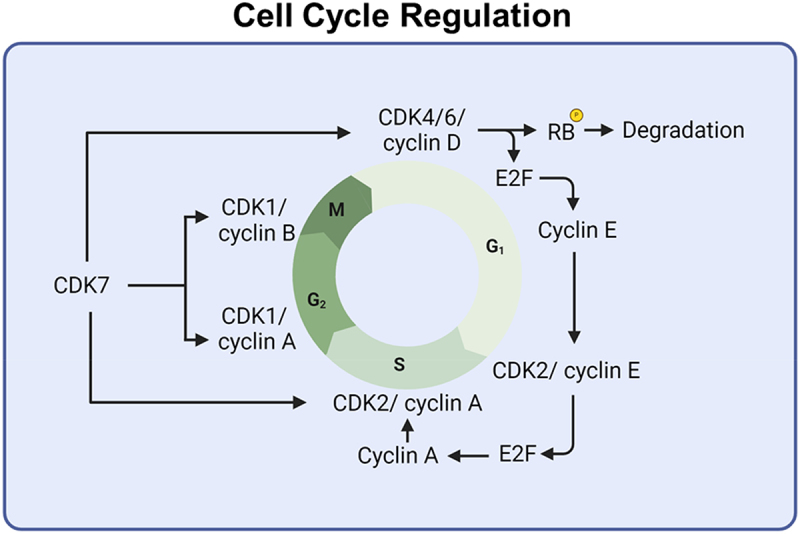
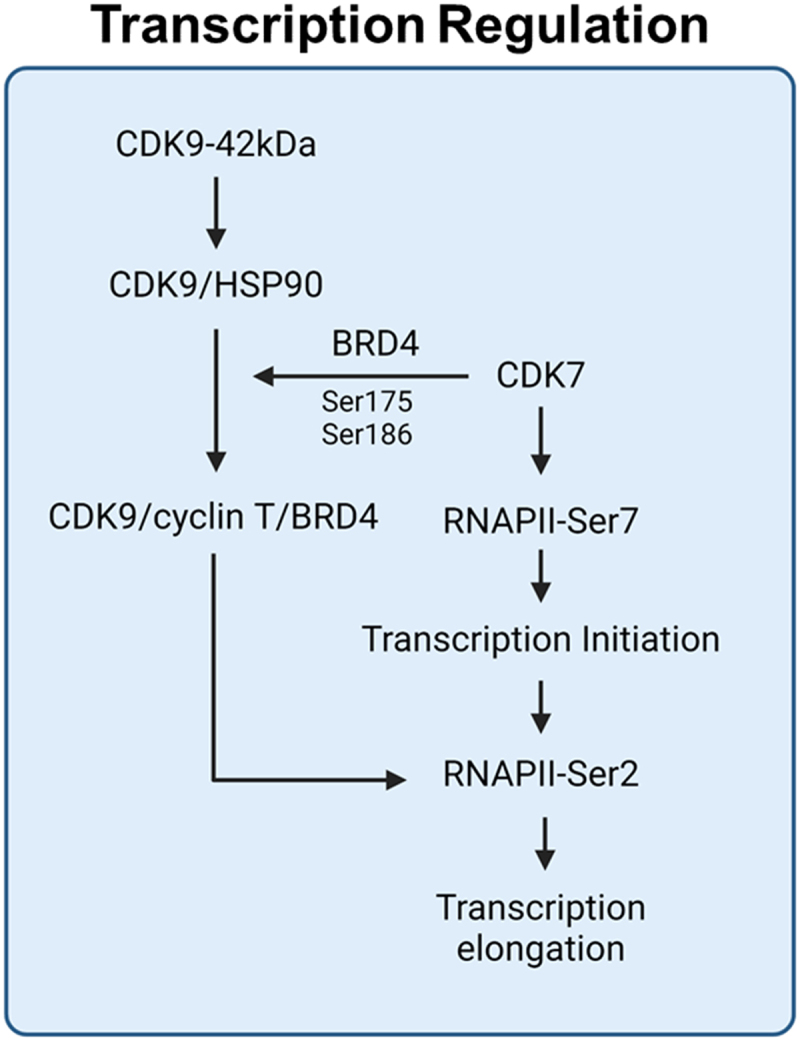
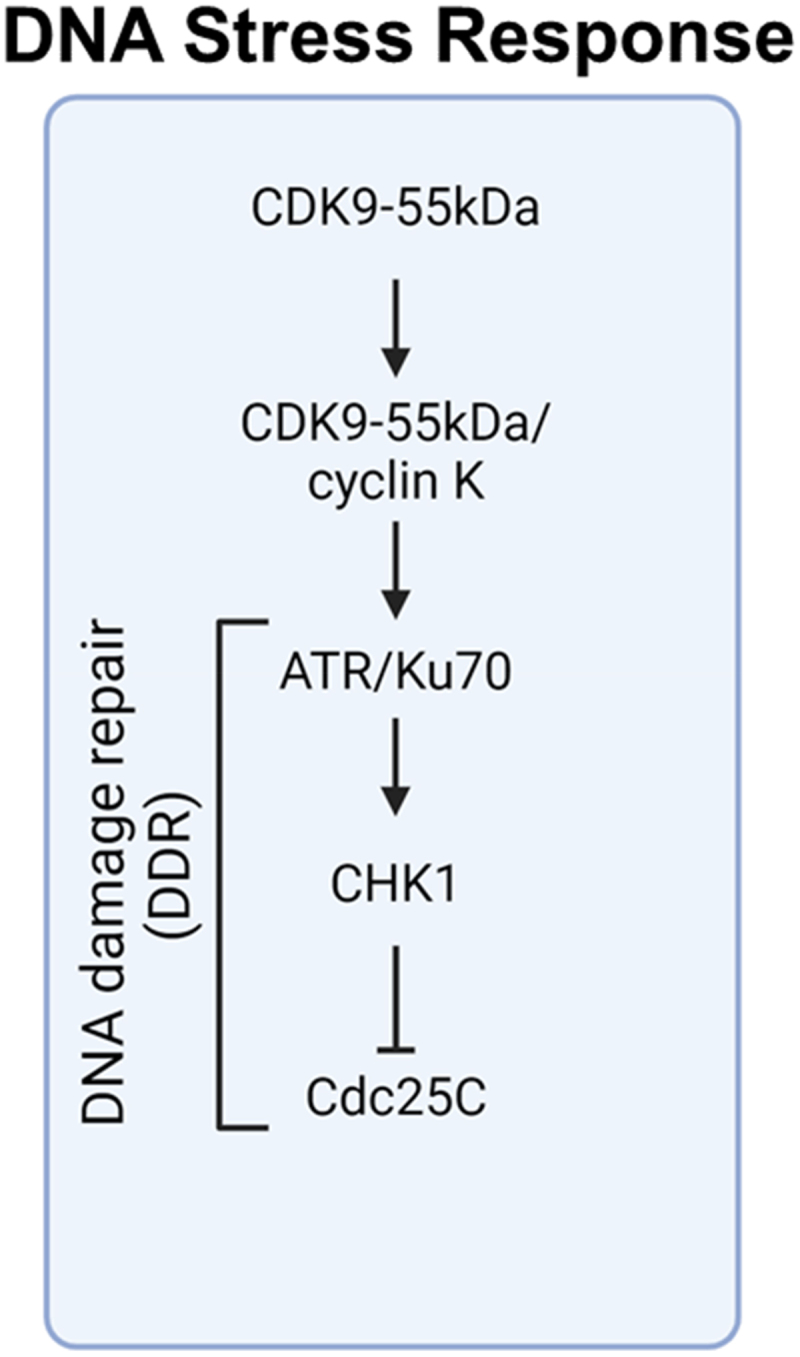
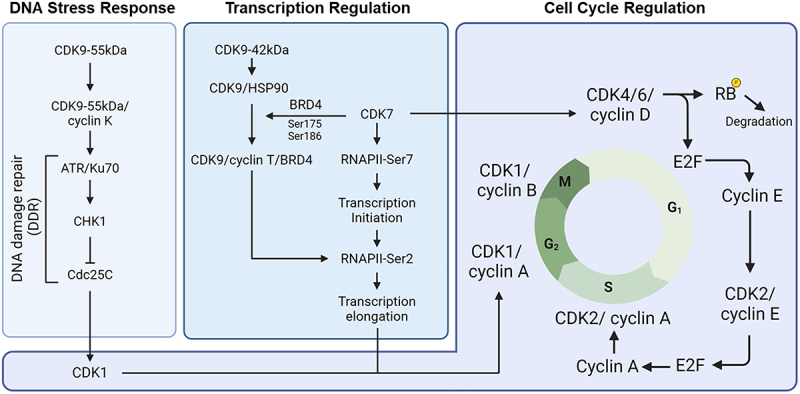
Cells regulate the expression of cell cycle-related genes, including cyclins essential for mitosis, through the transcriptional activity of the positive transcription elongation factor b (P-TEFb), a complex comprising CDK9, cyclin T, and transcription factors. P-TEFb cooperates with CDK7 to activate RNA polymerase. In response to DNA stress, the cell cycle shifts from mitosis to repair, triggering cell cycle arrest and the activation of DNA repair genes. This tight coordination between transcription, cell cycle progression, and DNA stress response is crucial for maintaining cellular integrity. Cyclin-dependent kinases CDK7 and CDK9 are central to both transcription and cell cycle regulation. CDK7 functions as the CDK-activating kinase (CAK), essential for activating other CDKs, while CDK9 acts as a critical integrator of signals from both the cell cycle and transcriptional machinery. This review elucidates the mechanisms by which CDK7 and CDK9 regulate the mitotic process and cell cycle checkpoints, emphasizing their roles in balancing cell growth, homeostasis, and DNA repair through transcriptional control.
Keywords: CDK7; CDK9; Cell cycle; transcription.
Conflict of interest statement
Kenneth J. Pienta is a consultant for CUE Biopharma, Inc., is a founder and holds equity interest in Keystone Biopharma, Inc., and holds equity interest in Kreftect, Inc. Sarah R. Amend holds equity interest in Keystone Biopharma, Inc. All other authors have no relevant financial or non-financial interests to disclose.
Figures
References
Publication types
MeSH terms
Substances
Grants and funding
LinkOut - more resources
Full Text Sources
Miscellaneous
